Daugavpils: Rothko and the fortress
Daugavpils sits on the Daugava about 25 km from the Lithuanian border. It was Dünaburg and then Dvinsk under the Russian empire, and it is still the most multilingual city in the country. Most visitors come for two things, and both sit inside the same walls.
The first is Daugavpils Fortress, begun in 1810 under Tsar Alexander I as Napoleon's invasion approached. It covers about 150 hectares, roughly 80 of its buildings survive along ten streets that keep their historic names, and the city describes it as the last bastion fortress of its type to survive without major alteration. People live in it, which makes it feel like a quiet garrison town rather than a museum.
The second is the Mark Rothko Art Centre, opened on 24 April 2013 in the fortress's 1833 artillery arsenal. Rothko was born in the city in 1903 as Marcus Rothkowitz. Original paintings of his, lent by his children Kate Rothko Prizel and Christopher Rothko, hang there permanently. Opening hours change with the season, so check the centre's site before you go.
Aglona Basilica
Aglona is a village between two lakes, and its basilica is the centre of Catholic Latvia. The church was built in late baroque between 1768 and 1800, with two towers of about 60 metres. In 1980 it was named a minor basilica, the only one in Latvia, and Pope John Paul II visited in 1993.
On 15 August, the feast of the Assumption, pilgrims arrive from across Latvia and beyond, many of them on foot. If you want to see it, plan for crowds and book a bed in the area well ahead. On any other day the grounds are wide, calm and mostly empty.
The lakes: the Land of Blue Lakes
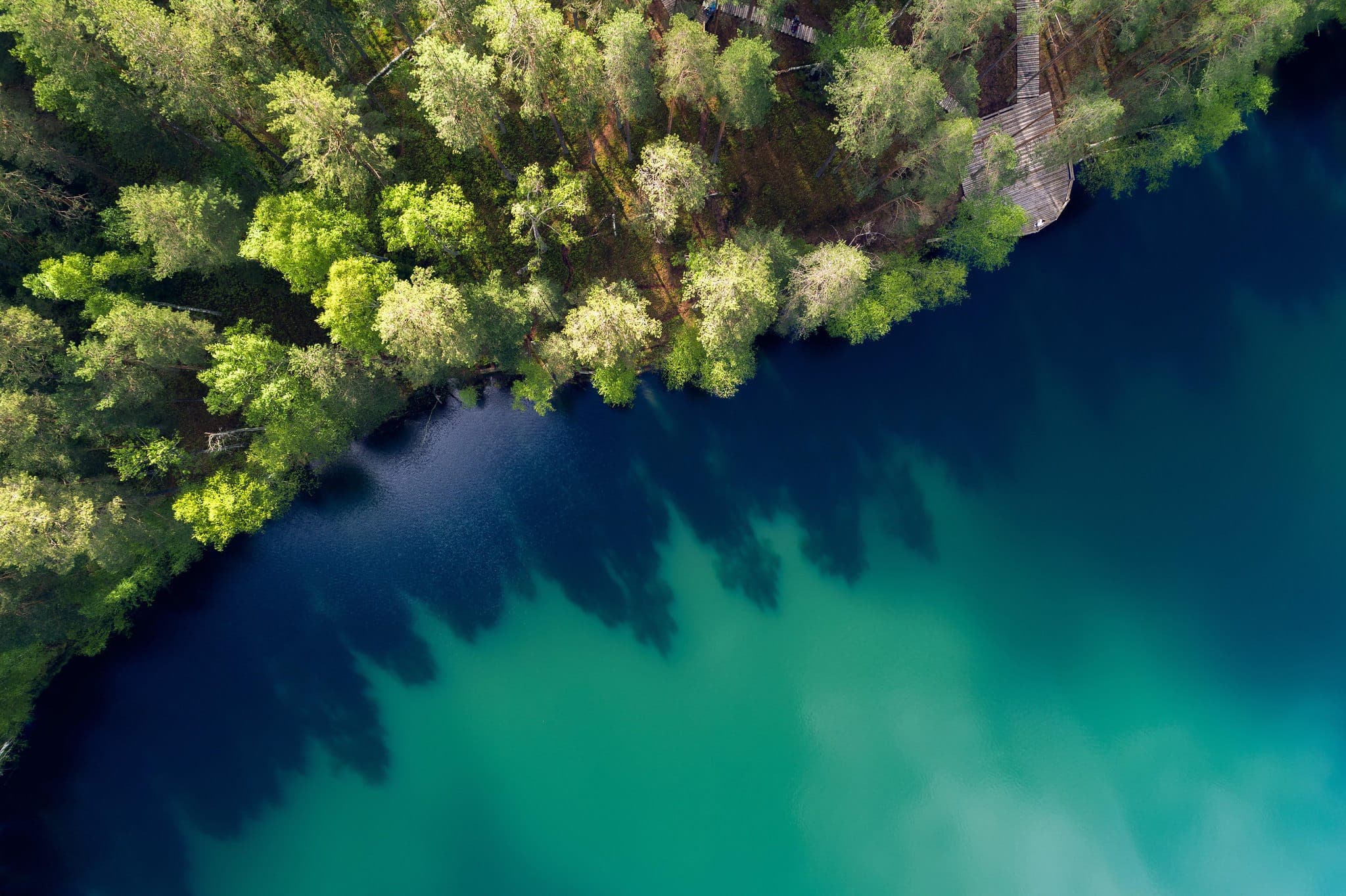
Latgale is the lake district of Latvia, sometimes called the Land of Blue Lakes. Lake Rāzna is the largest lake in the country by volume of water and second by area, and Rāzna National Park, created in 2007, protects it and about 59,600 hectares of the hills and farmland around it. The lake has 26 islands.
Lake Lubāns, on the region's western edge, is the largest lake in Latvia by surface area, more than 80 square kilometres, and is held in by dams on all four sides. It is flat, reedy and very good for birds. Between Krāslava and Daugavpils, the Daugavas loki nature park protects eight wide bends of the Daugava, where the river still keeps its natural course.
Rēzekne and Krāslava
Rēzekne is often called the heart of Latgale. Its landmark is GORS, the Embassy of Latgale, a concert hall opened in 2013 with two halls known for their acoustics. The Latgale Culture and History Museum in the town holds a large collection of Latgalian ceramics.
Krāslava, on the Daugava upstream from Daugavpils, is a small town built around the estate of the Plater family. The 18th century manor house sits in a park you can walk through. Its interior is not generally open, though a small museum is part of the complex. St Ludwig's Church, finished in 1767 with frescoes by the Italian painter Filippo Castaldi, holds the relics of St Donatus and is the region's second pilgrimage site after Aglona.
Language, pottery and faiths
Latgalian is the region's own written language. Latvian law protects it as a historic variant of Latvian, and you will see it on signs, menus and the names of places. The first surviving book in Latgalian was printed in 1753.
Latgalian pottery is on the Latvian Cultural Canon, the national list of 99 defining works. Potters still work in their own studios around the region, often in the old green and brown glazes or in smoke-fired black ware, and visiting a workshop is one of the best afternoons the region offers. In Daugavpils, the Martinsons House, also in the fortress, shows the work of the ceramicist Pēteris Martinsons.
Latgale has always been a crossroads of faiths. Old Believers, who broke with the Russian Orthodox Church in the 17th century schism, settled here from the 1660s, and their prayer houses still serve communities in Daugavpils and the villages around it. Catholic, Lutheran and Orthodox churches share the skyline in the same city.
Jewish heritage: Dvinsk and Krāslava
Before the Second World War, Latgale was one of the great centres of Jewish life in the region. In 1897 the 32,400 Jews of Dvinsk were 46 percent of the city. In Krāslava, Jews were just over half the town in 1897 and still about a third in 1935.
Almost all were murdered in the Holocaust. In Daugavpils the 1850 synagogue on Cietokšņa iela is the only one still standing, and it also houses a small Jewish museum. In Krāslava the old Jewish cemetery remains. For families tracing roots, both towns are worth a slow, guided day rather than a quick stop.
Getting there, how long, and when
From Riga, trains run direct to Daugavpils several times a day and take three to three and a half hours. By car it is 232 km on the A6, which also takes three to three and a half hours. Buses take about three and a half. To see Aglona, Rāzna and Krāslava as well, you need a car or a driver, as the countryside is thinly served by public transport.
Two nights in Daugavpils covers the Rothko centre, the fortress and a day out to Aglona or the Daugava bends. Three or four nights lets you add Rēzekne, the lakes and a potter's workshop. Late May to September is the best time, for swimming lakes and long evenings, with 15 August the busiest day of the year at Aglona. Winter is quiet, cold and dark by mid-afternoon.
Our From Rothko to Rundāle tour spends two nights in Daugavpils, with a curator-led morning at the Rothko centre, the fortress, and Aglona on the way west to Rundāle Palace.
- What is Latgale?
- Latgale is the easternmost of Latvia's four historic regions, bordering Lithuania, Belarus and Russia. It is known for its lakes, Aglona Basilica, its own written language, Latgalian pottery and a long mix of Catholic, Orthodox, Old Believer and Jewish communities. Its largest city is Daugavpils.
- How do I get from Riga to Daugavpils?
- By direct train from Riga station, several times a day, in three to three and a half hours. By car it is 232 km on the A6, about the same time. Buses also run from Riga bus station in about three and a half hours.
- Is Daugavpils worth visiting?
- Yes, for at least two nights. The Mark Rothko Art Centre has original Rothko paintings on permanent display, and the 1810 fortress around it is unusually intact. The city itself is easy to walk and very few tourists come.
- When is the pilgrimage at Aglona?
- The main pilgrimage is on 15 August, the feast of the Assumption. Pilgrims come from across Latvia and beyond, many on foot. Expect crowds and book accommodation early if you plan to be there that day.
- How many days do I need for Latgale?
- Two nights in Daugavpils is enough for the Rothko centre, the fortress and one day out. Three or four nights lets you add Rēzekne, Lake Rāzna, Krāslava and a pottery workshop. A car or driver makes the countryside much easier.
Make this part of your Latvia trip.
Tell us your dates, interests and the pace you have in mind. We will suggest how this could fit your route.