The capital: Warsaw
Poland's capital is Warsaw, in the centre of the country on the Vistula river. It was flattened in 1945, more than eighty percent of it destroyed, and the old town you see today was rebuilt stone by stone from paintings and drawings, a reconstruction so thorough that UNESCO listed it. Warsaw is now one of the fastest-moving capitals in the region, a city of glass towers above a restored core.
For most travellers, though, Poland does not centre on Warsaw. The anchor is Kraków, the royal city in the south that the war largely spared, and the usual base for a first visit. Warsaw is the capital and the business heart; Kraków is where the history and the crowds are. Poland is also the natural extension south from Vilnius, the border a couple of hours away near Suwałki.
The landscape: mountains, coast, and forest
Poland is not flat like the Baltic states. In the south it has real mountains: the Tatras, a compact alpine range on the Slovak border, make the sharpest transition from lowland plain to bare rock anywhere in Europe. Zakopane, at their foot, is the country's mountain resort, and the peaks behind it climb past 2,400 metres. This is genuine alpine terrain, not a hill.
The rest is varied. The north meets the Baltic at Gdańsk, on the amber coast that Poland shares with Lithuania. The northeast holds Masuria, a district of thousands of lakes, and along the eastern border lies Białowieża, the last primeval lowland forest in Europe and home to its largest wild population of European bison. Between them run the plains and river valleys that give the country its name, which comes from an old word for open field.
Kraków and its day trips
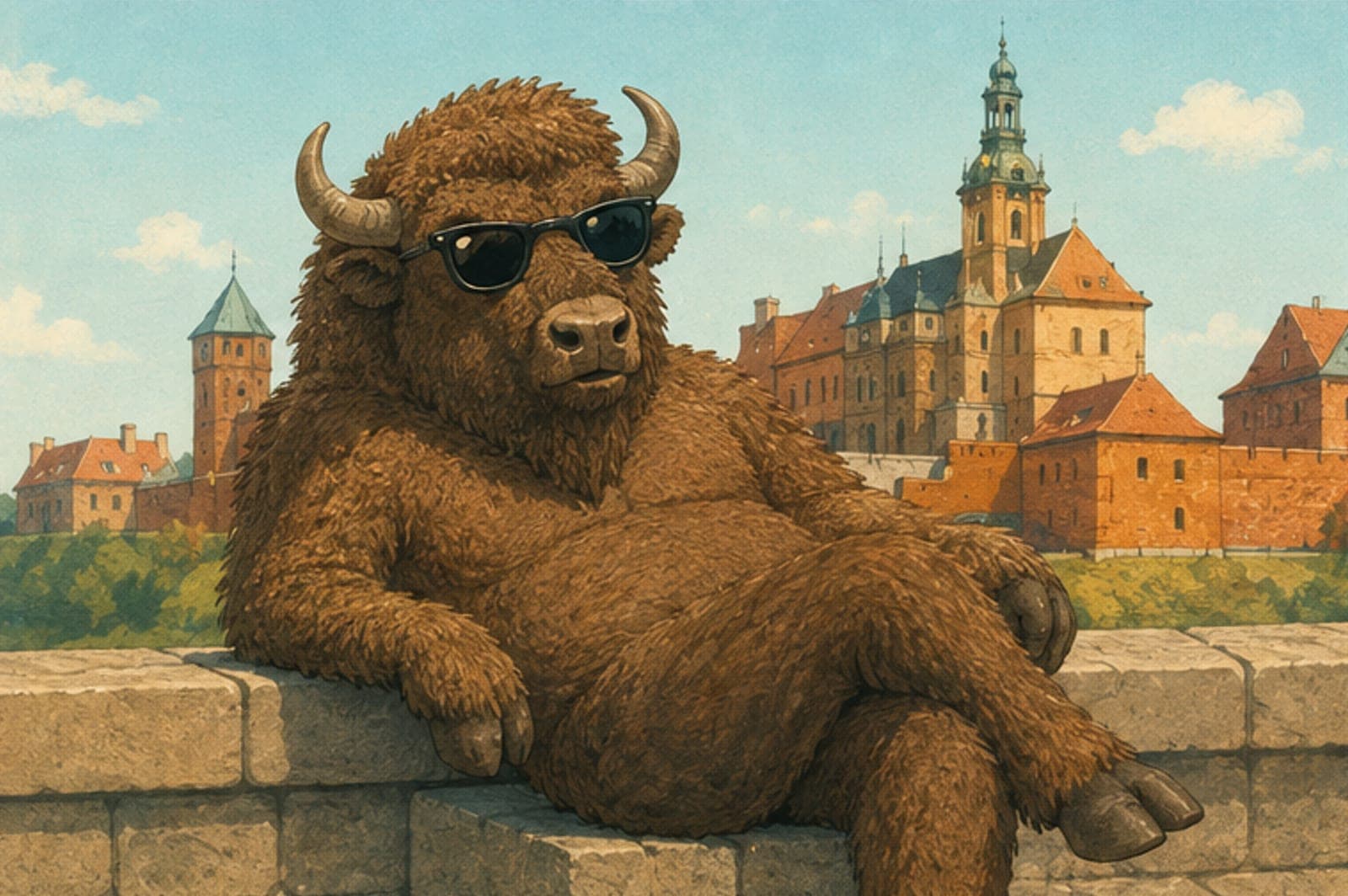
The single place most visitors come for is Kraków, the royal capital until the court moved to Warsaw and the one great Polish city the war did not destroy. Wawel Hill carries the castle and cathedral of the old kings above the Vistula. Below it spreads the Main Market Square, the largest medieval square in Europe, and to the south the Kazimierz quarter, the old Jewish district now full of small bars and restored synagogues.
Two of the most visited sites in the country are day trips from the city. The Wieliczka Salt Mine, southeast of Kraków, is a UNESCO site of chapels and chambers carved entirely from rock salt hundreds of metres underground. And an hour west lies Auschwitz-Birkenau, the memorial and museum on the site of the largest Nazi German death camp, the most sobering visit in Poland and one many travellers make in silence.
The cities and places
After Warsaw and Kraków, the city most worth knowing is Gdańsk, the great Baltic port in the north. Its long waterfront of tall, narrow merchant houses was rebuilt after the war, and it was here, in the shipyard, that the Solidarity movement began in 1980 and started the unravelling of communist rule across the bloc. Gdańsk is also a centre of the amber trade.
Wrocław, in the southwest, is a handsome university city of islands and bridges, once German Breslau, with a market square among the largest in the country. Poznań, Lodz and the mountain resort of Zakopane round out the list. For quiet nature, Masuria in the northeast and the Białowieża forest on the eastern border are the draws.
What Poland is known for
Poland is known first for Kraków's old town and, close beside it, for the Auschwitz-Birkenau memorial. After that come the Tatra mountains, the food, and the country's outsized place in modern history: the Solidarity movement that began in Gdańsk, and the Warsaw the Poles rebuilt from nothing.
Culturally it is the country of Chopin, born near Warsaw and played across the world, and of a deep Catholic tradition that produced Pope John Paul II. It is also known, simply, for eating well: pierogi, hearty soups, and rye bread that travellers remember. And it is the largest country of the region, about 37.4 million people, which gives its cities a scale and energy the smaller Baltic capitals do not have.
The best time to visit
The best time to visit Poland is May to September. This is the warm half of the year, when Kraków's square fills with cafe tables, the Baltic coast opens and the Tatra trails are clear of snow. Summer is busiest in July and August; late spring and early autumn are quieter and often just as fine.
December is the other window, for Kraków's Christmas market on the Main Market Square, the largest medieval square in Europe, strung with lights and stalls of mulled wine and roast sausage. For the mountains, winter brings skiing around Zakopane. The shoulder months of April and October are cheaper and calmer, with cooler, greyer weather.
- What is the capital of Poland?
- The capital of Poland is Warsaw, on the Vistula river, rebuilt from near-total destruction after 1945. For most travellers, though, the country centres on Kraków, the royal city in the south that the war largely spared.
- What currency does Poland use?
- Poland uses the złoty (PLN), not the euro. It is a member of the European Union but has kept its own currency, so you will need złoty for most everyday spending, though cards are widely accepted.
- Does Poland have mountains?
- Yes. Unlike the flat Baltic states, Poland has real mountains: the Tatras on the southern border rise past 2,400 metres and make the sharpest jump from plain to alpine rock in Europe, with Zakopane as the mountain resort at their foot.
- What is Poland known for?
- Poland is known for Kraków's old town, the Auschwitz-Birkenau memorial, the Tatra mountains, its food, Chopin, and the Solidarity movement that began in Gdańsk and helped end communist rule across the region.
- Which cities and places should you visit in Poland?
- Kraków first, for Wawel, the Main Market Square and Kazimierz, with the Wieliczka Salt Mine and Auschwitz-Birkenau as day trips. Then Warsaw, the rebuilt capital, and Gdańsk, the Baltic port and home of Solidarity. Wrocław and the Tatra resort of Zakopane round it out.
- When is the best time to visit Poland?
- May to September for warm days, the open coast and clear mountain trails, with July and August busiest. December is the time for Kraków's Christmas market on the largest medieval square in Europe.
Still have a question?
Ask the small team that runs these trips. A real person replies, usually within one working day.