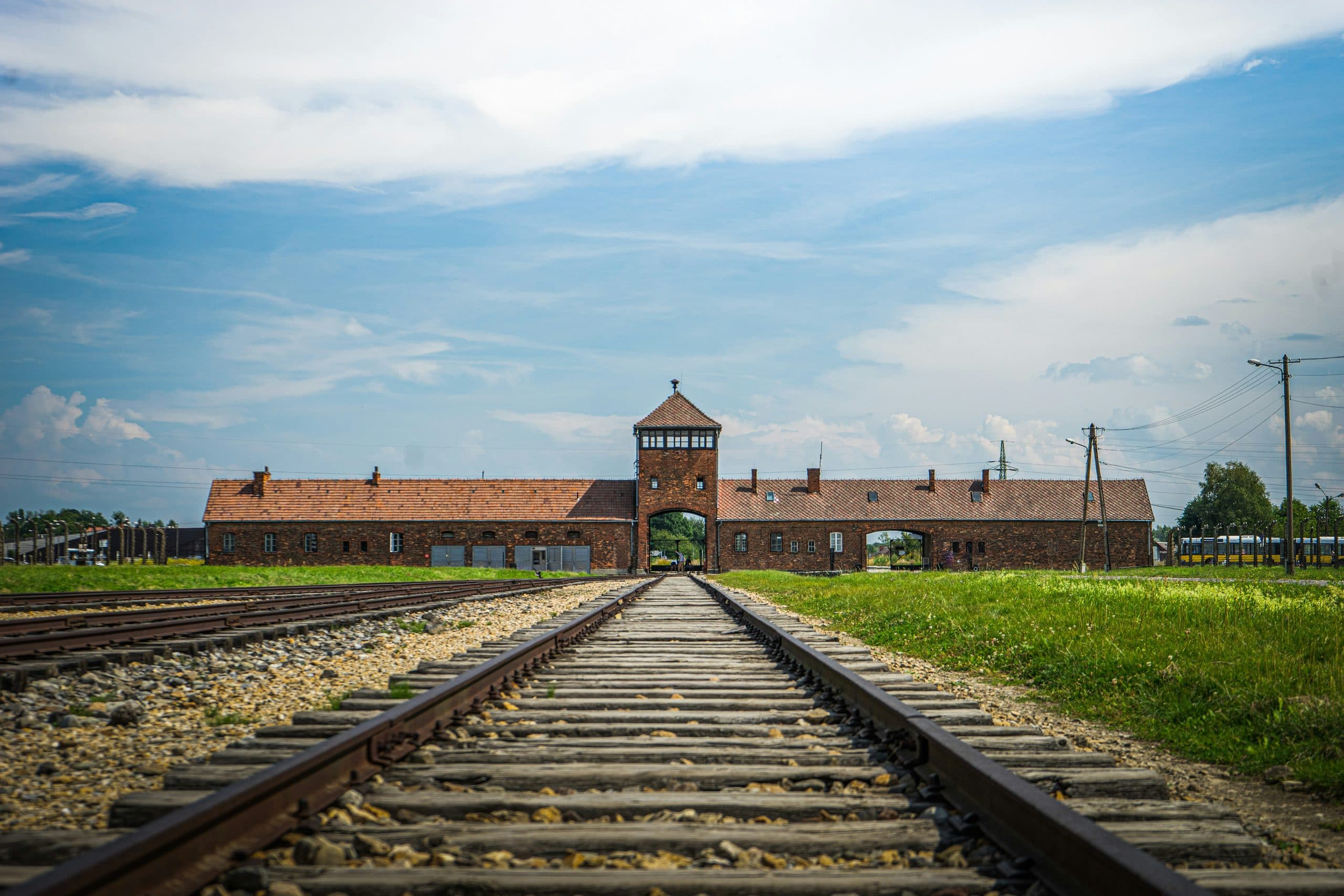
Auschwitz-Birkenau lies about 70 kilometres west of Kraków, an hour and a quarter's drive. We use only state-licensed memorial educators for this visit; it is a place that asks to be understood, not narrated.
The morning covers Auschwitz I, the original camp and its exhibitions; Birkenau follows, the much larger site where most deportations ended. The day is paced to leave room for quiet and for questions, and there is no obligation to speak while you walk.
What you'll see
- Auschwitz I main camp and exhibitions
- Birkenau camp and memorial
- State-licensed memorial educator
- Time for private reflection
What the price covers
Private driver, licensed memorial guide, entrance fees, water
Getting there
Trains from Kraków Główny to Oświęcim take roughly an hour and a half, and buses run in a similar time; from Oświęcim a local bus or taxi covers the last stretch, and Auschwitz I and Birkenau are about three kilometres apart. Entry passes are personal, limited in number and booked only online at visit.auschwitz.org, with a set start time; none are sold at the entrance. The private car handles the timing between the two sites.
The best time to go
The memorial is open every day except 1 January, 25 December and Easter Sunday. Summer brings the most visitors, and passes need booking well ahead. Winter is cold, and the Birkenau site is open and exposed, so warm layers matter. Last entry moves with the seasons, as early as 2 p.m. in December, so a winter visit starts in the morning.
- Is this trip appropriate for children?
- The memorial itself sets a minimum age of 14, and we follow that guidance. It's a sober, difficult visit by design.
- How long do we spend at each site?
- Roughly three hours between the two, guided throughout, with time built in for reflection rather than a fixed script.
- Why a licensed guide specifically?
- The memorial requires state-licensed educators for group interpretation. It also means the history is presented with the accuracy and care the site deserves.