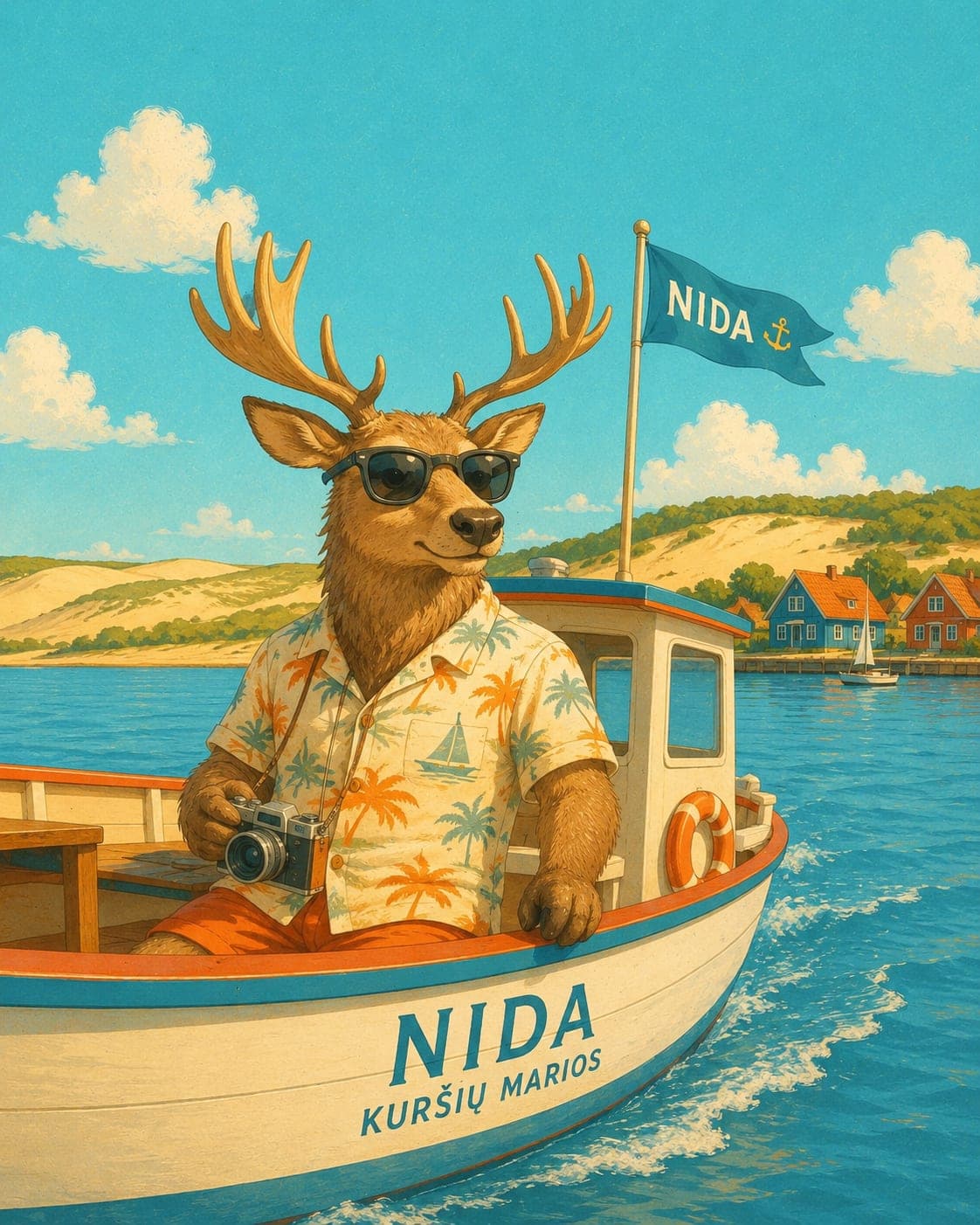
Was die Kurische Nehrung ist
Die Nehrung ist ein UNESCO-Welterbe aufgrund ihrer außergewöhnlichen Naturlandschaft: das größte wandernde Dünensystem Europas, entstanden aus Sand, der von der Ostsee angeweht und stellenweise durch angepflanzten Kiefernwald stabilisiert wurde. Die Dünen wandern noch immer langsam nach Südosten.
Die Lagunenseite ist ruhig, warm und geschützt; die Seeseite ist offene Ostsee, kühler und windiger. Beide haben ihren eigenen Charakter. Die Nehrung ist an ihrer breitesten Stelle 3 bis 4 km breit.
Der litauische Abschnitt wird als Nationalpark verwaltet. Für praktische Zwecke übernachten Reisende in Nida, Preila, Pervalka oder Juodkrantė, alle auf litauischer Seite.
Anreise: Fähre und Gebühr
Jede Reise beginnt in Klaipėda, Litauens Hafenstadt. Von Vilnius sind es rund 310 km auf der Straße: drei bis dreieinhalb Stunden mit dem Auto, vier bis fünf Stunden mit dem Zug von LTG Link.
Zwei Fährterminals bedienen die Nehrung, beide betrieben von Smiltynės perkėla. Autos setzen vom Neuen Fährterminal im Süden der Stadt über, laut aktuellem Fahrplan tagsüber etwa alle 20 Minuten. Das Alte Fährterminal im Stadtzentrum nimmt nur Fußgänger und Fahrräder mit. Die Überfahrt dauert wenige Minuten.
Autos zahlen danach am Kontrollposten Alksnynė, an der Straße südlich von Smiltynė, eine örtliche Einfahrtsgebühr für Neringa. Für einen Pkw sind es 10 €, vom 20. Juni bis 20. August 50 €. Sie lässt sich vorab online bezahlen.
Von Smiltynė führt die Straße rund 45 km nach Süden bis Nida, mit dem Linienbus etwa eine Stunde. Südlich von Nida endet die Straße an der russischen Grenze, deren Übergang für den regulären Verkehr geschlossen ist.
Ein Tag oder ein paar Nächte
Ab Klaipėda ist ein Tag auf der Nehrung realistisch. Nehmen Sie eine frühe Fähre, fahren Sie direkt nach Nida und zur Parnidis-Düne, und halten Sie auf dem Rückweg in Juodkrantė.
Ab Vilnius ist es kein Tagesausflug. Die Fahrt nach Klaipėda, die Fähre und die Straße nach Nida dauern pro Strecke vier bis fünf Stunden. Planen Sie mindestens eine Nacht an der Küste ein, besser zwei.
Nida ist der größte Ort und die übliche Basis, nahe der Parnidis-Düne und den Museen. Juodkrantė, näher an der Fähre, ist kleiner und ruhiger, mit den geschnitzten Eichenfiguren des Hexenbergs oberhalb des Dorfes. Klaipėda bietet sich an, wenn die Nehrung ausgebucht ist: mehr Hotels, und die Nehrung liegt nur eine Fährfahrt entfernt.
Nida: was Sie unternehmen können
Nida ist ein kleines Dorf aus bemalten Fischerhäusern am Lagunenufer. Thomas Mann verbrachte hier drei Sommer, 1930 bis 1932, in einem Sommerhaus, das heute ein ganzjährig geöffnetes Museum ist.
Die Parnidis-Düne, eine 52 Meter hohe Düne mit einer funktionierenden Sonnenuhr auf ihrem Gipfel, ist zu Fuß 30 Minuten vom Dorf entfernt. Der Blick bei Sonnenaufgang, auf der einen Seite über die Lagune und auf der anderen über die offene Ostsee, ist der beste Moment, den die Nehrung zu bieten hat.
Geräucherter Fisch, an der Lagune traditionell, wird in den Räuchereien von Nida verkauft. Geräucherter Aal oder geräucherte Brasse mit einem kühlen Bier auf einer Bank am Lagunenufer ist das richtige Mittagessen.
Auf den Dünen: bleiben Sie auf den Wegen
Die Dünen sind der geschützte Kern des Nationalparks, und sie sind empfindlich. Bleiben Sie auf der Parnidis-Düne auf den ausgeschilderten Wegen. Die Ostseite der Düne ist für Besucher gesperrt.
Zwei Naturreservate sind strenger. In Nagliai, zwischen Juodkrantė und Pervalka, dürfen Sie nur den markierten Lehrpfad begehen, der in der Saison kostenpflichtig ist und feste Öffnungszeiten hat. In Grobštas ist der Zugang auf den Strand an der Seeseite beschränkt.
Die Grenzen der Reservate sind markiert, und es ist verboten, sie zu überschreiten. Auch außerhalb der Reservate bittet der Park darum, die Dünen nicht zu besteigen.
Beste Reisezeit, und was Sie an Regentagen tun können
Juni bis August ist die Hauptsaison: warm genug zum Schwimmen in der Lagune, Tage lang genug für einen Sonnenaufgang auf der Parnidis-Düne und einen Abendspaziergang am Strand. Juli ist der geschäftigste Monat; Unterkünfte auf der Nehrung sind begrenzt und schnell ausgebucht.
September ist ausgezeichnet: die Menschenmassen sind weg, der Wald färbt sich bernstein- und goldfarben, und die Lagune ist noch angenehm warm. Bernsteinstürme im Herbst spülen frischen Bernstein an die Ostseeküste.
Der Winter ist kalt und ungeschützt, aber die Dünen unter Schnee haben eine karge Schönheit, und die Nehrung ist fast vollständig menschenleer. Außerhalb der Saison haben weniger Lokale geöffnet.
Regen beendet den Tag nicht. Das Thomas-Mann-Museum, das Museum für Geschichte der Kurischen Nehrung und das ethnografische Fischergehöft in Nida sind ganzjährig geöffnet, außerhalb der Saison dienstags bis samstags. Auch das Bernsteinmuseum Mizgiris liegt in Nida, und das Litauische Meeresmuseum befindet sich in Smiltynė, an der Nordspitze der Nehrung.
Wie die Kurische Nehrung in eine Baltikum-Reise passt
Von Vilnius aus ist die Kurische Nehrung eine naheliegende Erweiterung um zwei Nächte auf dem Weg nach Riga. Fahren Sie nach Klaipėda, setzen Sie mit der Fähre über und richten Sie sich in Nida ein. Die Grand Lithuania Tour beinhaltet zwei volle Tage auf der Nehrung; die Three Crowns Tour führt ebenfalls hindurch.
- Darf man auf der Kurischen Nehrung Auto fahren?
- Ja. Autos setzen mit der Autofähre vom Neuen Fährterminal in Klaipėda über und zahlen am Kontrollposten Alksnynė eine Einfahrtsgebühr für Neringa: 10 € für einen Pkw, vom 20. Juni bis 20. August 50 €. Parken Sie auf der Nehrung nur dort, wo Schilder es erlauben.
- Wie lange dauert die Fahrt von Vilnius nach Nida?
- Rechnen Sie mit vier bis fünf Stunden im Auto: rund 310 km bis Klaipėda, die Fähre nach Smiltynė, dann rund 45 km nach Süden bis Nida. Ein Direktbus ab Vilnius braucht etwa fünfeinhalb Stunden.
- Kann man die Kurische Nehrung als Tagesausflug besuchen?
- Ab Klaipėda ja. Ab Vilnius nein: Die Anreise dauert pro Strecke vier bis fünf Stunden, planen Sie also mindestens eine Nacht an der Küste ein.
- Was ist die Parnidis-Düne?
- Die höchste zugängliche Düne bei Nida, rund 52 Meter hoch, mit einer funktionierenden Sonnenuhr auf dem Gipfel. Der Blick von oben reicht über das Kurische Haff im Nordosten und die offene Ostsee im Südwesten. Bleiben Sie auf den ausgeschilderten Wegen: Die Ostseite der Düne ist für Besucher gesperrt.
- Lohnt sich ein Besuch der Kurischen Nehrung?
- Ja, besonders wenn Sie ohnehin in Litauen sind. Es gibt keine vergleichbare Landschaft in den baltischen Staaten: wandernde Dünen, Kiefernwald und eine ruhige Lagune machen sie zu einem eigenständigen Erlebnis gegenüber dem Städte-Reiseprogramm. Zwei Nächte sind die richtige Zeitspanne.
- In welchem Land liegt die Kurische Nehrung?
- Die Nehrung teilt sich zwischen Litauen (rund 52 km der insgesamt 98 km) und der russischen Exklave Kaliningrad (rund 46 km) auf. Reisende bewegen sich im litauischen Abschnitt, der ein Nationalpark und UNESCO-Welterbe ist. Der Grenzübergang südlich von Nida ist für den regulären Verkehr geschlossen.
Machen Sie das zu einem Teil Ihrer Litauen-Reise.
Nennen Sie uns Reisezeit, Interessen und das Tempo, das Ihnen vorschwebt. Wir schlagen vor, wie das in Ihre Route passt.