Baltic Discovery
Three capitals with the coast and the river valley between them, at three nights a city rather than one.
Die Route.
Tag für Tag.
Die Tageslichtwerte gelten für eine Abreise am 3. Mai und werden für den Ort jedes Tages berechnet. Fragen Sie uns, wir rechnen sie für Ihre Termine.
Into the baroque capital
Your guide-driver meets you inside the terminal at Vilnius and drives you the twenty minutes into the old town. The afternoon is yours to sleep off the flight or start walking, and the day closes with a welcome dinner a short walk from the hotel.
Den ganzen Tag lesen
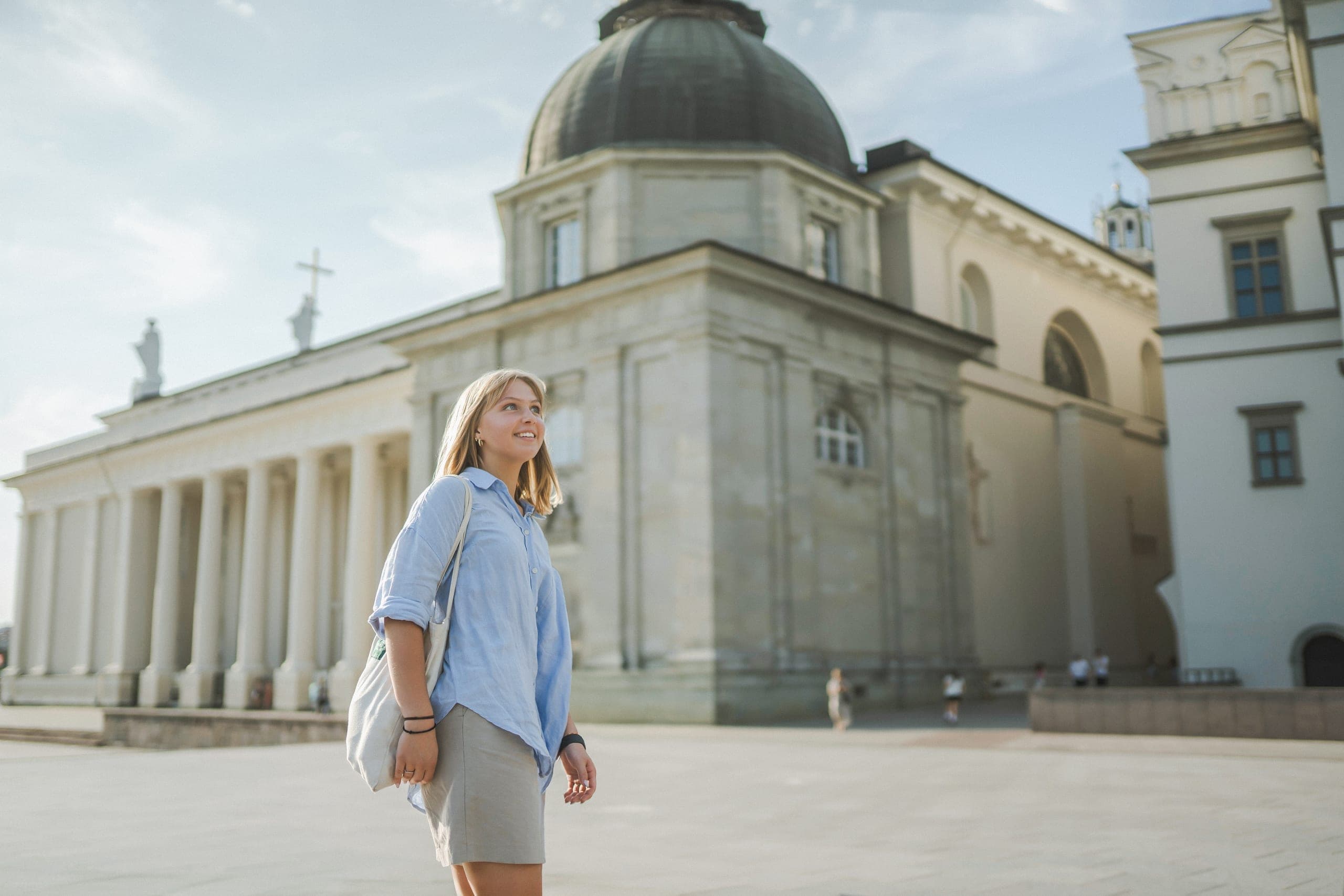
Vilnius is the largest surviving baroque old town north of the Alps, and the first thing to do with it is nothing in particular. Your guide-driver meets you inside the arrivals hall, takes the bags, and has you at the hotel in about twenty minutes. Check-in is held from early afternoon. What is left of the day is deliberately unplanned: the old town starts at the door and the best introduction to it is an aimless hour before dinner, when the light comes in low along Pilies Street and the courtyards open off it one after another. We book a welcome dinner within walking distance and your guide talks through the twelve days over it, so the plan is in your head rather than on your phone.
- Met inside the terminal
- Twenty minutes to the old town
- Welcome dinner nearby
The old town on foot
Three hours on foot through the old town with your guide: the cathedral and its bell tower, the university's chain of courtyards, the Gates of Dawn and Užupis over the river. The afternoon is free.
Den ganzen Tag lesen
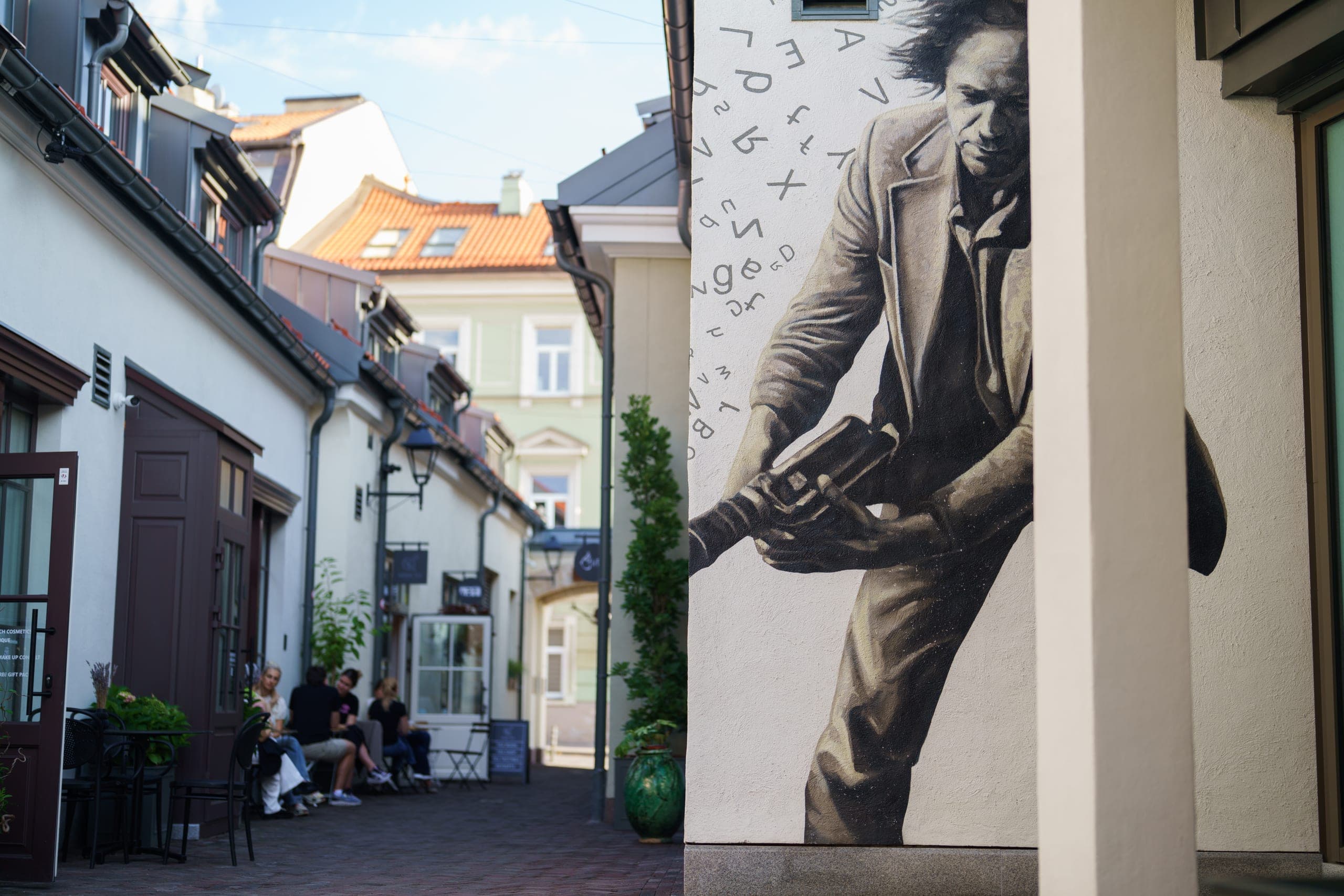
The morning is the proper introduction: about three hours walking, at a pace that allows for stopping. You start at Cathedral Square, go inside for the St Casimir chapel, and climb or skip the bell tower depending on how you feel about steps. From there into Vilnius University, founded in 1579, whose thirteen linked courtyards are the quietest place in the city centre on a weekday morning. Down Pilies Street to the Gates of Dawn, the last of the old city gates and still a working shrine, then across the Vilnia footbridge into Užupis, the district that declared itself a republic in 1997 and nailed its constitution to a wall in twenty-odd languages. Your guide leaves you there or walks you back, and the afternoon is yours.
- Cathedral and bell tower
- University courtyards
- Gates of Dawn and Užupis
The island castle and the first capital
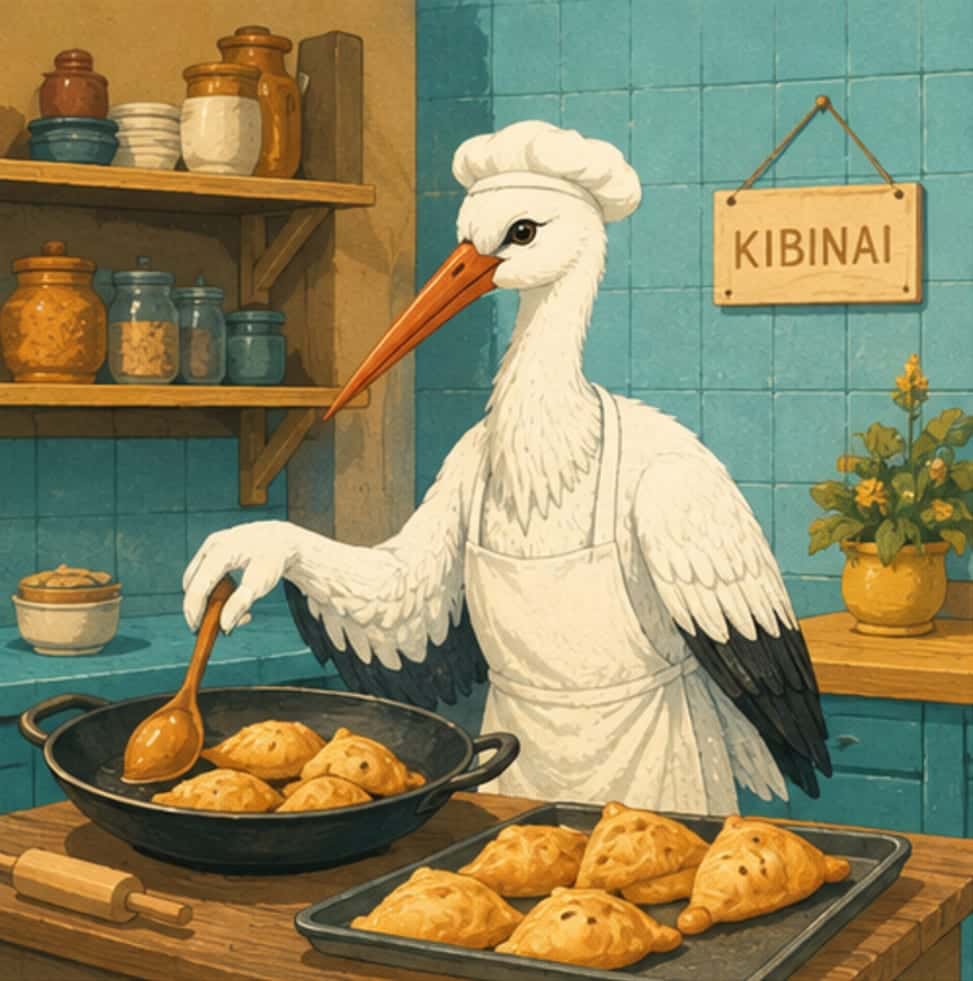
West to Trakai, where a red brick castle sits on its own island in Lake Galvė, and lunch on kibinai with the Karaim community. Then north to Kernavė, five hill forts above the Neris and the capital before Vilnius was.
Den ganzen Tag lesen
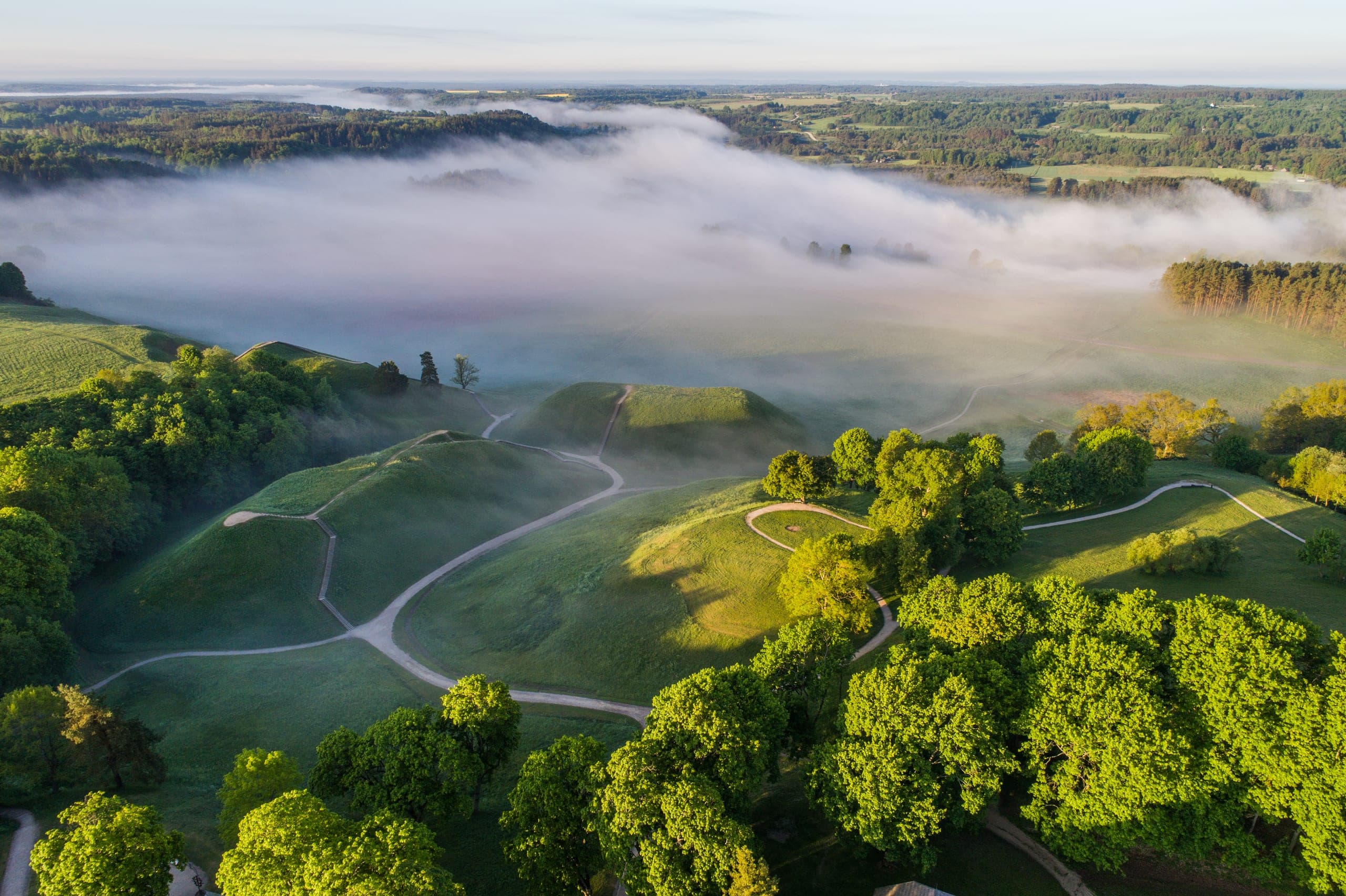
Trakai is half an hour from the city and looks exactly like the postcard, which is not usually a compliment but here it is: a fourteenth-century brick castle on an island, reached by a wooden footbridge, with the lake on every side. You go in and through the courtyards and the duke's chambers. Lunch is kibinai, the baked pastry the Karaim brought here from Crimea in the fourteenth century and have been making on the same street ever since. The afternoon goes north to Kernavė, which almost nobody visits: five grass hill forts stepped above the Neris river, the capital of the Grand Duchy before Vilnius took the title, and UNESCO-listed since 2004. There is nothing built there now, which is the point. You are back in Vilnius by early evening.
- Trakai island castle
- Karaim kibinai lunch
- Kernavė hill forts
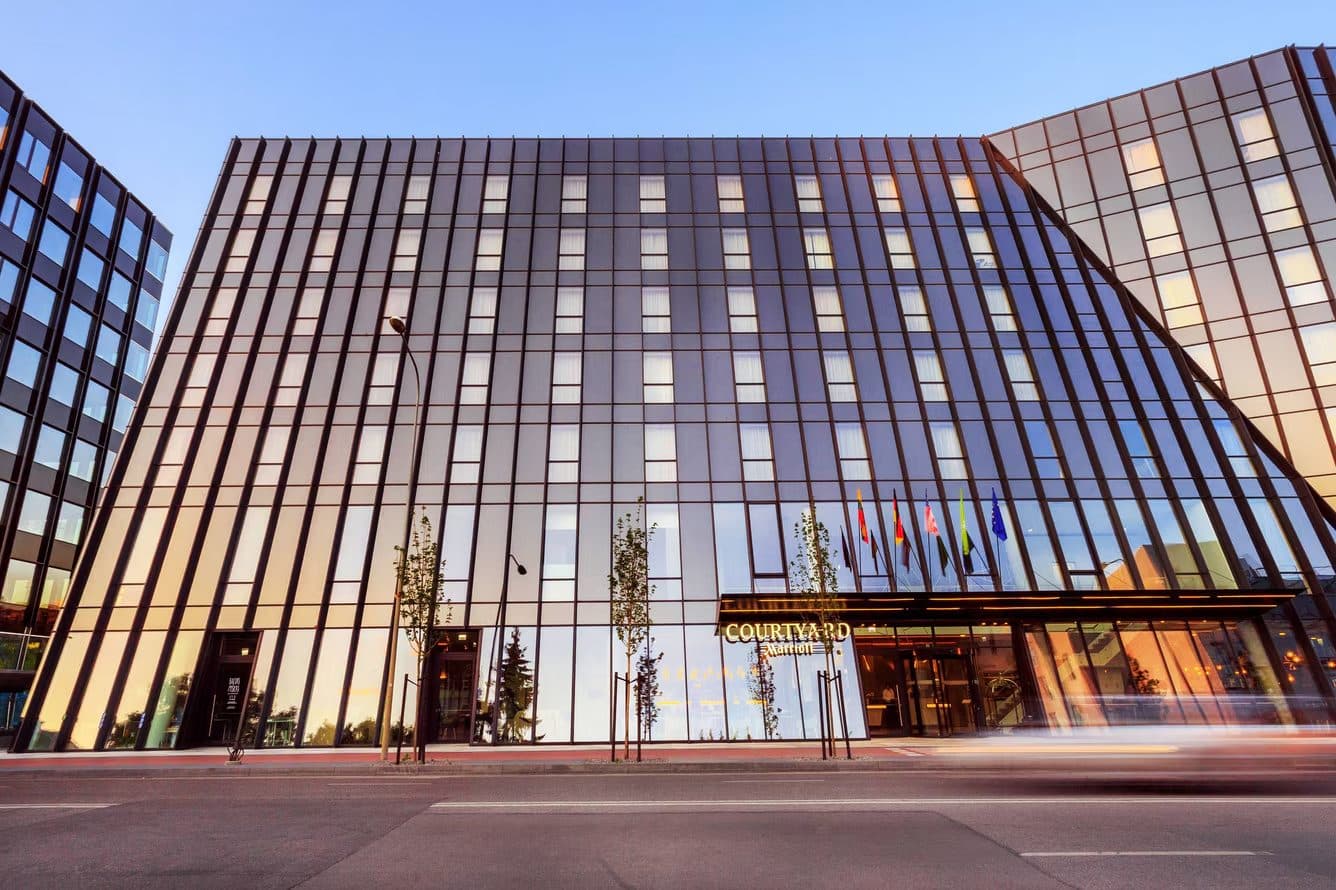
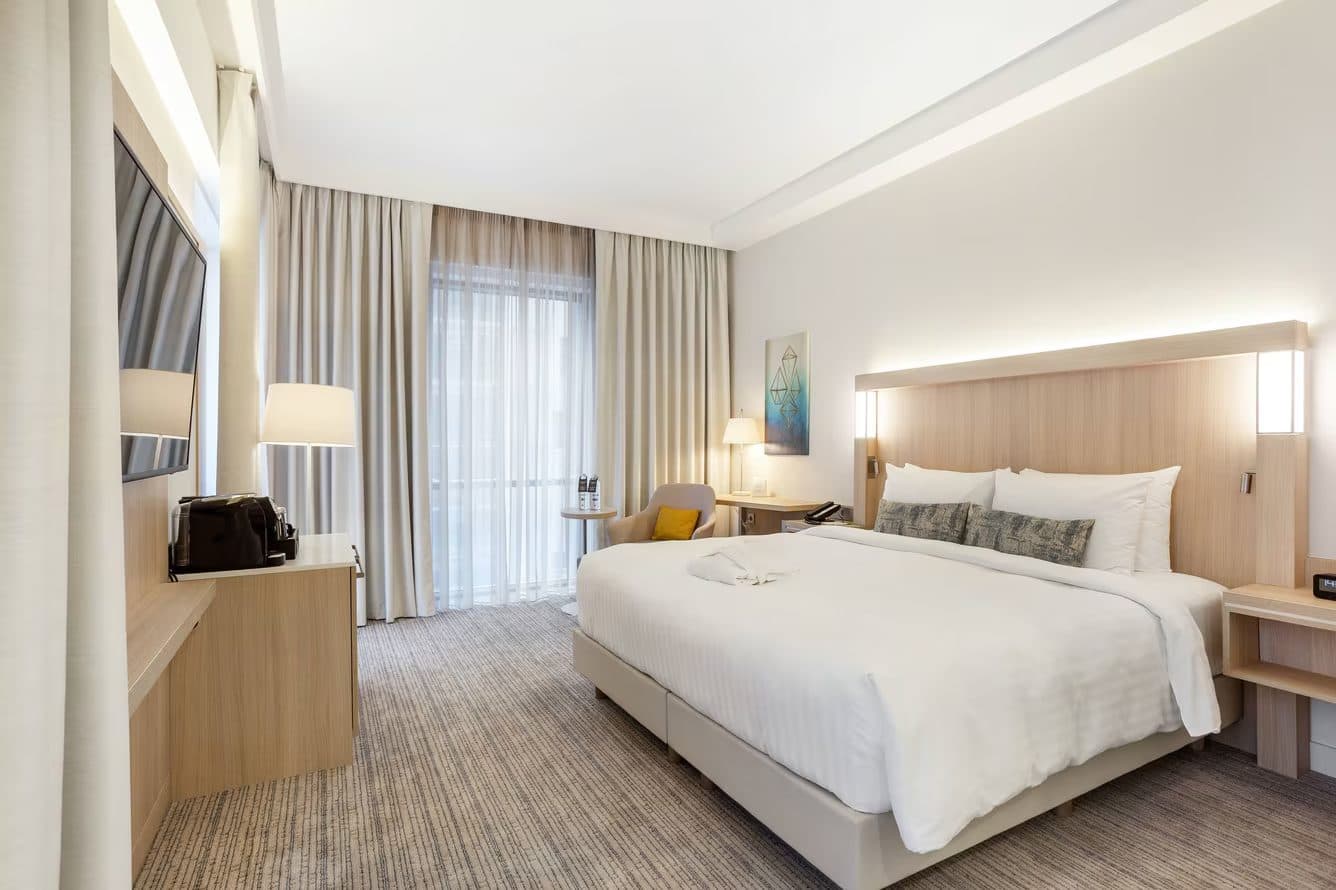
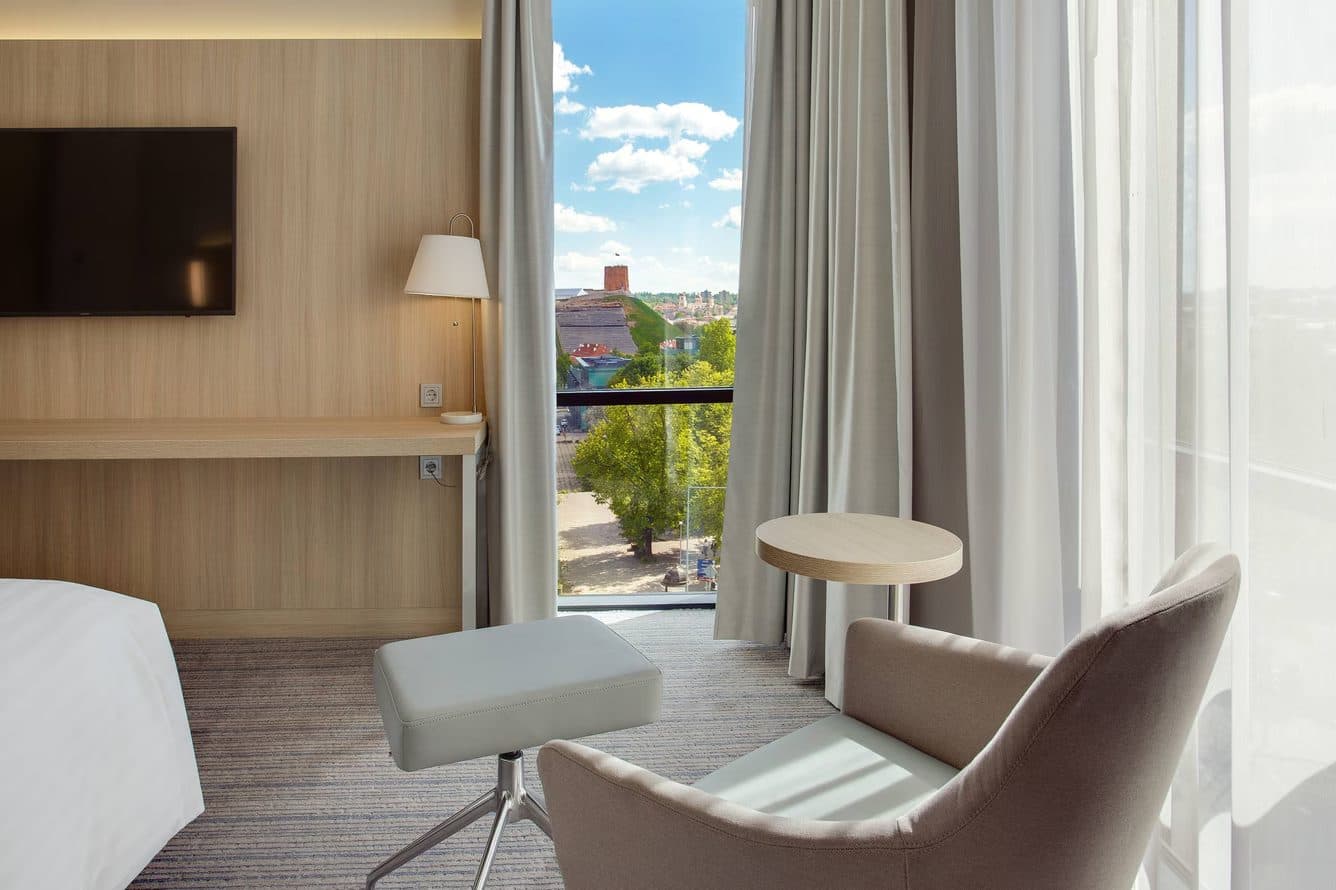
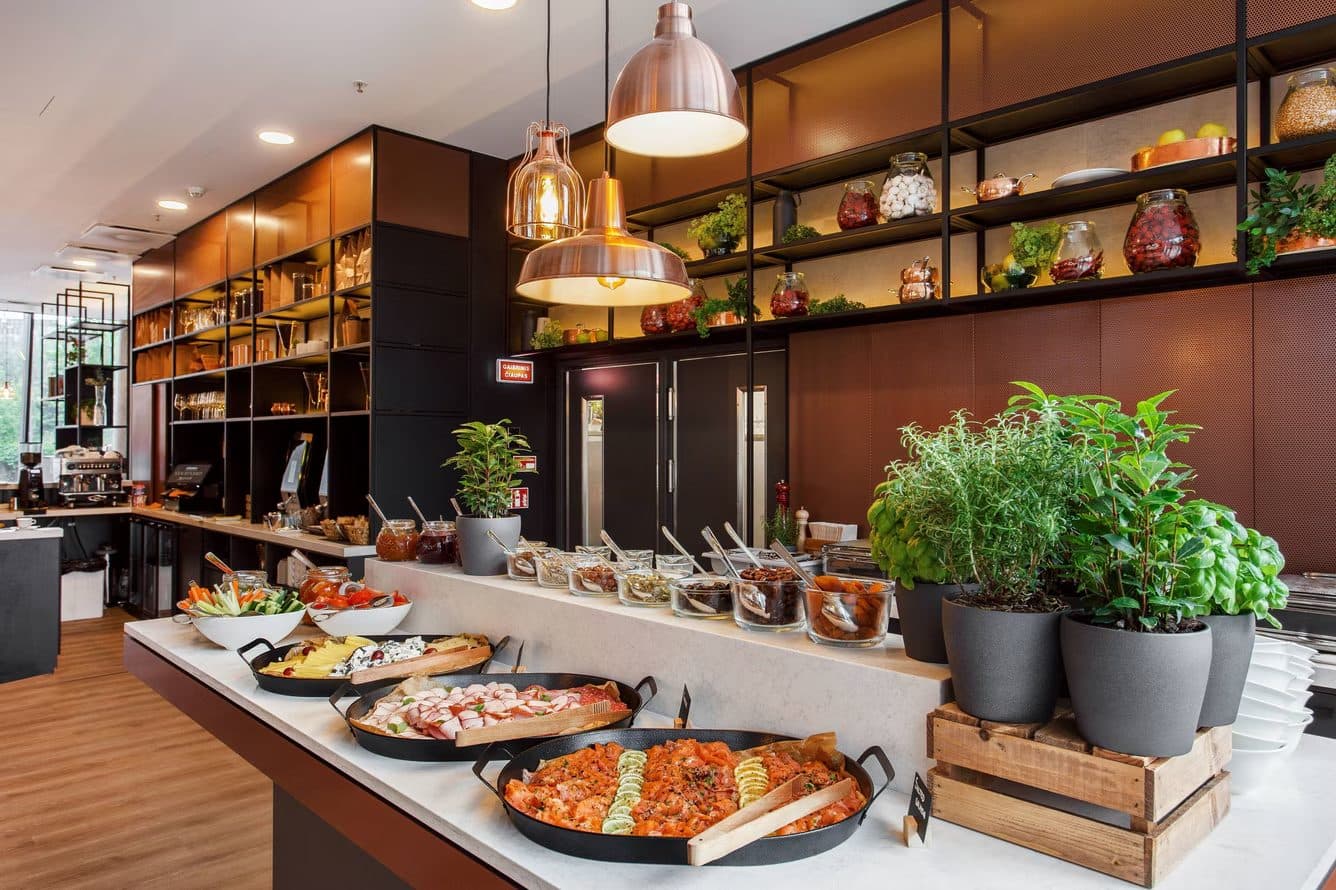
Courtyard by Marriott Vilnius City Center
Third and last night in Vilnius.
Bis zum Eingang Ihrer Anzahlung ist dieses Hotel optioniert, nicht gebucht. Ist es dann vergeben, ersetzen wir es durch ein gleichwertiges oder besseres und sagen Ihnen vorher Bescheid.
West to the coast
The drive west across Lithuania takes about three and a half hours. You arrive in Klaipėda in the early afternoon and walk the old town with your guide: the timbered German merchant houses, the theatre square and the Ännchen von Tharau fountain.
Den ganzen Tag lesen
Lithuania is flat and green and the drive west is an easy three and a half hours with one stop. Klaipėda at the end of it is a different country in every sense that matters: it was Memel until 1923, the northernmost city of East Prussia, and the old town is half-timbered and Germanic rather than baroque. You arrive early enough to walk it properly. Your guide takes you through the warehouse quarter along the Dane river, into Theatre Square for the Ännchen von Tharau fountain, and out to the point where the Curonian Lagoon meets the sea and the ferries cross to the spit. The evening is free, and the fish restaurants along the water are the reason to be here.
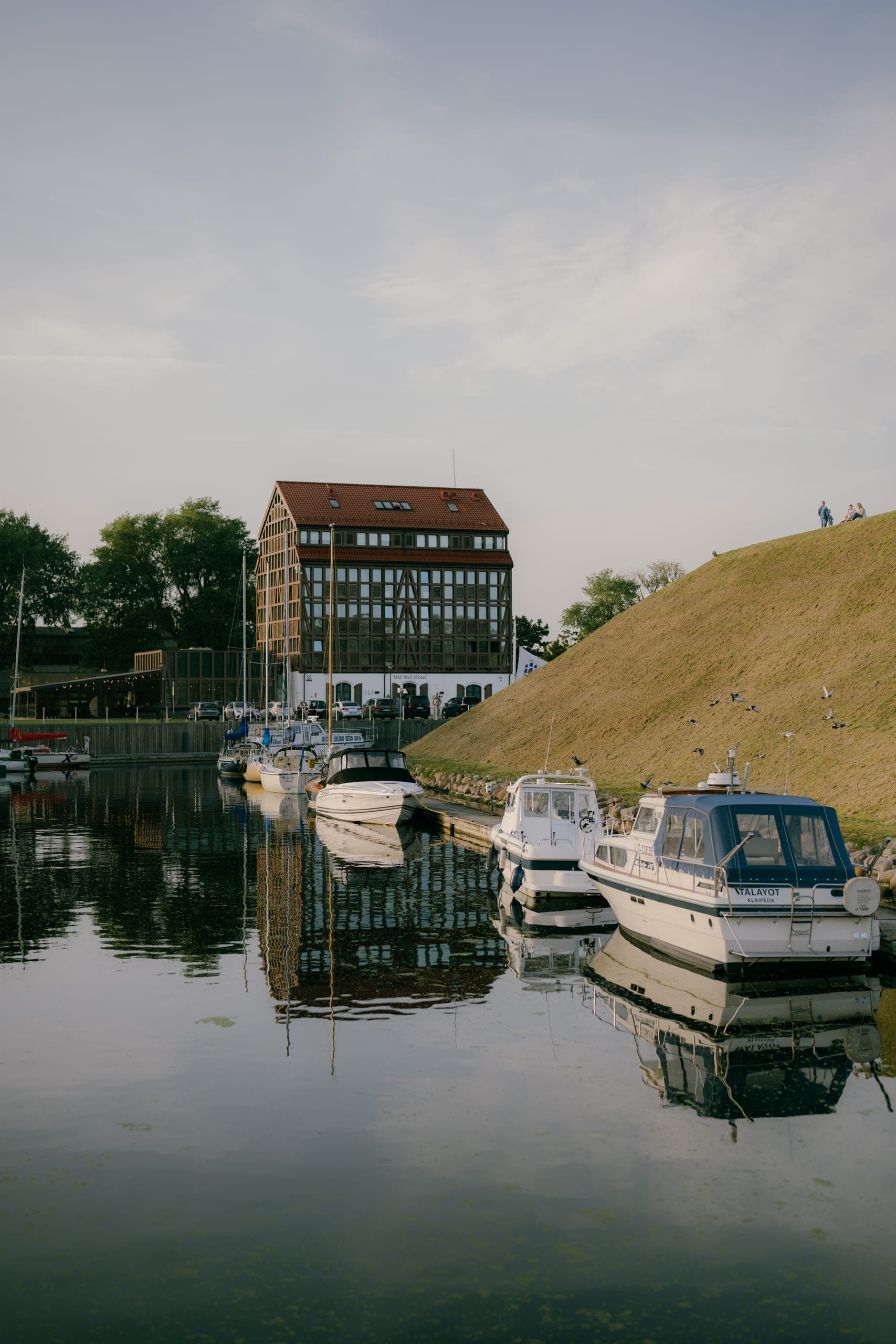
- Three and a half hours west
- Klaipėda old town on foot
- Lagoon and ferry point
A full day on the spit
The ferry crosses to the Curonian Spit and the day runs south to Nida: the Parnidis dune and its granite sundial, the Thomas Mann summer house, and the painted weathervanes of the old fishing villages.
Den ganzen Tag lesen
The Curonian Spit is a ninety-eight kilometre sandbar between the lagoon and the open Baltic, half Lithuanian and half Russian, forested and shifting and UNESCO-listed. The ferry from Klaipėda takes a few minutes and then the road runs south through pine. You stop at the Hill of Witches, a wooded sculpture trail carved by Lithuanian artists since the 1970s, and at Juodkrantė for the cormorant and heron colony. Nida is the far end: a village of blue and brown fishermen's cottages with carved weathervanes, the Parnidis dune above it with a granite sundial on top and a view over sand into Russia, and the modest house where Thomas Mann spent three summers writing. Time on the beach on the sea side if the weather is doing its job. Back in Klaipėda for dinner.
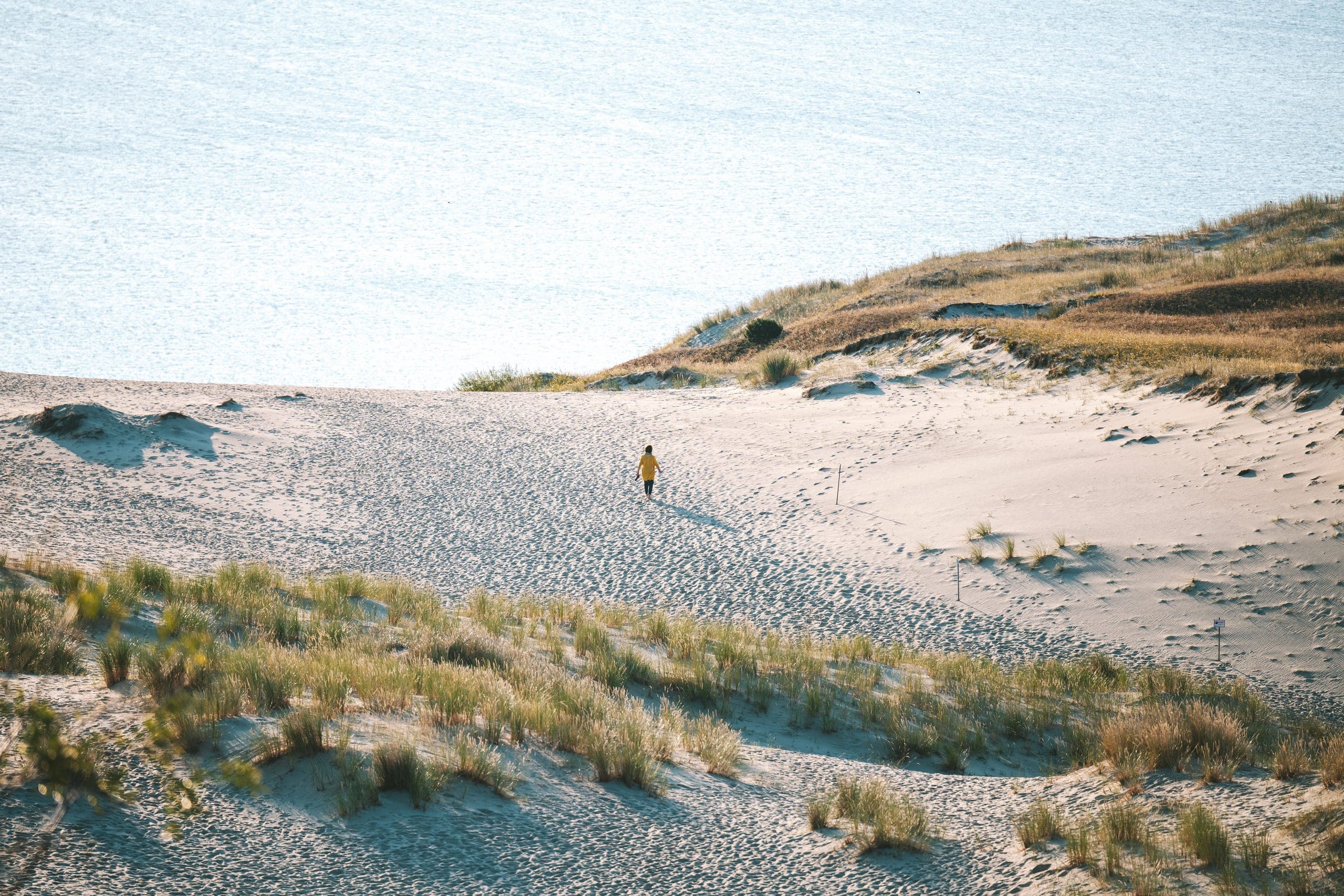
- Parnidis dune and sundial
- Thomas Mann house
- Hill of Witches and Juodkrantė
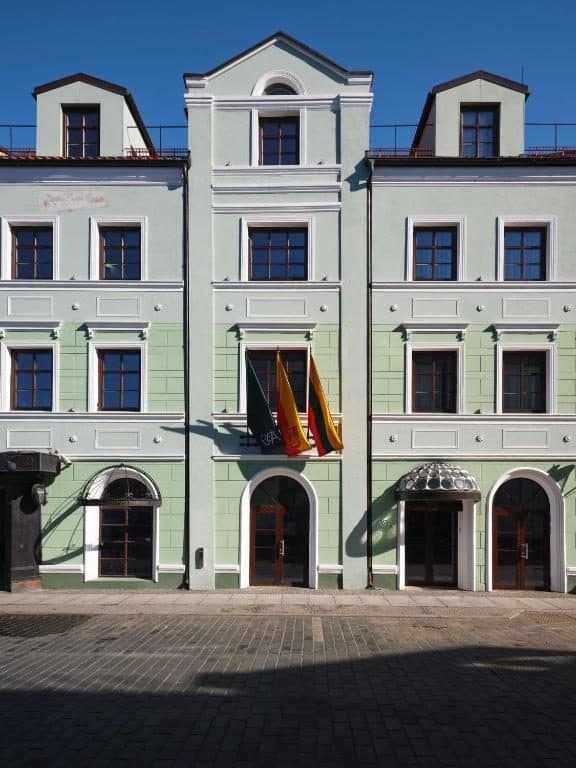
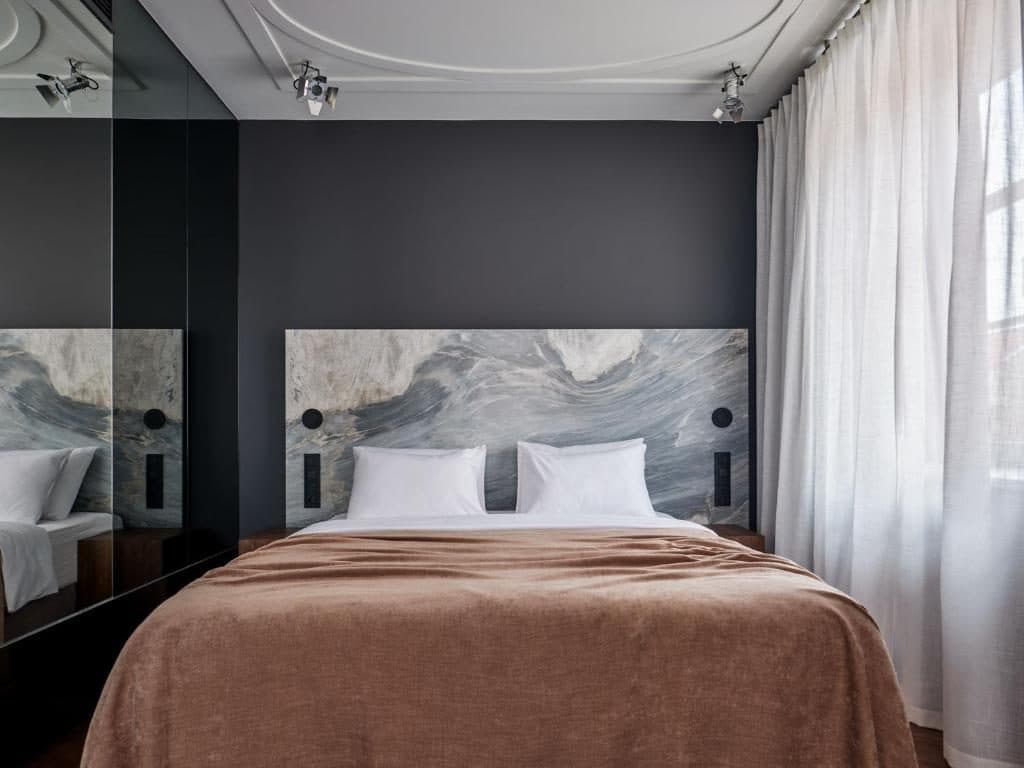
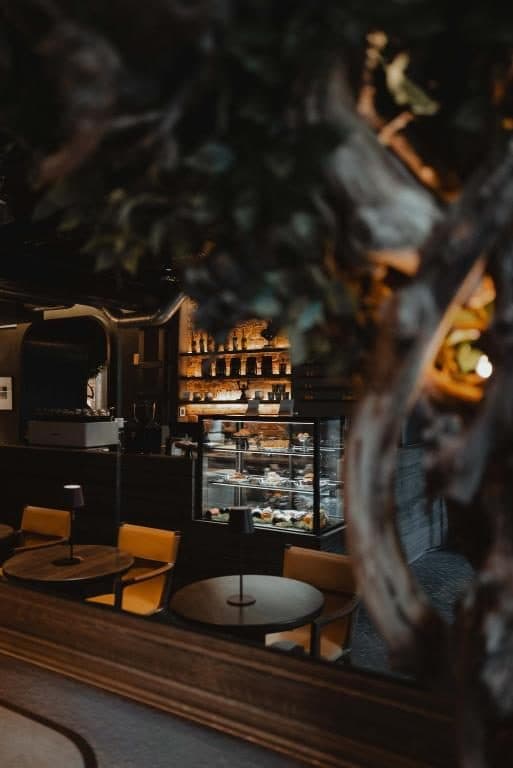
Hotel Rėja
Second night in Klaipėda.
Bis zum Eingang Ihrer Anzahlung ist dieses Hotel optioniert, nicht gebucht. Ist es dann vergeben, ersetzen wir es durch ein gleichwertiges oder besseres und sagen Ihnen vorher Bescheid.
The Hill of Crosses and a palace
The drive north to Latvia is the day itself. You stop at the Hill of Crosses, where more than two hundred thousand crosses stand on one small mound, and at Rundāle, the baroque palace Rastrelli built before he went to St Petersburg.
Den ganzen Tag lesen
This is six hours door to door and almost none of it is spent in the car for its own sake. The Hill of Crosses comes first, an hour and a half north of Klaipėda: a low mound outside Šiauliai carrying more than two hundred thousand crosses, left by pilgrims since the 1830s, bulldozed three times by the Soviet authorities and rebuilt each time within weeks. It is quieter than the photographs suggest and worth a slow half hour. Then across the Latvian border to Rundāle, built in the 1730s by Bartolomeo Rastrelli for the Duke of Courland before the same architect went north to build the Winter Palace. The gilded hall and the restored formal gardens take a couple of hours. You are in Riga by early evening, checked in on a quiet old-town street with the night free.
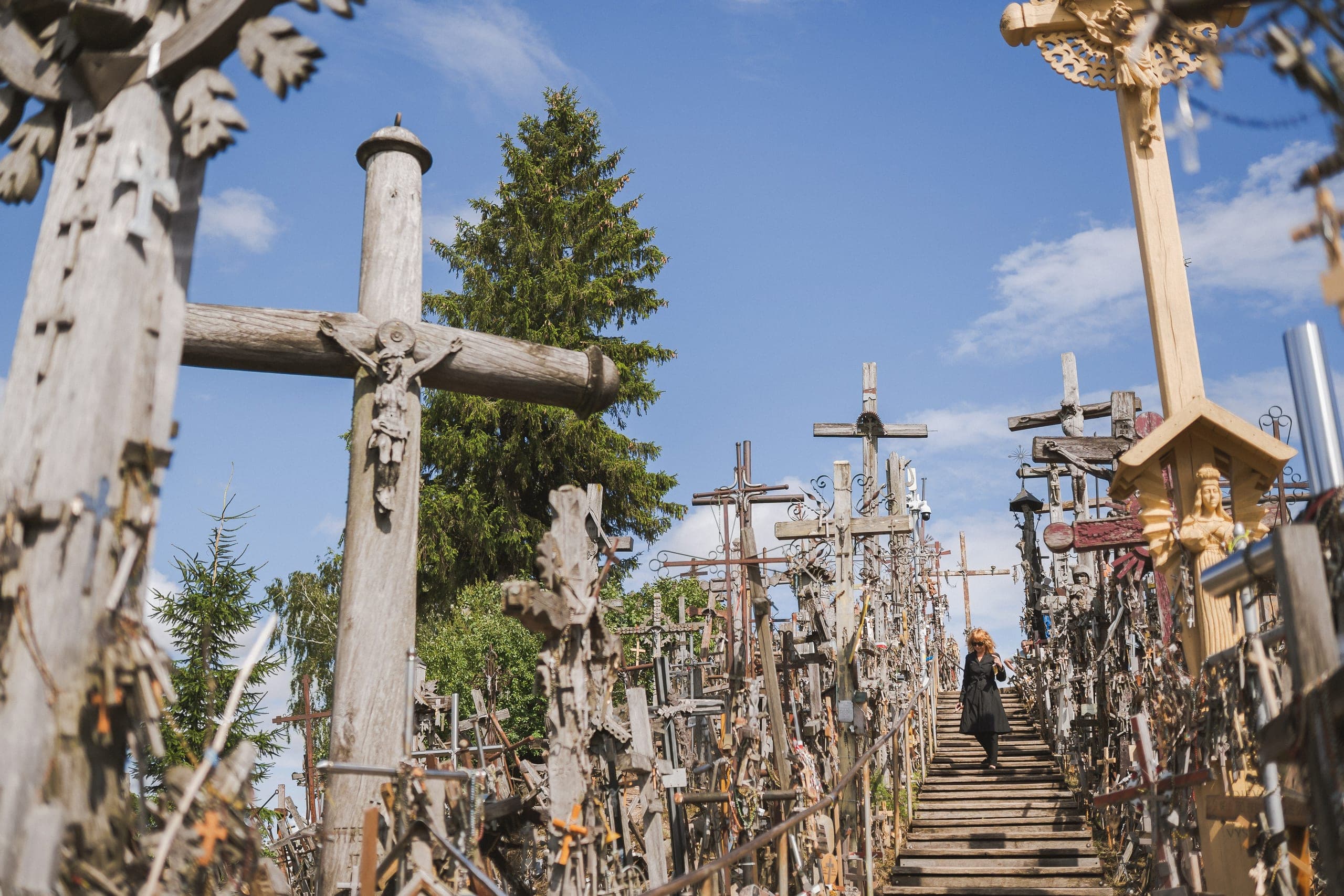
- Hill of Crosses
- Rundāle Palace and gardens
- Into Riga for the evening
Riga on foot
Three hours through the old town with your guide: the Dome Cathedral, St Peter's and the view from its spire, the House of the Blackheads and the guild houses, then out to Alberta Street for the Art Nouveau.
Den ganzen Tag lesen
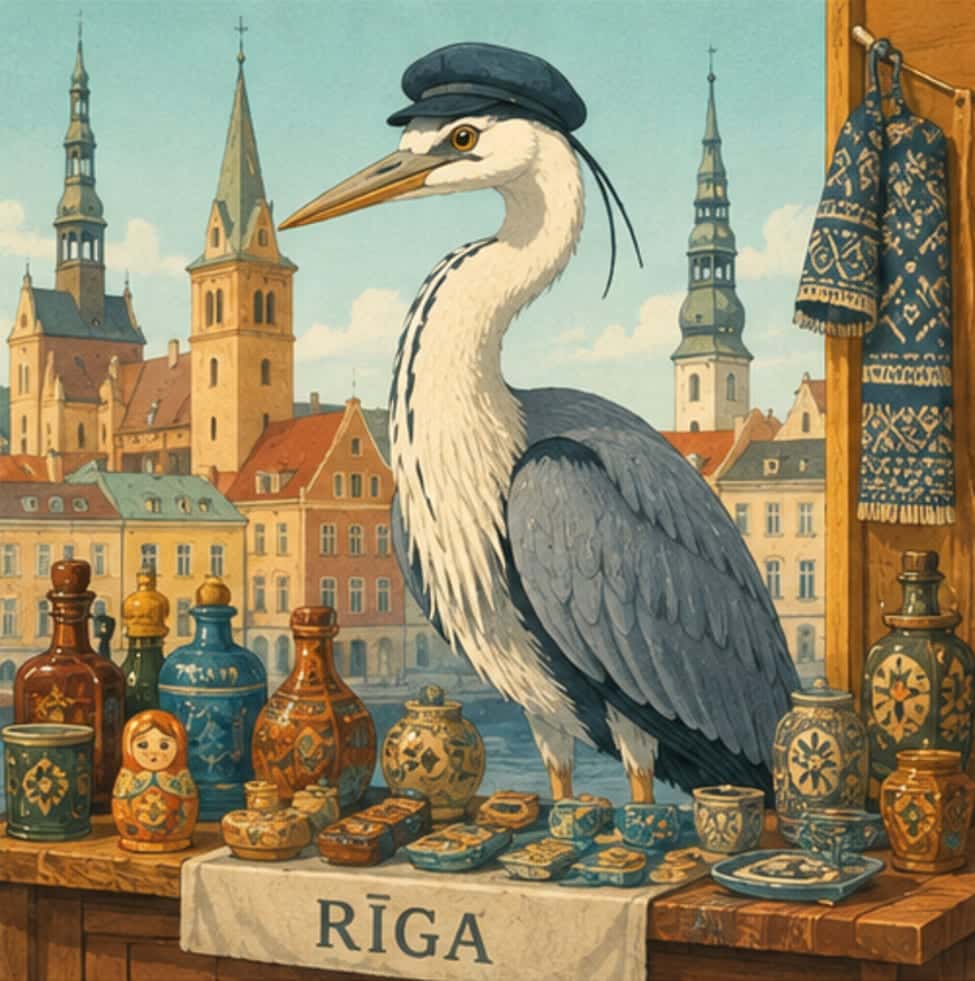
Riga is the biggest of the three capitals and the old town is compact enough to cross in fifteen minutes, which is misleading, because the detail is the point. You start at the Dome Cathedral, begun in 1211 and holding an organ that was the largest in the world when it was built. St Peter's next, and up the spire for the one view that makes sense of the layout: the old town below, the Daugava wide and grey, the Central Market pavilions beyond it. The House of the Blackheads and the guild houses on the square, then the walk out of the old town into the quiet embassy streets around Alberta iela, where Mikhail Eisenstein covered whole facades in faces and peacocks and screaming masks between 1901 and 1908. Riga has the densest concentration of Art Nouveau of any city in Europe and this street is where it stops being a statistic.
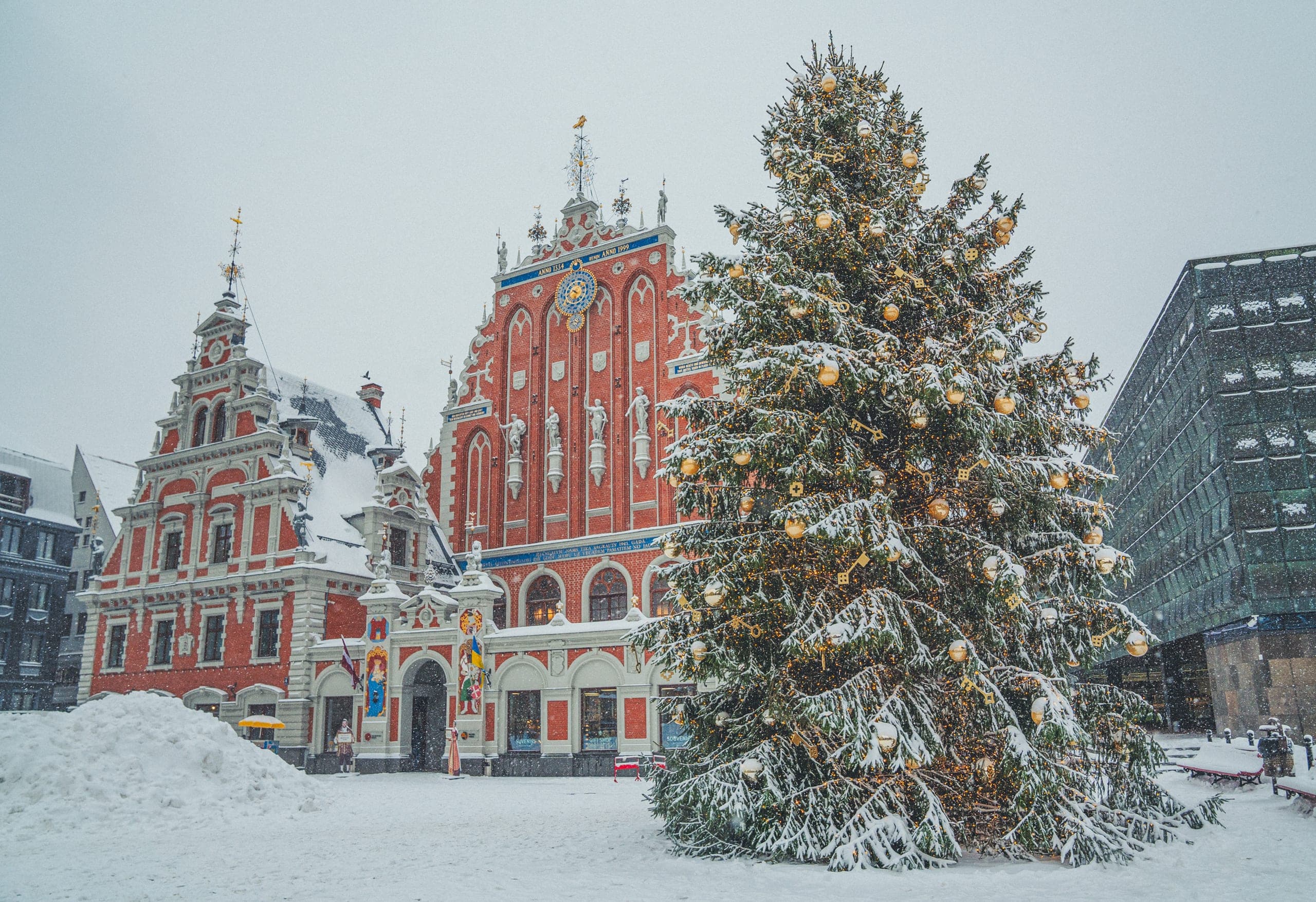
- Dome Cathedral
- St Peter's spire view
- Alberta iela Art Nouveau
A day in the Gauja valley
An hour north-east of Riga the land finally does something. The Gauja has cut a red sandstone valley through the forest, and the day takes in Turaida castle, the Gūtmaņa cave and the ruins above Sigulda before returning to Riga for the evening.
Den ganzen Tag lesen
Latvia is flat until the Gauja, which has spent ten thousand years cutting a wooded valley through soft red sandstone and is the closest thing the Baltics have to hill country. Turaida is the set piece: a red brick castle begun in 1214, rebuilt and climbable, with the whole valley laid out from the top of the tower. Below it is the Gūtmaņa cave, the largest in the Baltics, its walls carved with names and coats of arms going back to the seventeenth century, and the grave of the Rose of Turaida, who according to the story died in 1620 rather than be taken by a soldier. Across the river are the ruins of Sigulda castle, and a cable car over the valley if you would rather have the view without the walk. You are back in Riga in time for dinner, in the same room you left this morning.
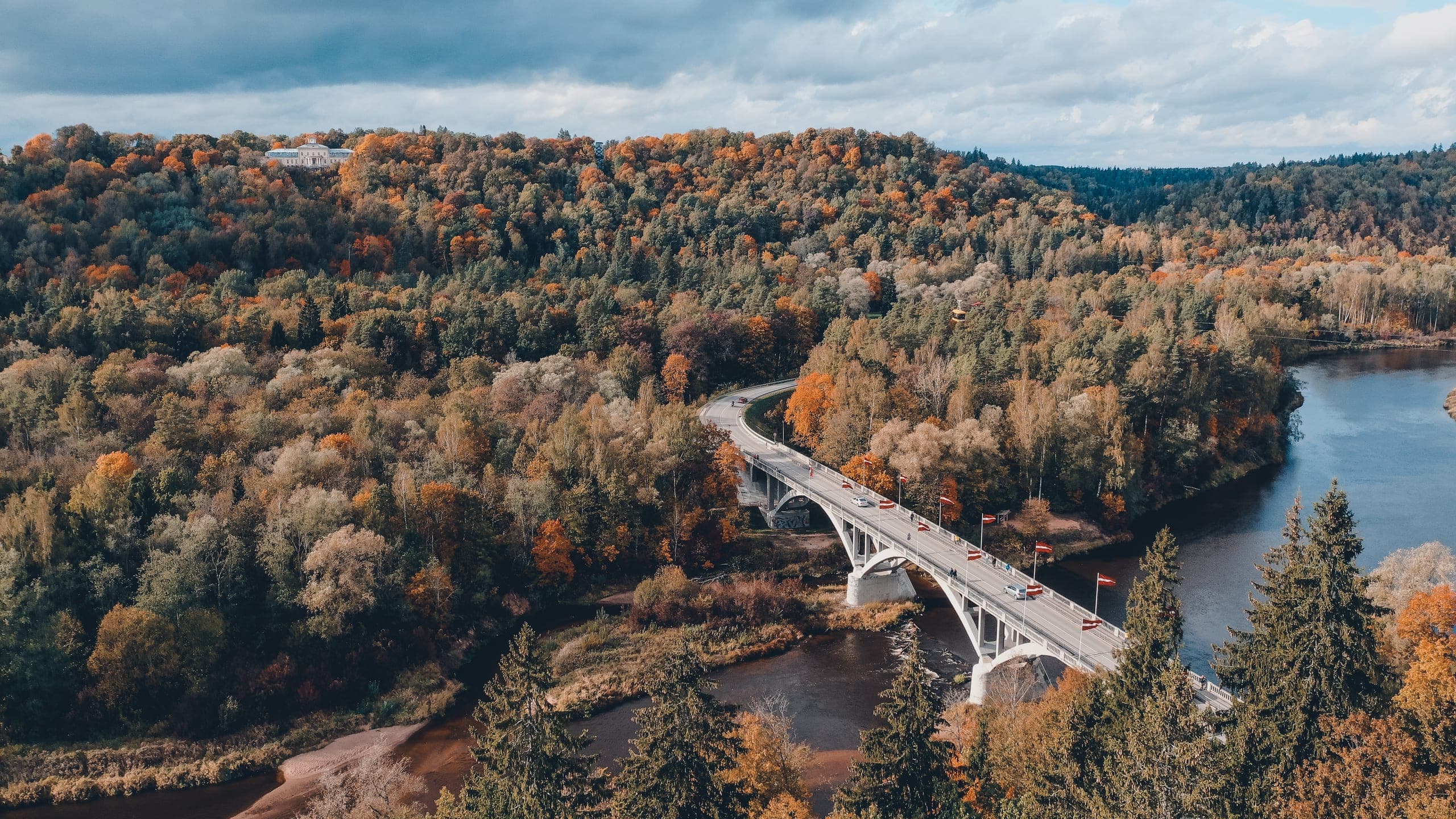
- Turaida castle tower
- Gūtmaņa cave carvings
- Sigulda ruins and cable car
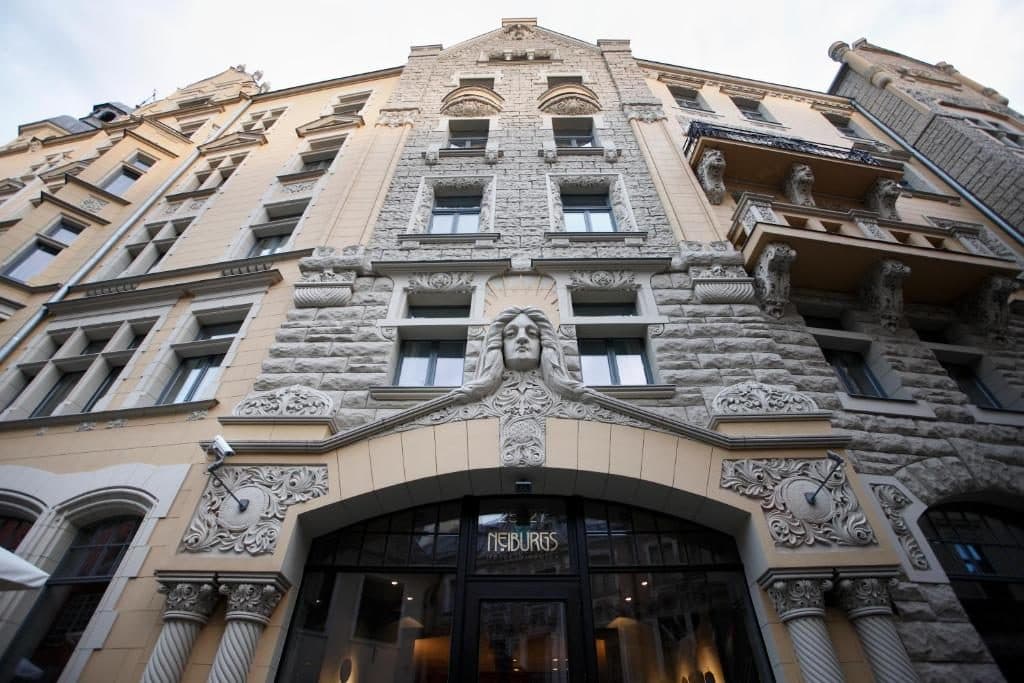
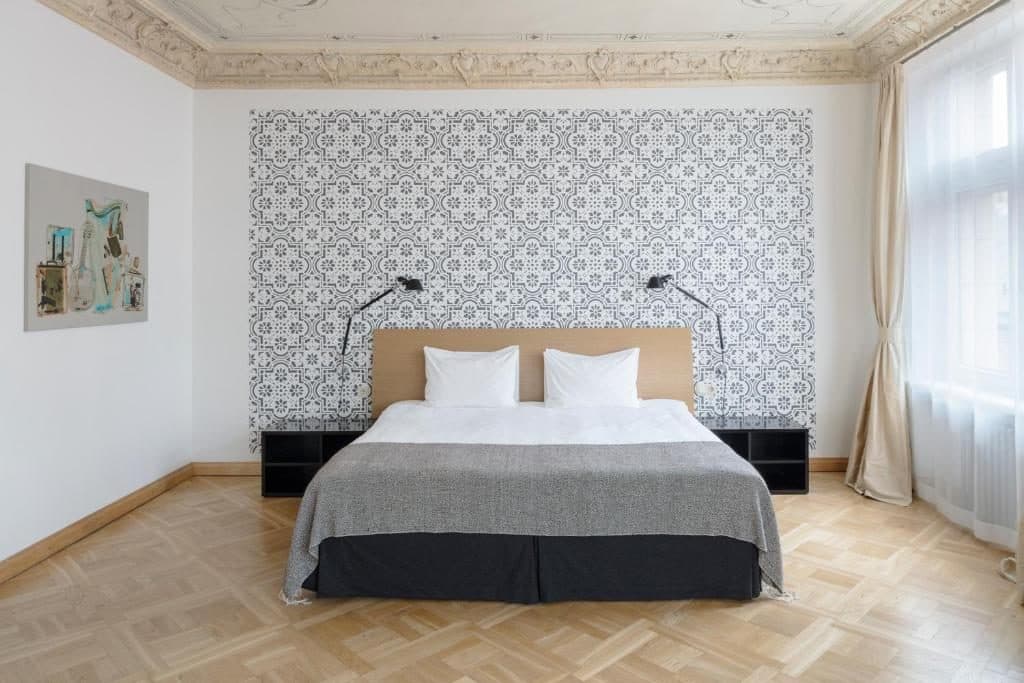
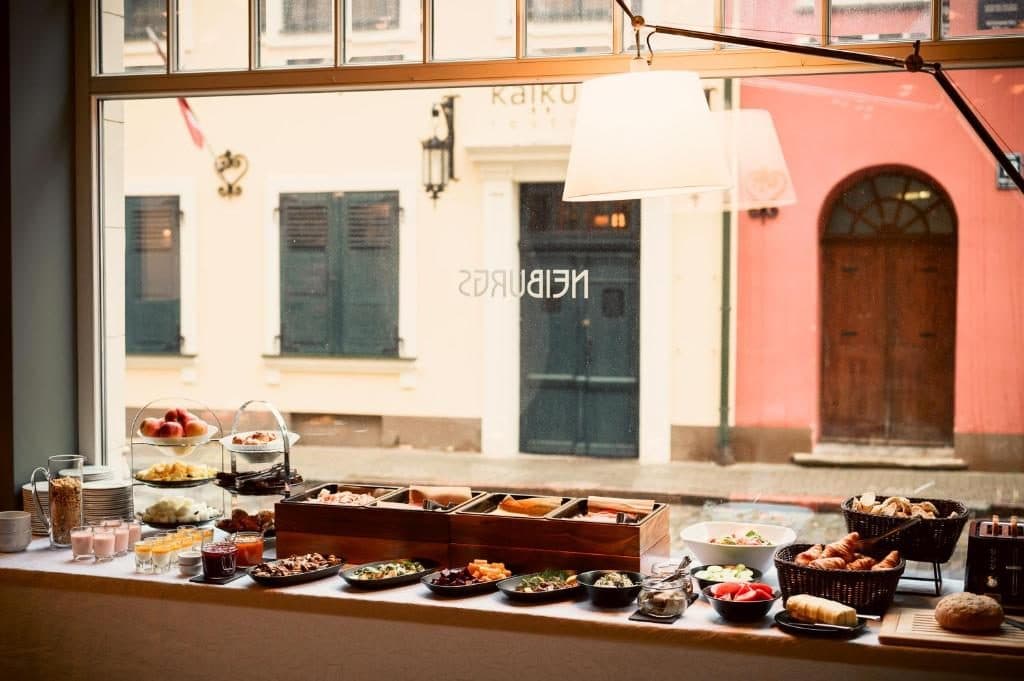
Neiburgs Hotel
Third and last night in Riga.
Bis zum Eingang Ihrer Anzahlung ist dieses Hotel optioniert, nicht gebucht. Ist es dann vergeben, ersetzen wir es durch ein gleichwertiges oder besseres und sagen Ihnen vorher Bescheid.
North to Estonia
About four and a half hours north across the Estonian border, with a stop on the way. You arrive in Tallinn in the afternoon, and the medieval old town starts at the hotel door.
Den ganzen Tag lesen
The drive north crosses into Estonia about two hours in, and the landscape changes with it: more bog, more pine, fewer farms. You stop on the way, either at Pärnu for lunch on the promenade if the weather is good or at the Lahemaa forest edge if it is not, and reach Tallinn in the afternoon. Tallinn's old town is the best preserved in northern Europe and one of the few that never had to be rebuilt after the war: two kilometres of city wall, twenty surviving towers, and a merchants' lower town beneath a fortified upper town on the limestone hill. You check in inside the walls with the evening free, and the walk up to the Toompea platforms at dusk is the right first move.
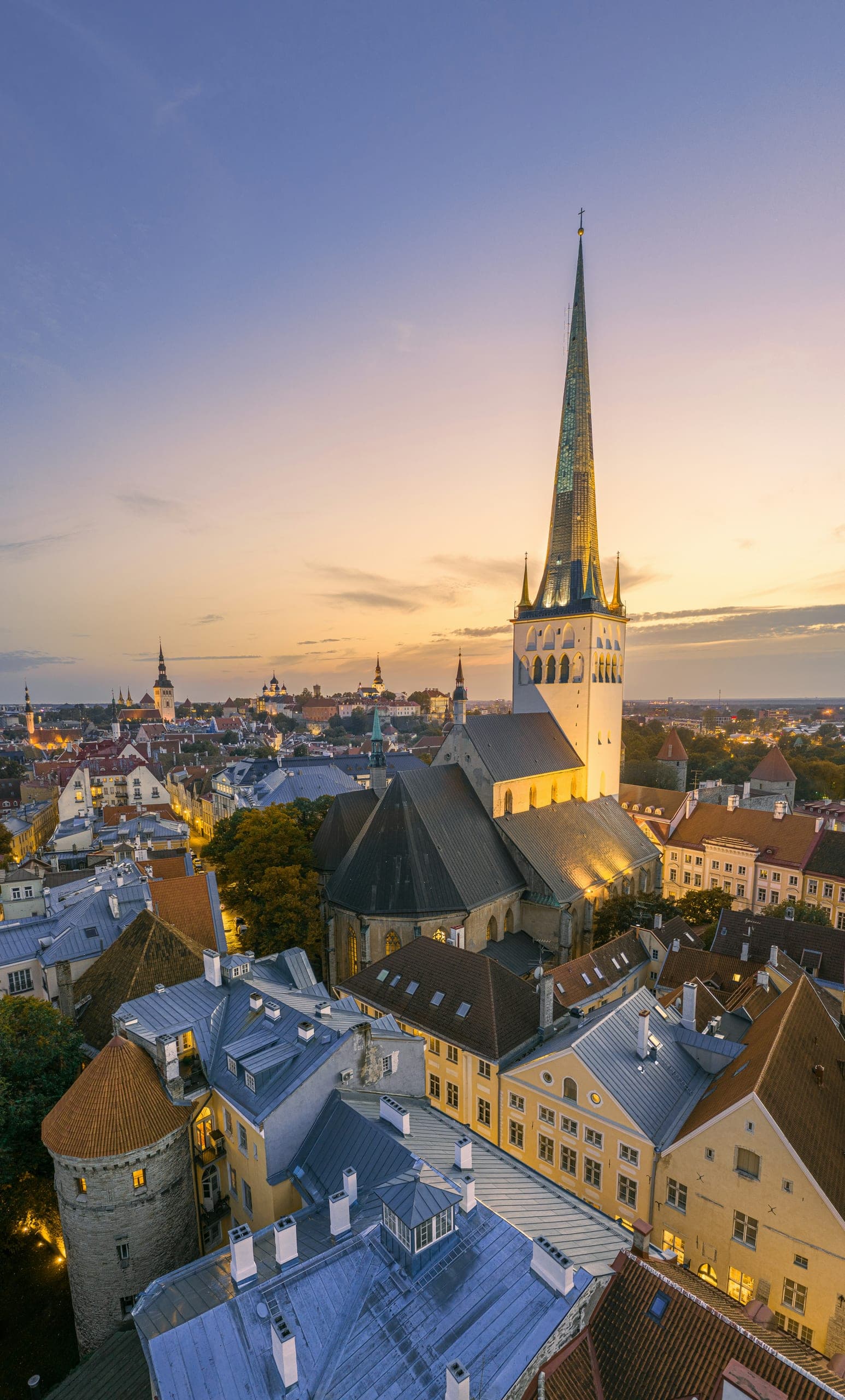
- Border into Estonia
- Stop at Pärnu or Lahemaa
- First evening inside the walls
The walled city
Three hours on foot with your guide: the upper town and its viewing platforms, the Alexander Nevsky cathedral, the town hall square and the guild halls, and a stretch of the city wall between the towers.
Den ganzen Tag lesen
Tallinn splits in two and the walk follows the split. Toompea, the upper town on the limestone outcrop, was where the bishops and the nobility lived and looked down: the Alexander Nevsky cathedral, onion-domed and Russian and deliberately provocative when it went up in 1900, faces the parliament across the square, and the Kohtuotsa and Patkuli platforms give the red-roof view that ends up on every cover. Down the Long Leg passage into the lower town, where the merchants lived: Raekoja plats and its 1404 town hall, the Great Guild, the clock on the Holy Spirit church. You walk a section of the wall itself between the towers. Your guide leaves you in the square and the rest of the day is yours.
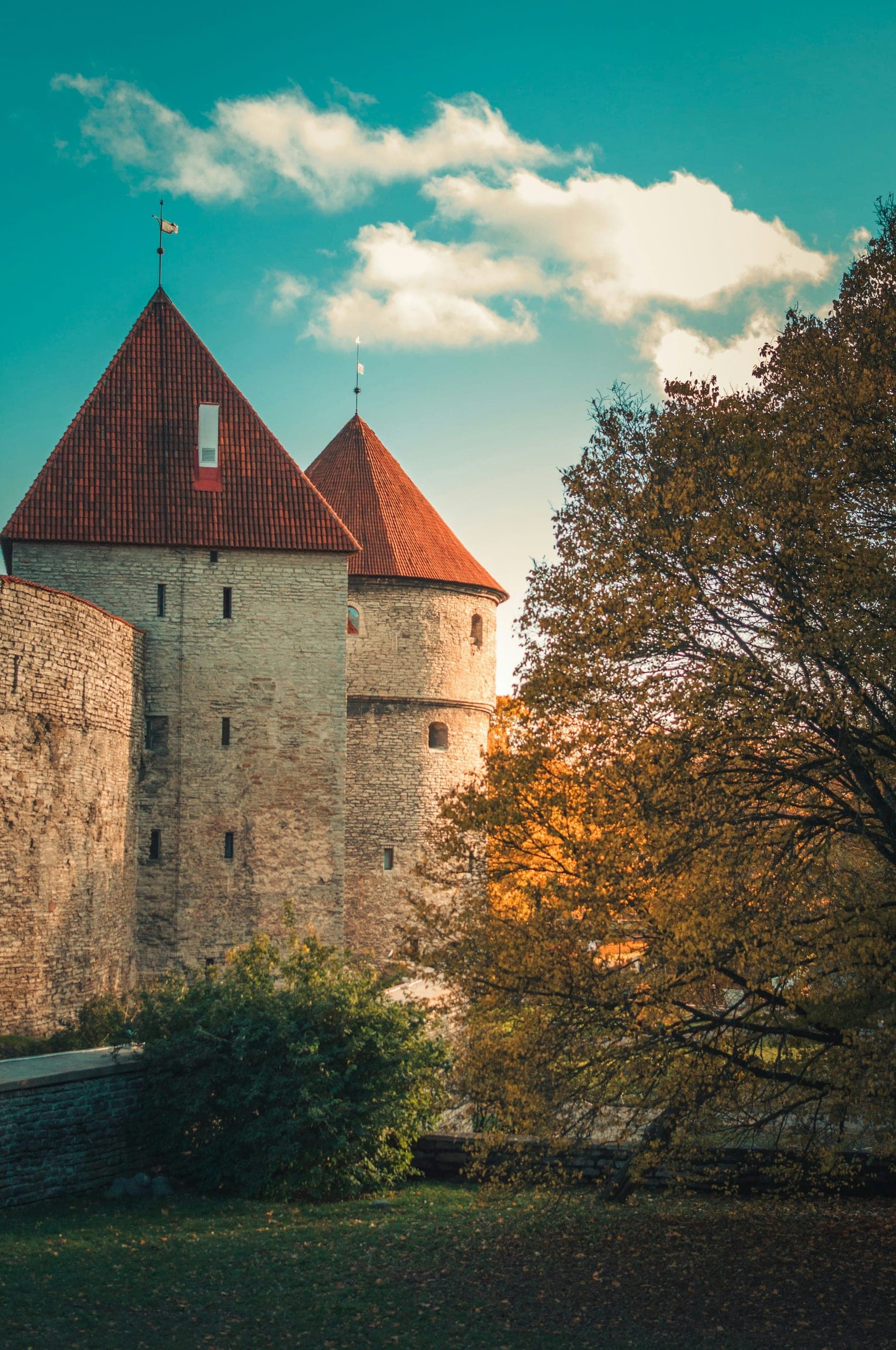
- Toompea and the viewing platforms
- Town hall square and guild halls
- A section of the city wall
A day of your own
Nothing is scheduled. Kalamaja and the Telliskivi yards are the obvious morning, the seaplane hangars the obvious afternoon, and the Lahemaa bogs are an hour away if you would rather have forest.
Den ganzen Tag lesen
Eleven days in, a free day is worth more than another guided one. Kalamaja, just beyond the station, is the wooden-house district where Tallinn actually lives: painted timber houses from the 1920s, the Telliskivi creative yards in the old rail works, and the Balti Jaam market at the edge of it. The Seaplane Harbour is fifteen minutes further, a 1917 hangar holding a whole submarine and an icebreaker moored outside, and is the best museum in the Baltics by some distance. If you would rather leave the city, Lahemaa national park is an hour east and its bog boardwalks are at their best in late May. Your guide-driver is available if you want him, and stays out of the way if you do not.
- Kalamaja and Telliskivi
- Seaplane Harbour hangars
- Optional Lahemaa bog walk
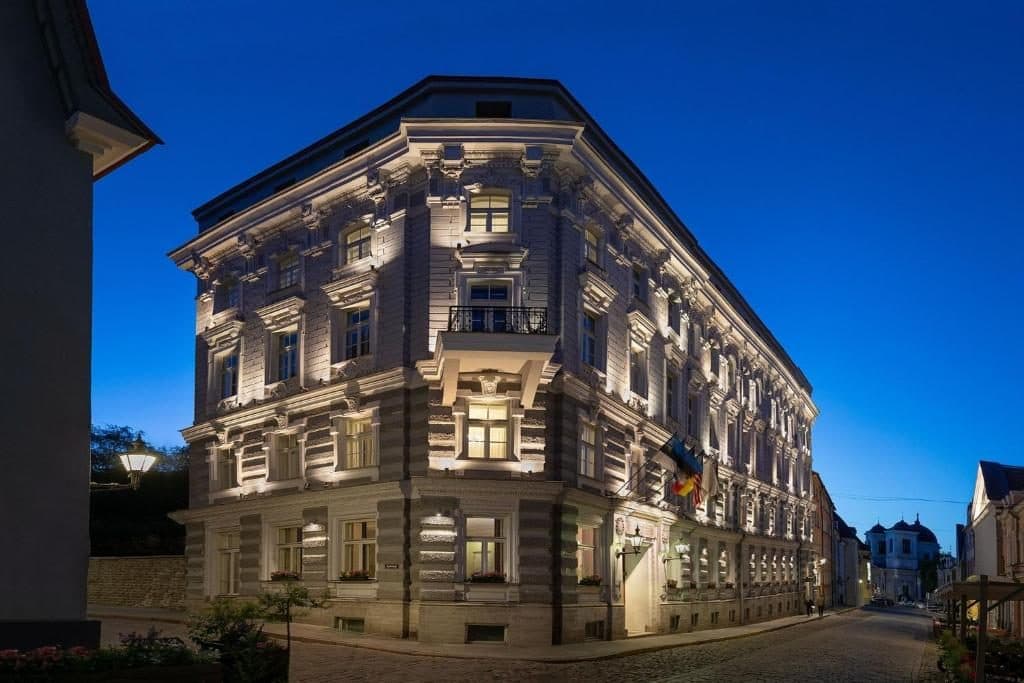
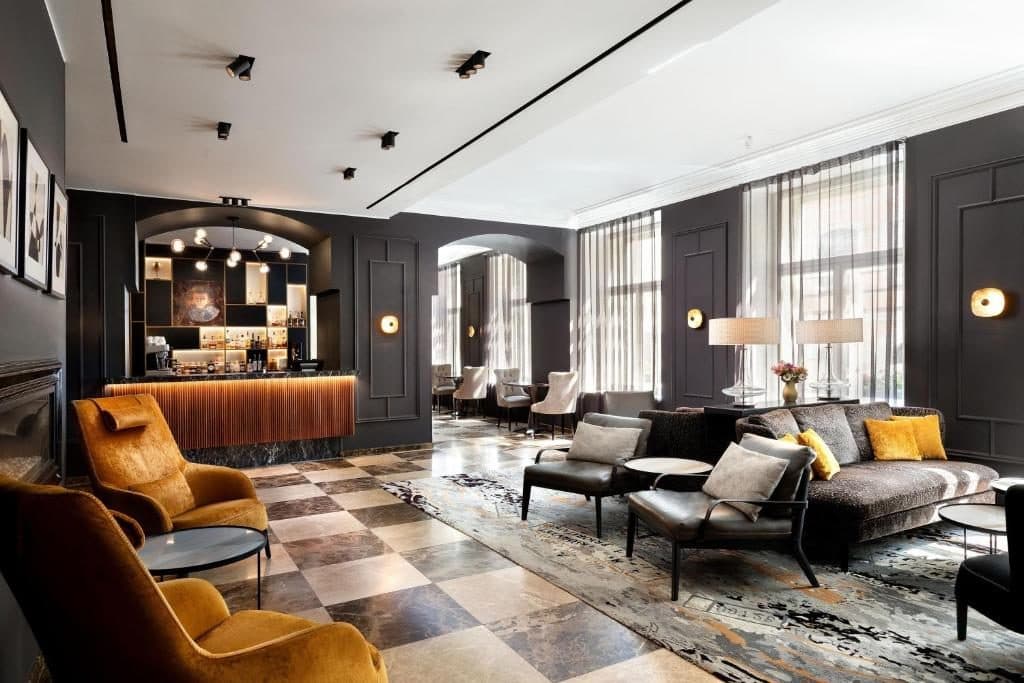
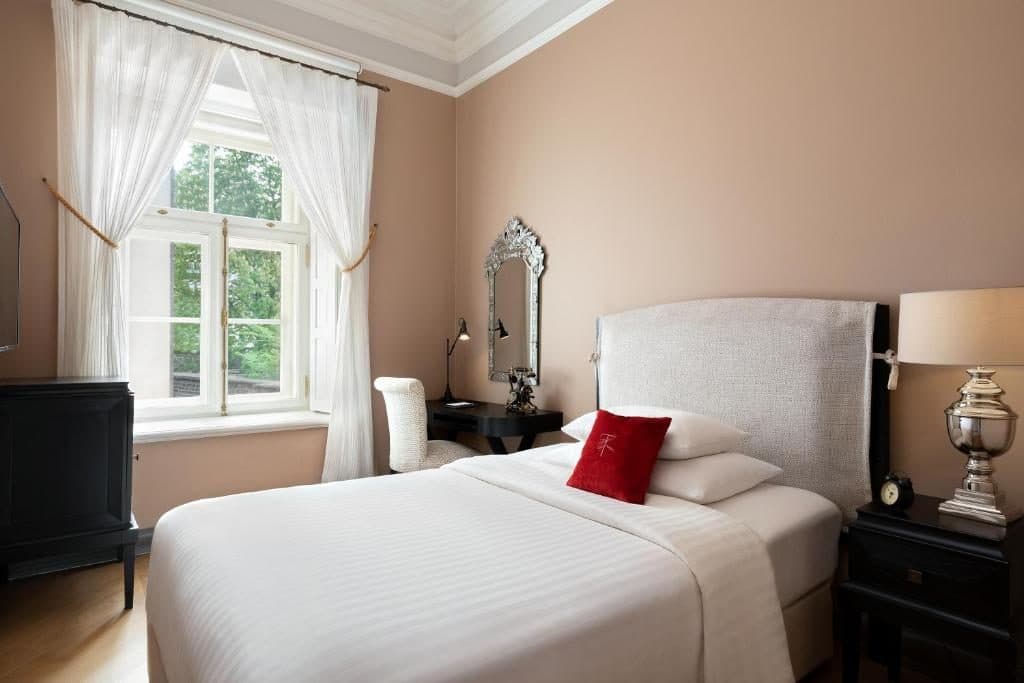
Hotel Telegraaf, Autograph Collection
Last night of the trip.
Bis zum Eingang Ihrer Anzahlung ist dieses Hotel optioniert, nicht gebucht. Ist es dann vergeben, ersetzen wir es durch ein gleichwertiges oder besseres und sagen Ihnen vorher Bescheid.
The last morning
Breakfast at your own pace and time in the old town if the flight is late. Your guide-driver takes you to Tallinn airport, which is fifteen minutes from the walls.
Den ganzen Tag lesen
Tallinn airport is unusually close to the city, about fifteen minutes from the old town gates, which means the last morning does not have to be a scramble. Breakfast is unhurried and bags can stay at the hotel while you walk. If there is time, the market at Balti Jaam or a last coffee on Raekoja plats is the right way to finish. Your guide-driver collects you with enough margin for the flight and sees you into the terminal, twelve days and three countries after he met you at the other end of the Baltics.
- Unhurried last morning
- Bags held at the hotel
- Fifteen minutes to TLL
Ihr Angebot anfordern.
Nennen Sie uns Ihre Termine und Gruppengröße. Wir melden uns innerhalb eines Werktags, eine private, vollständig kalkulierte Version von Baltic Discovery folgt innerhalb von zwei.
innerhalb von zwei Werktagen
Preise in USD zur Orientierung. Abgerechnet wird in EUR.
- Private Reise: nur Ihre Gruppe, Ihr Tempo
- Flexible Termine, Abfahrten ganzjährig
- Für die Anfrage wird nichts berechnet
- Eine Anzahlung von $1,075 p. P. sichert Ihre Termine
- Geschützt durch die EU-Pauschalreiserichtlinie
Preis nach Gruppengröße.
- Pro Person
- $5,862(≈ €5,010)
- Gesamt für 2
- $11,723(≈ €10,020)
- Anzahlung zur Buchung
- $2,150(≈ €1,838)
- Restbetrag, 60 Tage vorher
- $9,573(≈ €8,182)
Berechnet aus denselben Pro-Person-Sätzen wie die Tabelle unten. Der endgültige Preis wird mit Ihrem Angebot bestätigt und ändert sich mit Terminen, Zimmerwahl und jedem Tag, den Sie anpassen. Abrechnung in EUR.
Preise pro Person nach Gruppengröße
Preise in USD zur Orientierung. Abgerechnet wird in EUR.
Was ist inbegriffen.
- 11 nights: Courtyard by Marriott Vilnius (3), Hotel Rėja Klaipėda (2), Neiburgs Riga (3), Hotel Telegraaf Tallinn (3)
- Private guide-driver and car for every transfer, all three countries
- Guided walking tours of Vilnius, Klaipėda, Riga and Tallinn, three hours each in the capitals
- Full-day Trakai and Kernavė excursion from Vilnius
- Full-day Curonian Spit excursion from Klaipėda
- Hill of Crosses and Rundāle Palace on the drive north
- Full-day Gauja valley excursion from Riga: Turaida, Sigulda, the Gūtmaņa cave
- Daily breakfast and a welcome dinner in Vilnius
- Airport meet on arrival and transfer out on departure
- International flights into Vilnius and out of Tallinn
- Lunches and most dinners
- Travel insurance (mandatory)
- Tips for guide and driver (suggested 15 EUR per traveller per day)
- Anything marked optional in the day-by-day