Behind the Curtain: Soviet & Cold War Deep Dive
Three countries occupied twice in a century, and the story of how they got free. This is Cold War history told through the actual rooms, with a guide old enough to remember it.
The route.
Day by day.
Daylight is shown for a departure on 3 May, calculated for each day's own location. Ask us and we will run the figures for your dates.
Arrival, and a guide who remembers
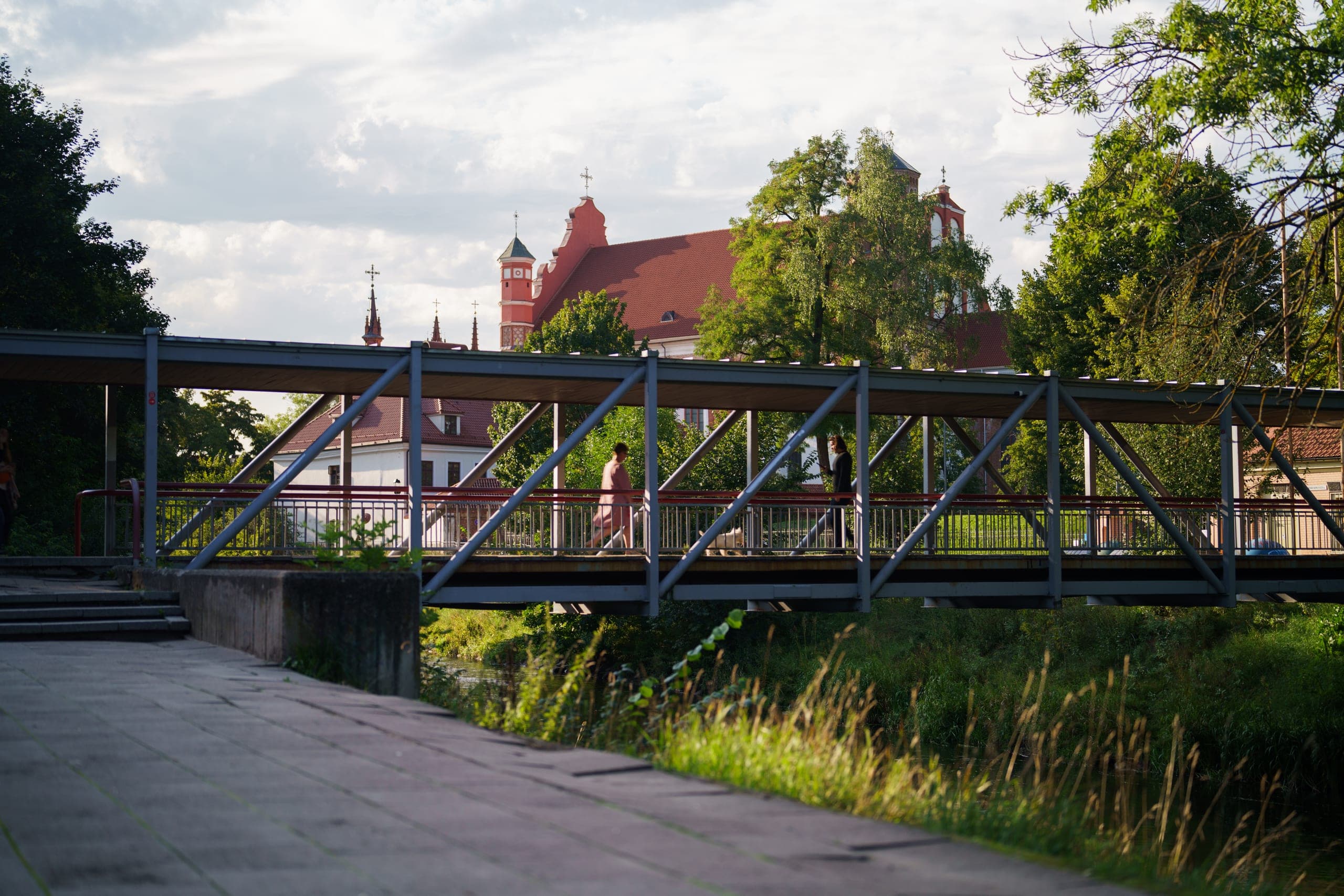
Your driver meets you at Vilnius airport and takes you to the Grand Hotel on Cathedral Square. In the evening your guide, old enough to remember the Soviet years firsthand, walks you through the old town and sets the context for the days ahead over a welcome dinner.
Read the full day
Your driver meets you at Vilnius airport (VNO) and takes you the short distance to the Grand Hotel Kempinski on Cathedral Square, where you settle in for the first two nights. In the early evening your guide collects you for a gentle orientation walk through the old town, pointing out a handful of buildings you will return to properly over the coming days, among them the former KGB headquarters on Aukų gatvė, seen tonight only from the street. Over a welcome dinner at a local restaurant, your guide, old enough to have lived through the final Soviet decades and the independence movement that ended them, talks through what the week ahead will cover and answers whatever questions you bring with you. This is not a lecture: it is the start of a conversation that continues for the next seven days.
- Transfer from VNO
- Old Town orientation with historical context
- Welcome dinner with your guide
The KGB building and the TV Tower
Your guide takes you into the Museum of Occupations and Freedom Fights, the former KGB headquarters, through its basement cells, the execution chamber and the surveillance floor above. In the afternoon you go to the Vilnius TV Tower, where you hear the account of January 1991.
Read the full day
After breakfast your guide walks you the short distance to the Museum of Occupations and Freedom Fights, housed in the actual building the KGB used as its Lithuanian headquarters. You move through it in the order a prisoner once would: the basement cells, some padded, some flooded ankle-deep as a method of pressure, then the execution chamber where the condemned were shot at close range, preserved as it was found. Upstairs, the surveillance floor holds the equipment used to monitor phone lines and mail across the republic. Your guide, who remembers the building from the outside long before it became a museum, adds what the display panels cannot: what it meant to walk past this corner and look away. After a free lunch, the afternoon turns to the Vilnius TV Tower, where your guide recounts January 13, 1991: Soviet tanks moving against unarmed civilians who had gathered to defend the broadcast signal, and the fourteen who died doing it. You take the lift up for the view before returning to the old town, where the evening is yours.
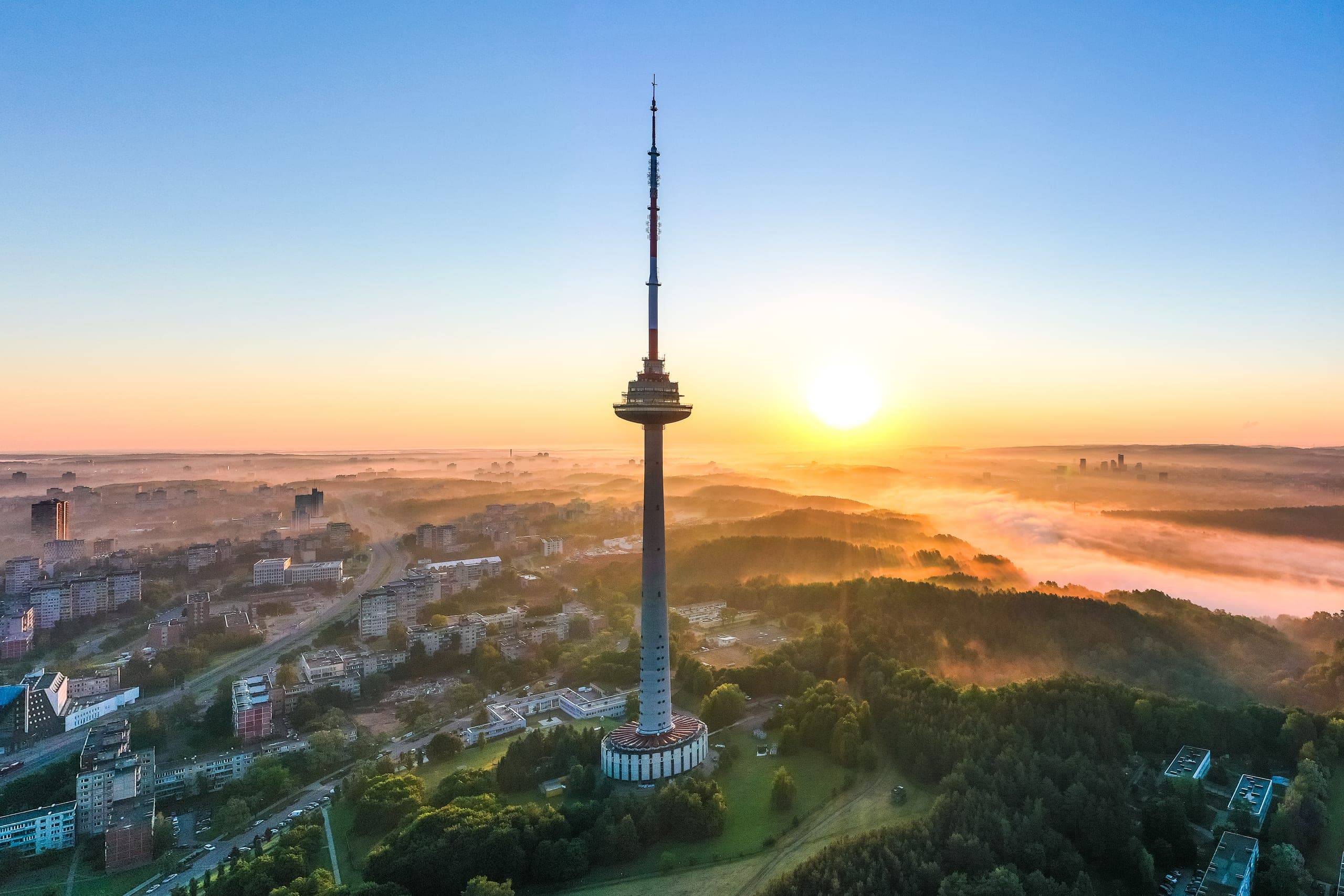
- Former KGB headquarters and execution chamber
- Interrogation cells and the surveillance floor
- Vilnius TV Tower and the events of January 1991
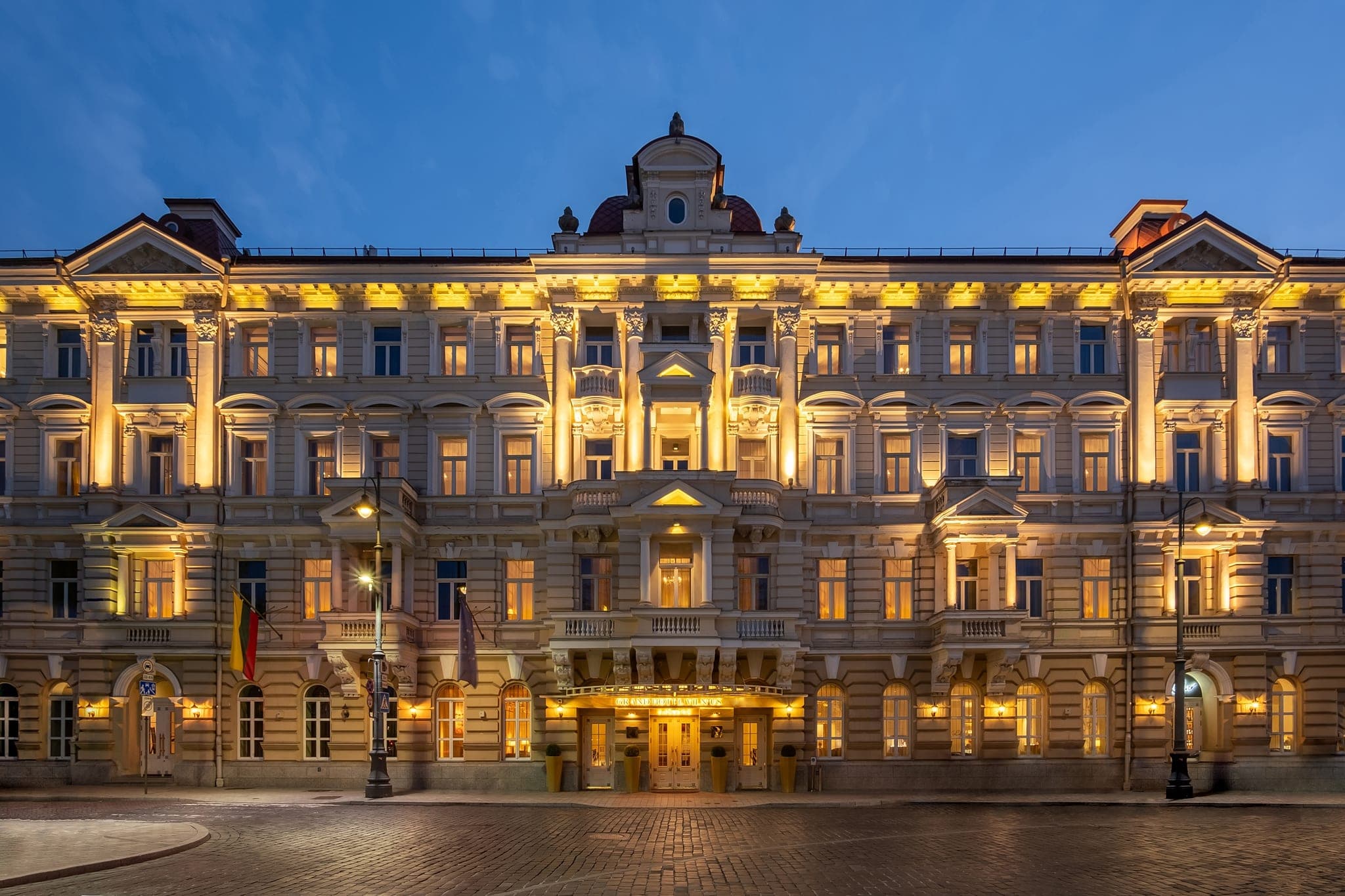
Grand Hotel Vilnius, Curio Collection by Hilton
Second night on Cathedral Square.
Held, not booked, until your deposit clears. If it is gone by then we substitute an equal or better hotel and tell you first.
Fallen statues, a spa town
You drive south to Grūtas Park, where more than eighty relocated Soviet statues stand among the pines, then continue the short distance into Druskininkai, a spa town whose Soviet-era resort architecture still shapes its streets.
Read the full day
After breakfast your driver takes you south through forest and farmland to Grūtas Park, a private open-air museum built by a local businessman to house the Lenins, Stalins, Dzerzhinskys and Soviet civic statues pulled down from town squares across Lithuania after 1991, rather than melted down or left to rot in storage yards. A wooden walkway styled after a route to a Siberian labor camp, complete with a watchtower and a cattle wagon, leads you past the fallen monuments in something close to their original scale, an unusual and occasionally unsettling way to see the iconography of the regime up close and out of context. From Grūtas it is a short drive into Druskininkai, a spa town on the Nemunas river that was already popular before the war and became one of the Soviet Union's major sanatorium destinations after it, its streets still lined with the boxy modernist sanatoria built for workers sent here to take the waters. Your guide walks you through the town center before you check in to the spa resort for the night, where the modern water park now shares ground with that older layer of the town's history.
- Grūtas Park's collection of Soviet statues
- Watchtower and gulag-wagon walkway
- Druskininkai's Soviet-resort architecture
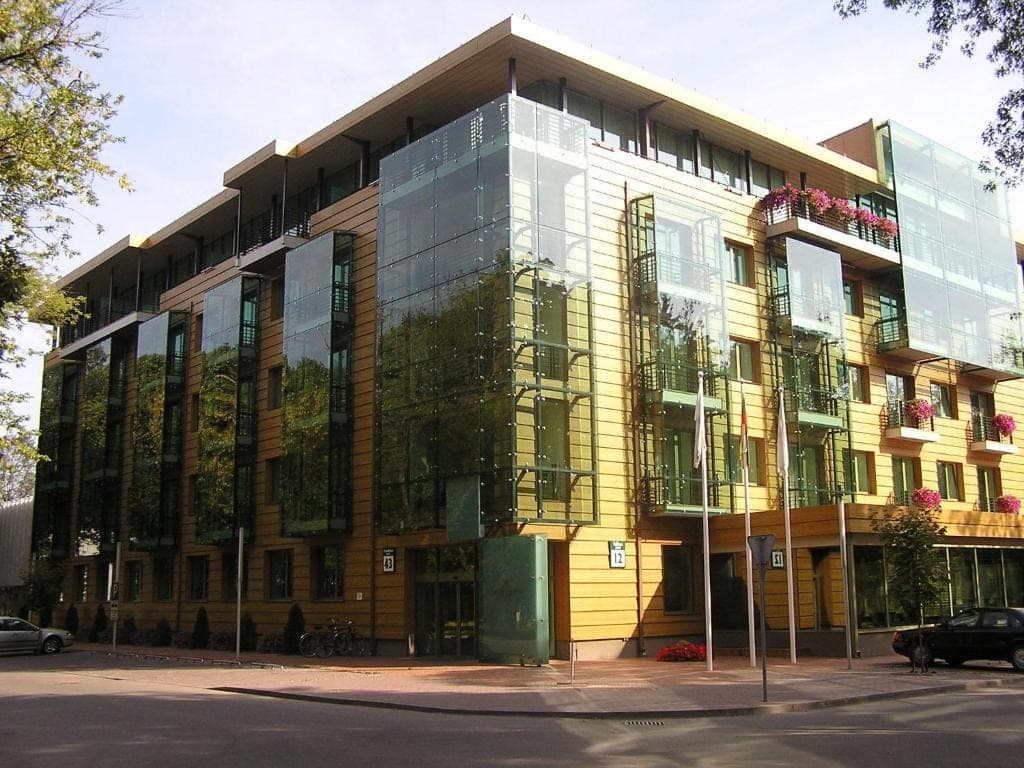
Grand SPA Lietuva
A modern thermal spa resort on the site of the town's older sanatorium district, with indoor and outdoor pools and a pine-shaded park.
Held, not booked, until your deposit clears. If it is gone by then we substitute an equal or better hotel and tell you first.
North to Riga, and the Corner House
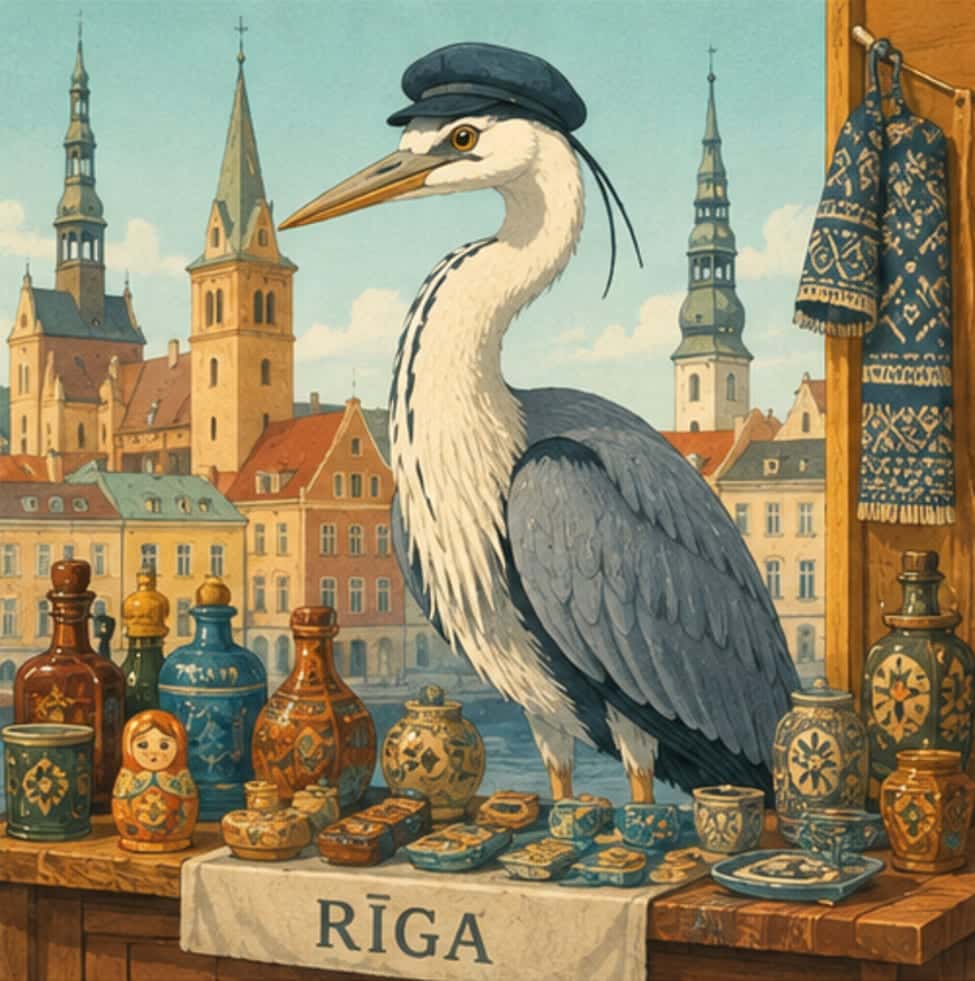
The morning's drive crosses into Latvia and brings you to Riga by early afternoon. Your guide takes you straight to the Corner House, the former KGB headquarters left almost exactly as it was found in 1991.
Read the full day
After breakfast you leave Druskininkai and drive north with your guide, crossing your first border of the trip from Lithuania into Latvia and continuing on to Riga, arriving by early afternoon. There is time to check in to the Grand Hotel Kempinski before your guide walks you to Stūra māja, the Corner House, at the junction of Brīvības and Stabu, the former KGB headquarters for the Latvian SSR. Unlike the Vilnius museum, the Corner House was sealed on the day the KGB left in 1991 and reopened to the public only in 2014, largely untouched in between: the interrogation rooms, the cramped cells, and the inner courtyard where prisoners were shot are shown to you close to how they were left, down to the peeling paint. Your guide walks you through the building's use as an ordinary residential block on its upper floors, its tenants aware, in varying degrees, of what happened below them. The rest of the evening is free to explore Riga's old town or rest after the drive.
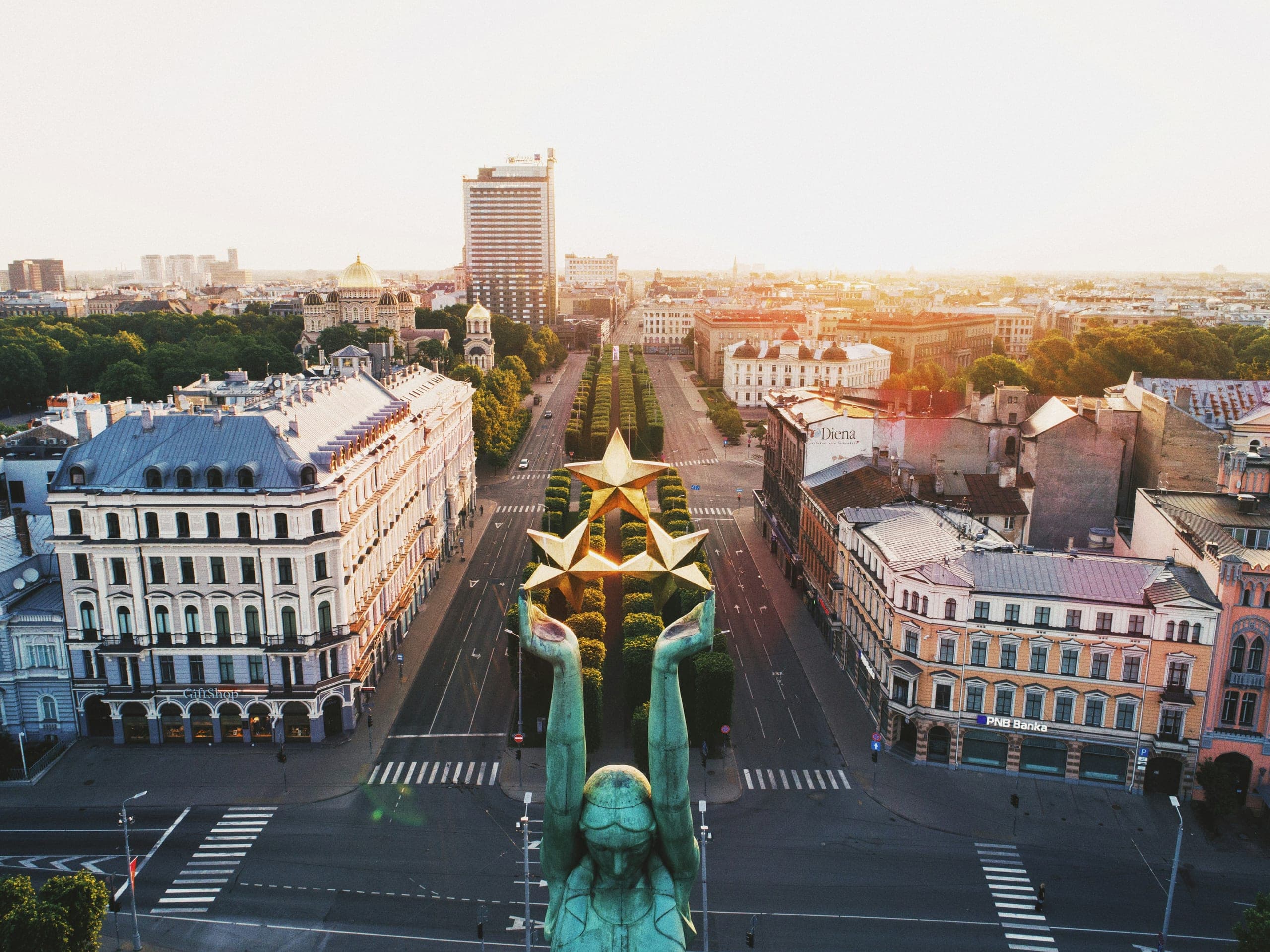
- Border crossing into Latvia
- The Corner House, Riga's former KGB headquarters
- Preserved interrogation rooms and inner courtyard
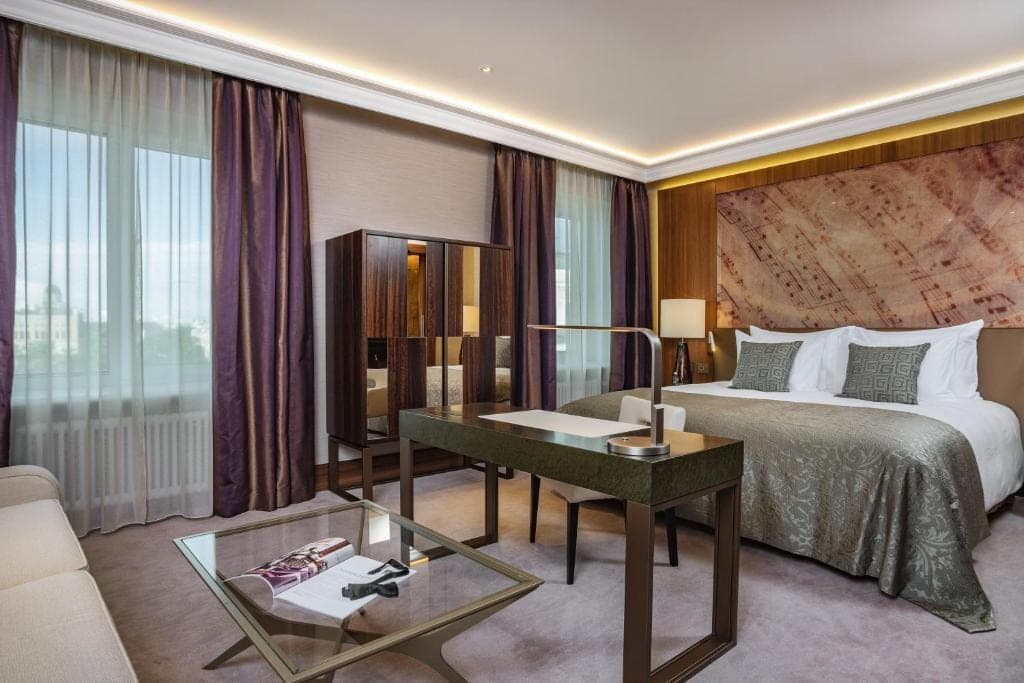
Grand Hotel Kempinski Riga
A restored 19th-century landmark opposite the Freedom Monument, with a grand spa and a glass-roofed courtyard.
Held, not booked, until your deposit clears. If it is gone by then we substitute an equal or better hotel and tell you first.
Soviet Riga, then west to Karosta
Your guide leads a morning walk through Riga's Soviet-modernist layer, the housing microdistricts and monumental set pieces built after the war. In the afternoon you drive west to Liepāja and the closed naval city of Karosta.
Read the full day
After breakfast your guide takes you beyond the Art Nouveau boulevards most visitors see, into the panel-block microdistricts built to house Riga's rapidly expanded postwar workforce, and to a handful of the monumental set pieces from the same decades, reading the city's Soviet-era layer alongside its better-known one. By late morning you set off west, a two-and-a-half to three-hour drive across the Latvian countryside to Liepāja, a port city on the Baltic coast. Liepāja's northern district, Karosta, was built as a fortified naval base under the Russian tsars and expanded by the Soviet navy into a closed city, sealed to outsiders and even to most Latvians until 1994: your guide explains what it meant to live in, or simply be shut out of, a town that did not officially exist on ordinary maps. You check in to a boutique guesthouse in Liepāja for the night, with the evening free.
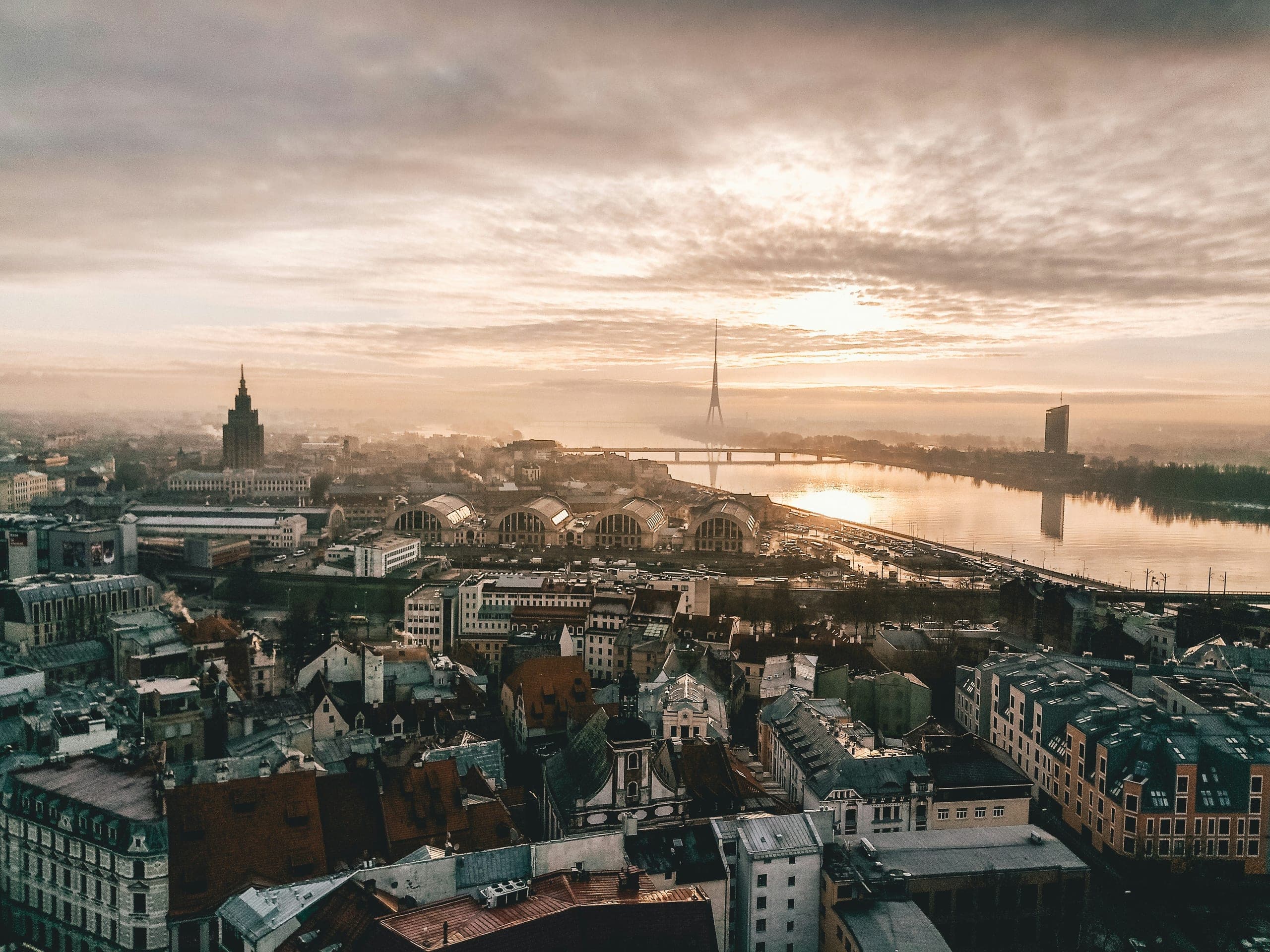
- Soviet-modernist Riga: microdistricts and monuments
- Drive west to Liepāja
- Arrival in Karosta, a former closed naval city
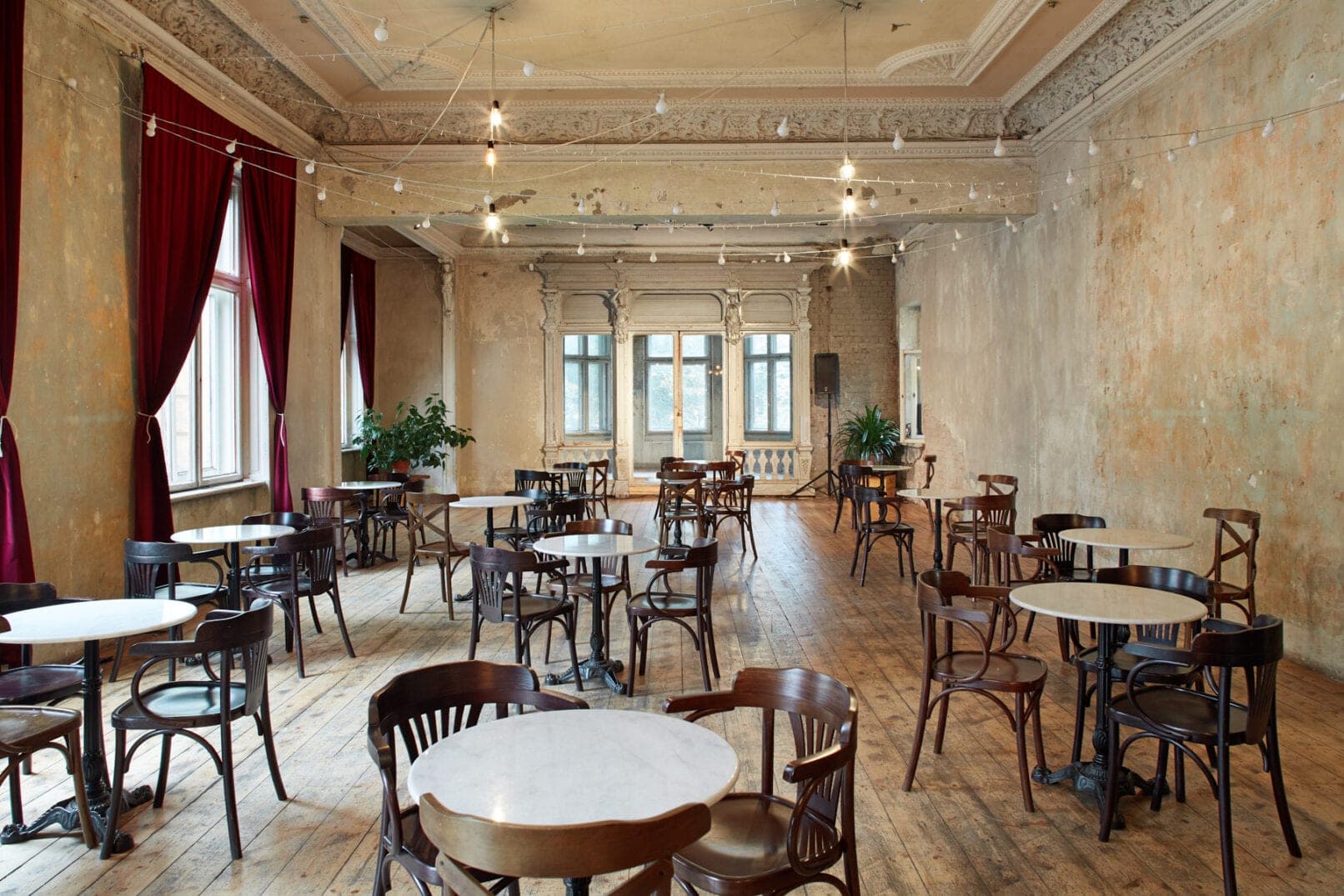
Fon Stricka Villa
An elegant Art Nouveau villa near Liepāja's center, with a walled garden and a small restaurant, a graceful base for the Karosta visit.
Held, not booked, until your deposit clears. If it is gone by then we substitute an equal or better hotel and tell you first.
The naval prison, then north to Estonia
In the morning your guide takes you through Karosta naval prison, built under the tsars and used by the Soviet navy to hold and punish its own sailors. From there the long drive north crosses into Estonia and ends in Tallinn.
Read the full day
In the morning your guide walks you through Karosta naval prison, built in the early 1900s under the Russian empire and kept in continuous use by the Soviet Baltic Fleet through the occupation to discipline its own sailors and officers. The cells are bare concrete, the punishment cells smaller still, and your guide explains the prison's later, stranger footnote as a filming location and overnight novelty for the curious, a use that sits uneasily beside its real history, which the tour does not gloss over. By late morning you set off on the longest drive of the trip, north out of Latvia, skirting Riga and crossing your second border into Estonia, with a lunch stop in Pärnu, Estonia's summer resort town, to break the journey. You arrive in Tallinn in the evening and check in to the Hotel Telegraaf inside the medieval walls, with dinner and the rest of the night your own after a long day on the road.
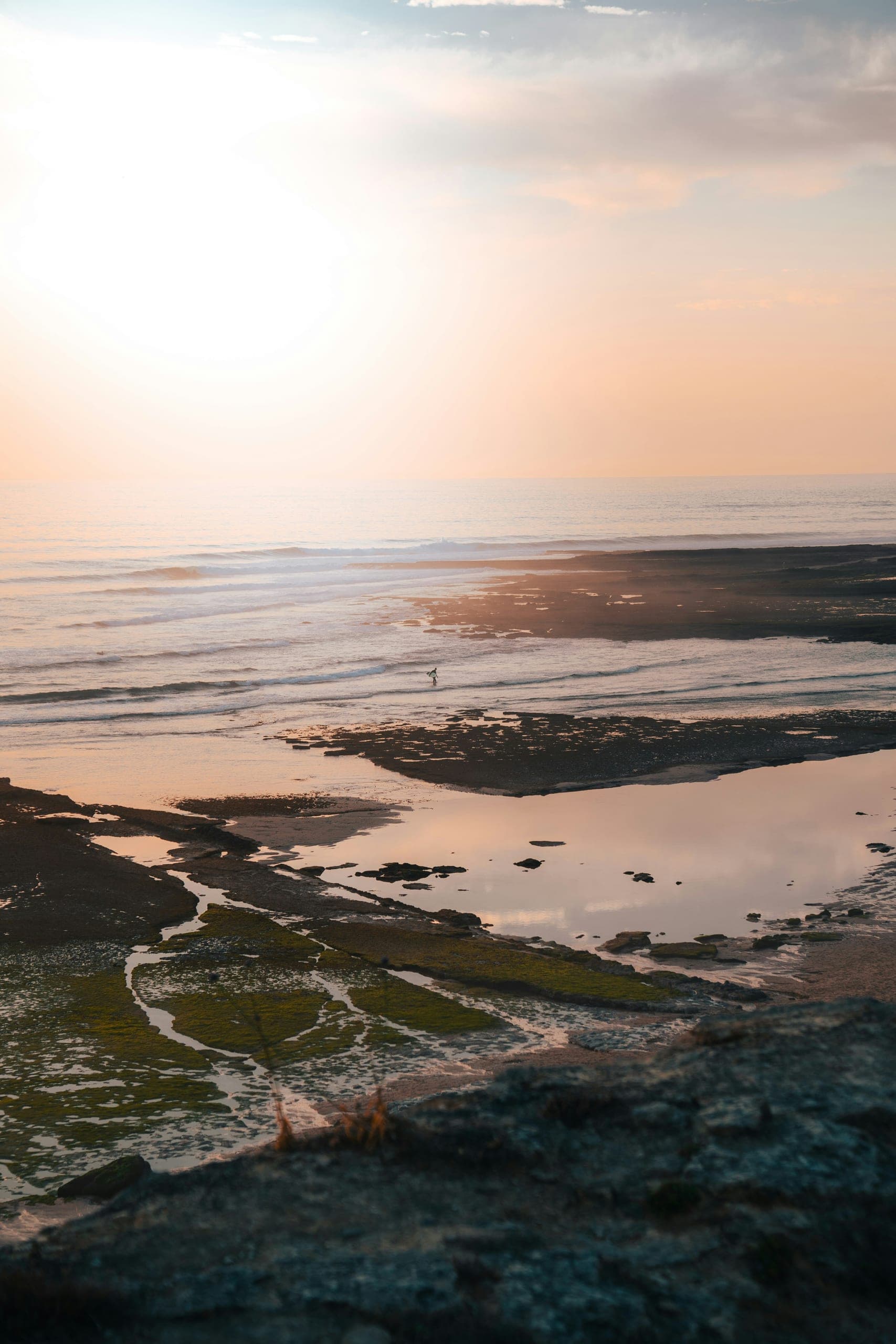
- Karosta naval prison cells
- Border crossing into Estonia
- Lunch stop in Pärnu on the long drive north
Pagari Street and the Hotel Viru listening post
Your guide takes you to the former KGB headquarters on Pagari Street, its basement cells now a museum, then to the Hotel Viru, where a secret surveillance floor once monitored foreign guests.
Read the full day
After breakfast your guide leads you to Pagari 1, the former KGB headquarters for the Estonian SSR, whose basement cells are now open as a museum. You walk the same corridors and holding cells that once processed those arrested for anti-Soviet activity, alongside deportation records that your guide, whose own family's history brushes against this material, can speak to in ways the wall text cannot. In the afternoon you cross to the Hotel Viru, the Intourist hotel built in 1972 for Finnish and other foreign visitors, which turns out to have held a secret twenty-third floor, sealed off and left permanently absent from the elevator panel, where KGB officers monitored guest rooms and telephone lines around the clock. Preserved with its original equipment, the listening post is one of the more vivid, almost absurd artifacts of the surveillance state you have been tracing all week: bugged ashtrays, hollowed-out fixtures, reel-to-reel recorders. The evening is yours in Tallinn's old town.
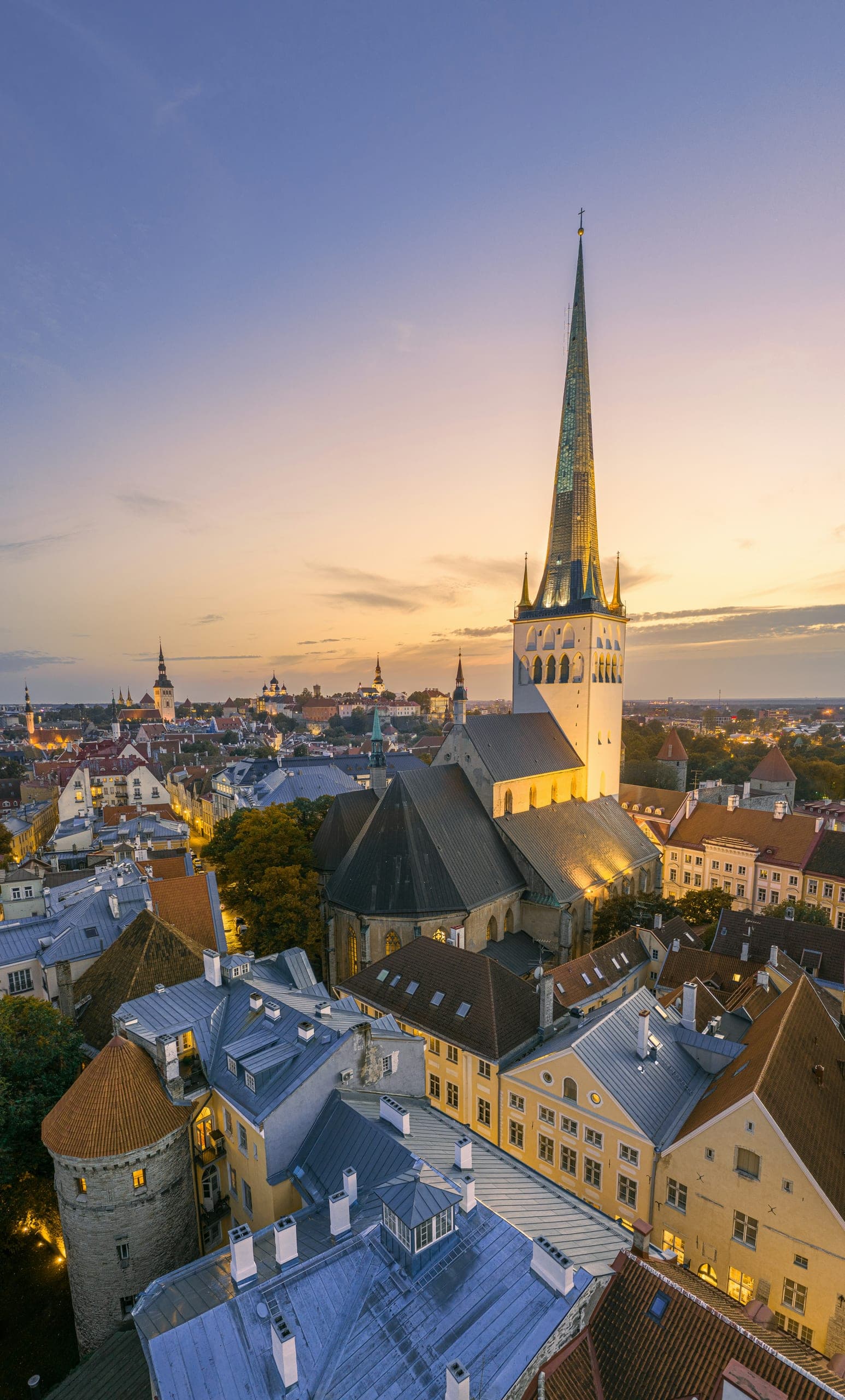
- Pagari Street KGB cells
- Deportation and interrogation records
- Hotel Viru's secret 23rd-floor listening post
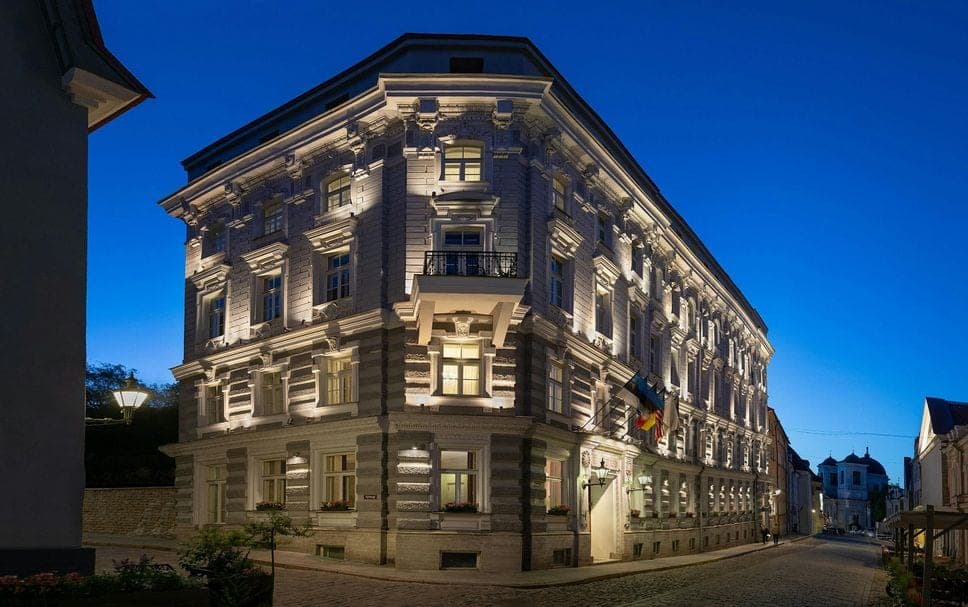
Hotel Telegraaf, Autograph Collection
Second night inside the walls.
Held, not booked, until your deposit clears. If it is gone by then we substitute an equal or better hotel and tell you first.
A submarine base, and how it ends
Your guide drives you to Paldiski, once a closed Soviet nuclear submarine training base on a restricted peninsula, then back to the Tallinn Song Festival Grounds, where hundreds of thousands once sang for independence. Your driver takes you to the airport.
Read the full day
After a final breakfast at the Telegraaf, your driver takes you west along the coast to Paldiski, a peninsula town sealed off from ordinary Estonians from the 1960s until 1994, home to a Soviet nuclear submarine training facility that housed two working reactors. Your guide walks you along the shoreline past the crumbling barracks and the fenced-off reactor site itself, closed to entry but visible enough to make its scale clear, and explains what it meant for a whole town to disappear from the map for three decades. Back in Tallinn, the trip closes at the Song Festival Grounds, the vast open-air amphitheater where, between 1988 and 1991, hundreds of thousands of Estonians gathered to sing songs the Soviet authorities had banned, joined by similar movements in Latvia and Lithuania that together came to be called the Singing Revolution. Standing on the grounds, your guide brings the week to its close: three countries occupied twice in a century that got free again largely without firing a shot, ending this story on how it ended, not only on how it began. Your driver then takes you to Tallinn airport (TLL) in good time for your onward flight.
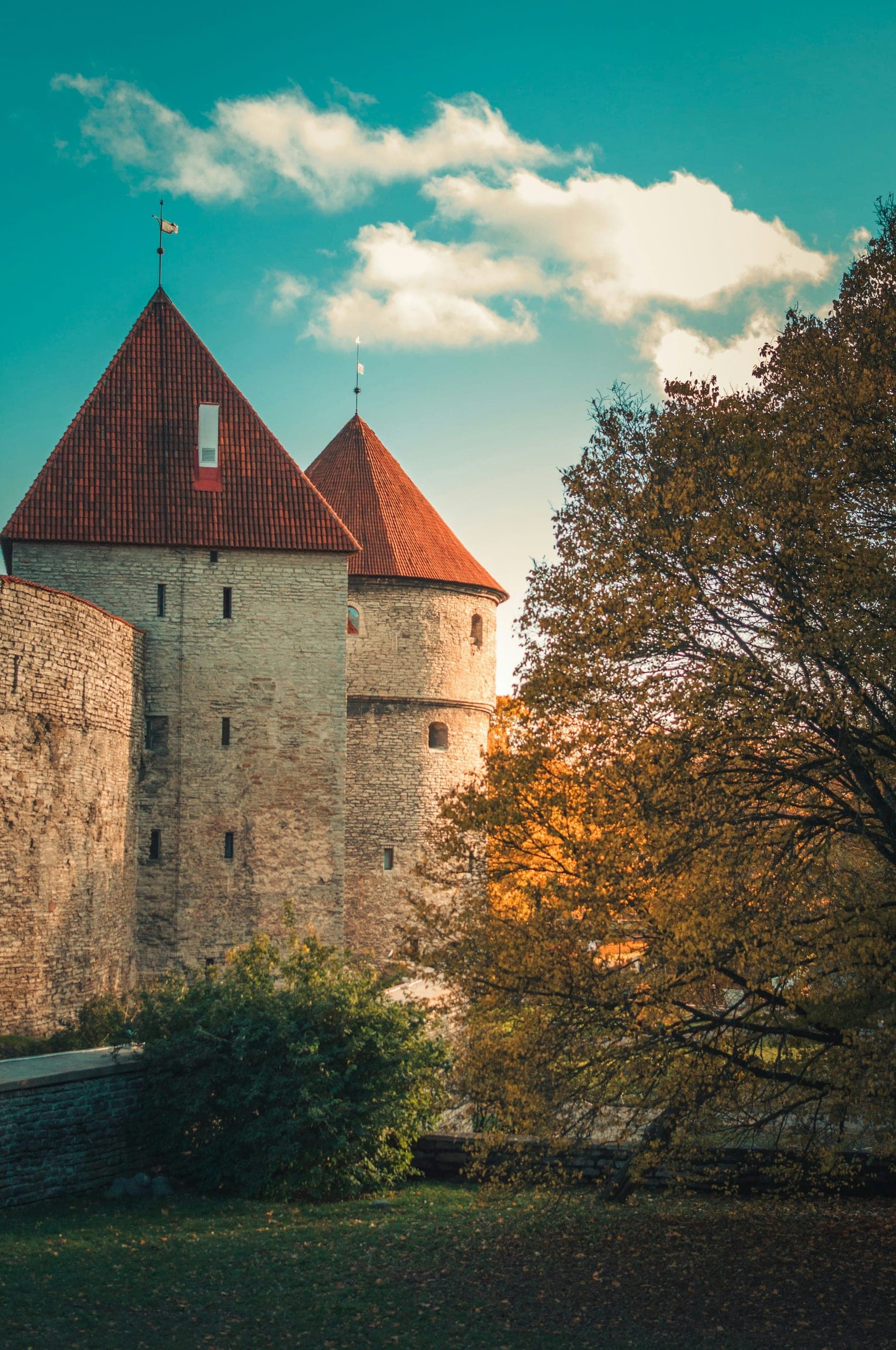
- Paldiski, a former closed submarine base
- Tallinn Song Festival Grounds
- Transfer to Tallinn (TLL)
Request your quote.
Tell us your dates and party size. We'll reply within one working day, with a private, fully-costed version of Behind the Curtain: Soviet & Cold War Deep Dive to follow within two.
within two working days
Prices shown in USD for reference. You're billed in EUR.
- Private trip: just your party, your pace
- Flexible dates, year-round departures
- No payment taken to enquire
- A $748 pp deposit holds your dates
- Protected under the EU Package Travel Directive
Priced by party size.
- Per person
- $4,083(≈ €3,490)
- Total for 2
- $8,167(≈ €6,980)
- Deposit to book
- $1,495(≈ €1,278)
- Balance, 60 days out
- $6,671(≈ €5,702)
Calculated from the same per-person rates as the table below. Final pricing is confirmed with your quote and moves with your dates, room choices and any day you change. Billed in EUR.
Per-person rates by party size
Prices shown in USD for reference. You're billed in EUR.
What's included.
- 7 nights in 5★ hotels, a spa resort and a boutique guesthouse
- Private guide and chauffeur across three countries, one who lived through the era
- Former KGB headquarters in Vilnius, Riga and Tallinn, with cells and interrogation rooms
- Grūtas Park's Soviet statue collection and Druskininkai's spa-town history
- Karosta naval prison in the former closed city of Liepāja
- Hotel Viru's secret 23rd-floor KGB listening post
- Paldiski's former submarine base and the Tallinn Song Festival Grounds
- All breakfasts and museum entrance fees
- International travel to Vilnius (VNO) / from Tallinn (TLL)
- Most lunches and dinners (curated shortlist provided)
- Travel insurance (mandatory)
- Tips for guide and chauffeur (suggested €12/day per traveller)