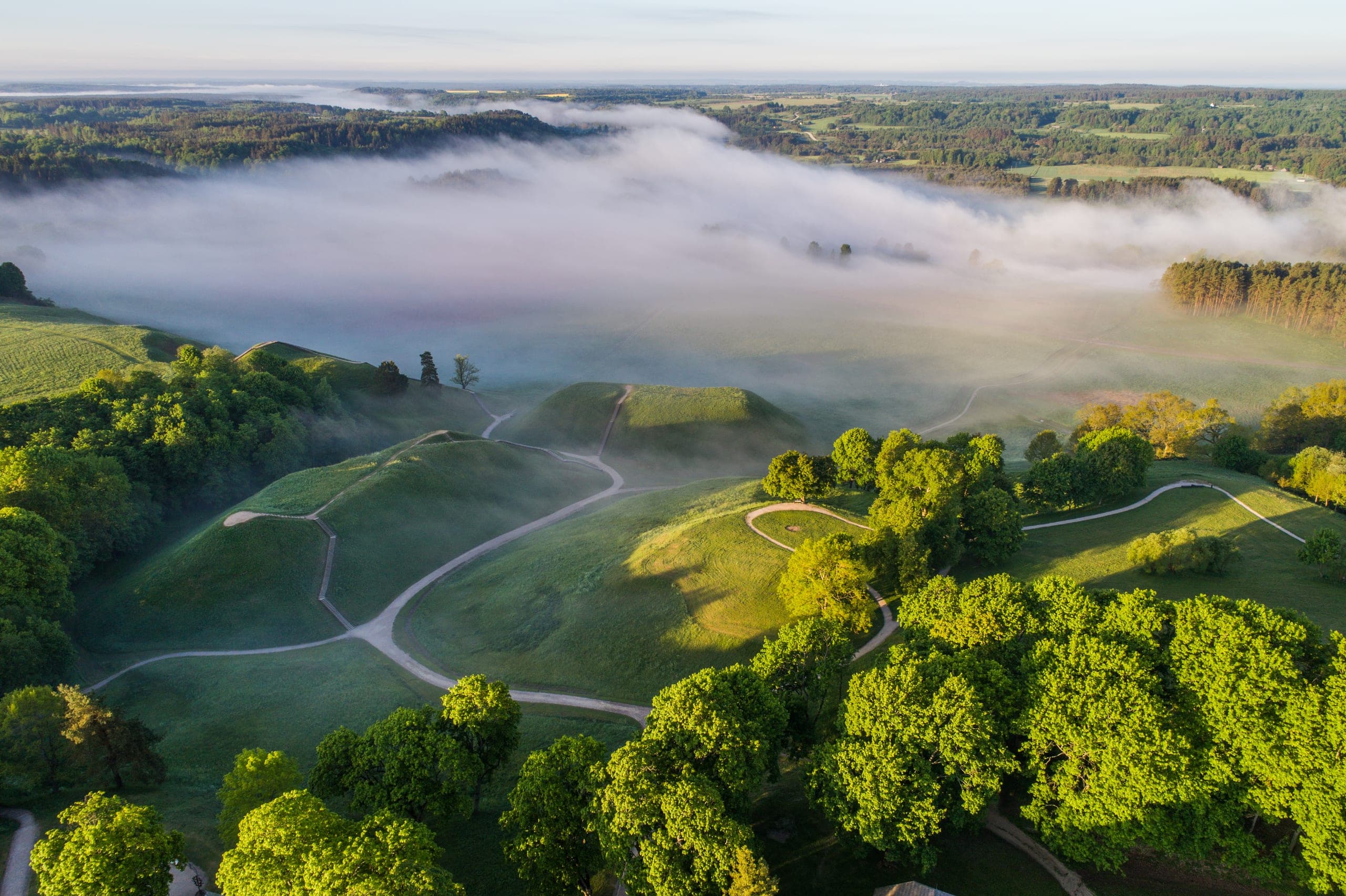
Kernavė lies 35 kilometres northwest of Vilnius, a 40-minute drive along the Neris river. Five grass-covered hill forts rise from the valley floor, the remains of Lithuania's first capital before Vilnius took the title in the 14th century.
UNESCO listed the site in 2004, and on most afternoons you will have the climb to yourself. The small archaeology museum below explains what the forts protected; the walk itself, up and along the ridge, is the real exhibit.
What you'll see
- Climb all five hill forts
- Pagan-era explanation
- Riverside picnic
- Coffee in Maišiagala on the return
What the price covers
Private driver, English-speaking guide, archaeology museum, picnic
Getting there
There is no railway to Kernavė. A handful of direct buses a day run from Vilnius and take about an hour, so a day by bus is possible but needs planning around the return times. You can also take the train to Vievis and continue by bus, which adds a change. By car it is about 40 minutes along the Neris. The private car removes the timetable and lets you leave when the walk is done.
The best time to go
May to September is the best time, when the hill forts are green, the paths are dry and a riverside picnic makes sense. Early summer brings the longest evenings. In autumn the valley turns gold and the site is at its quietest. In winter the grass slopes can be icy or muddy and daylight is short, around seven hours in December, so the walk is kept shorter.
- How long is the walk at Kernavė?
- About two hours to see all five hill forts at an easy pace, with time to stop at the ridge viewpoints.
- Is Kernavė suitable for children?
- Yes. The paths are grass and gravel, gently sloped, with no climbing or exposure.
- What's included besides the driver and guide?
- The archaeology museum entrance and a riverside picnic lunch.