The quietest serious wildlife destination in Europe.
The Baltic countries are the quietest serious wildlife destination in Europe, and the reason is unglamorous: nobody markets them. More than half of Estonia and Latvia is forest, the population density is among the lowest in the EU, and large tracts of the countryside emptied out in the twentieth century and were left to grow back. What returned was bear, wolf, lynx, elk and beaver, in numbers that would be headline news in western Europe.
The birding case is even stronger. The east Baltic coast is a migration bottleneck: birds moving between the Arctic and Africa follow the coastline and funnel into a handful of narrow points. On a good morning in mid-April, Cape Kolka in Latvia counts birds in six figures. In late September, Matsalu Bay in Estonia holds tens of thousands of staging cranes at once.
None of this needs a long-haul flight, a four-wheel drive or a permit. It needs somebody who knows which hide is worth sitting in this week, and the honesty to tell you when the answer is none of them.
The species, and the odds.
- Brown bear
- Odds: Good in Estonia, poor in Latvia
Estonia has roughly 900 bears, concentrated in the Alutaguse forests of the northeast, and a well-placed hide there produces sightings on most summer nights. Latvia has perhaps 30 to 70 and we do not pretend otherwise: if the bear is the point, we send you to Estonia. - Grey wolf
- Odds: One or two sightings in ten dawns
The Baltic wolf population is healthy and largely unpersecuted, and Latvia's western wildlands hold a real density of them. They are seen at first and last light, at distance, and almost never for long. Tracks and scat are near certain; a wolf in the open is a good year. - Eurasian lynx
- Odds: Rare, and honestly so
There are more lynx in Latvia than in the whole of Norway, and almost nobody sees one. We do not build a trip around lynx. We do put camera traps out on your behalf and send you the footage afterwards, which is how most people meet them. - Elk and beaver
- Odds: Near certain at dusk
Elk are common enough to be a road hazard and are reliably seen at forest edges at dusk. Beavers are more reliable still: sit at a dam at last light, stay quiet for an hour, and they will surface. Otters frequently get there first. - Migrating raptors and waterfowl
- Odds: Spectacular in the right week
Cape Kolka in mid-April and Pape in late September are the two great funnels: seaduck, geese, cranes and raptors passing in numbers that stop conversation. Matsalu Bay in Estonia stages tens of thousands of cranes in September. - Woodpeckers and forest specialists
- Odds: Excellent with a local guide
Ten woodpecker species including white-backed, three-toed and grey-headed, plus black stork, lesser spotted eagle, hazel grouse and capercaillie. These are the birds people fly here for, and they need somebody who knows the specific stand of trees.
What happens, and when.
- Late March to mid-May
- Spring migration and the leks. Cape Kolka peaks in mid-April, when more than 100,000 birds can pass in a morning. Capercaillie and black grouse display at dawn through April, from a hide, in the dark, in the cold. Bears leave the den.
- May to June
- The best weeks for bear hides: long light, active animals, and cubs. Nights barely darken. Corncrake and thrush nightingale sing all night, and the bogs are at their most photogenic at 3am.
- July to August
- Quietest for birds, best for mammals and landscape. Berry season pulls bears into clearings. Bog walking is dry and warm, and the beaver dams are at full height. Bring a head net for the first half of July.
- September to early October
- The autumn passage, and our pick if you can only come once. Peak is roughly September 5 to October 5. Pape and Cape Kolka run all day, the ringing stations are working, and Matsalu holds staging cranes in their thousands.
- November to February
- White-tailed eagles on the coast, wintering Steller's eider off Saaremaa, and wolf tracking in fresh snow, which is the single best way to understand how much wolf there is out there. The bear hides are closed.
- The fifth season
- Soomaa in Estonia floods most springs, usually between March and April, and the bog becomes navigable by canoe. It lasts days rather than weeks and cannot be booked in advance, so we keep a list and call people.
Six places worth the drive.
- Alutaguse and Lahemaa Estonia
- The northeast forests, and the country's bear ground. Purpose-built hides sleep two to four, with a long horizontal slot facing a clearing the forestry service keeps open. This is where a bear trip actually goes.
- Soomaa National Park Estonia
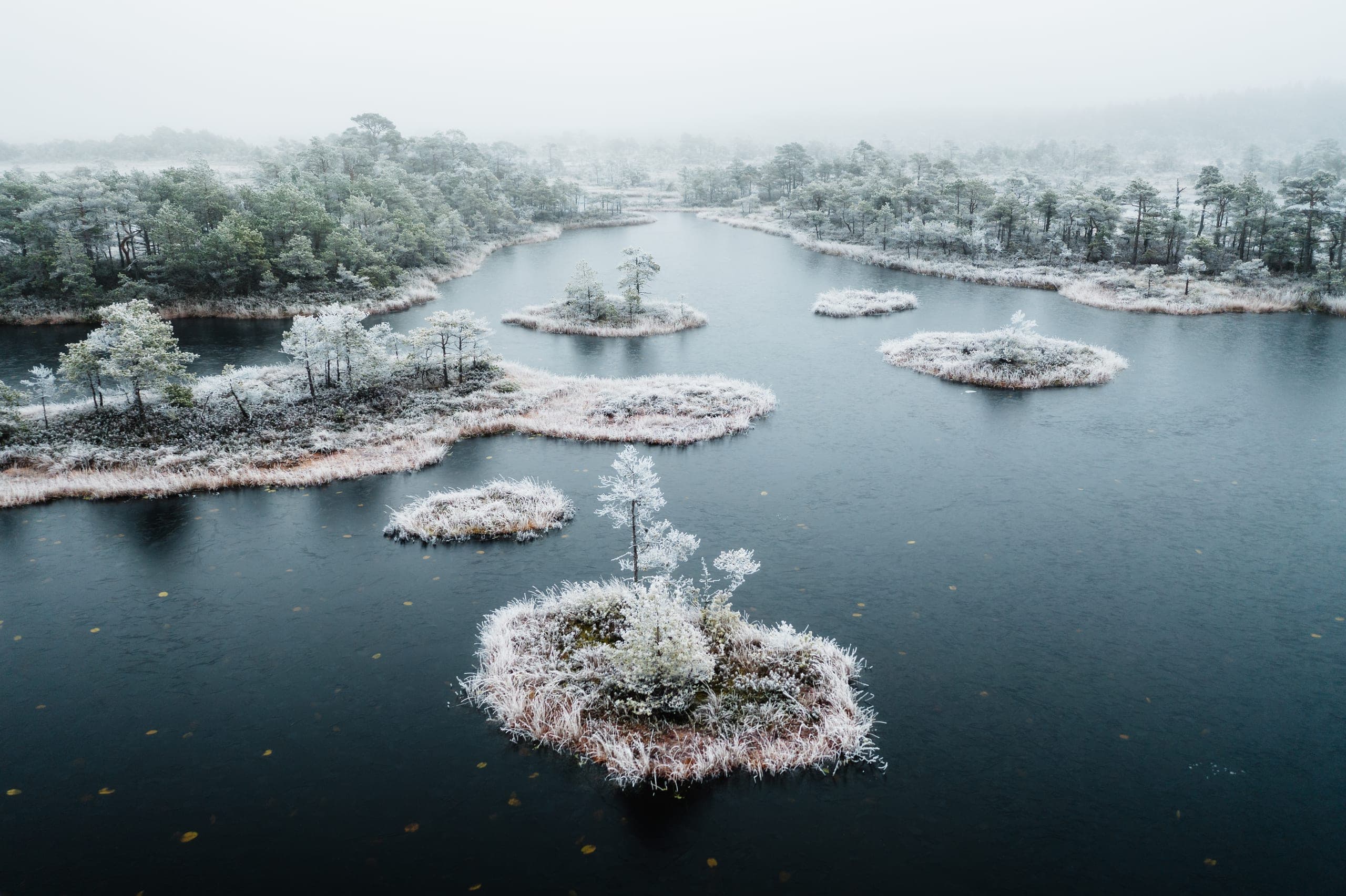
- The land of bogs: five raised bogs, beaver, elk, and the flood season that turns the whole park into water. Boardwalks in summer, snowshoes in winter, a canoe in spring.
- Matsalu Bay Estonia
- One of Europe's most important staging grounds. Tens of thousands of cranes in September, barnacle geese in May, and a set of towers positioned by people who understood exactly where the birds sit.
- Cape Kolka and Slītere Latvia
- The headland where the Gulf of Riga meets the open Baltic, and the point the migration funnels into. Behind it, Slītere's old-growth forest and the near-empty Livonian coast.
- Lake Pape and Ķemeri Latvia
- A working bird ringing station on a narrow isthmus between lake and sea, and a 6,000-year-old raised bog an hour from Riga with the best boardwalk in the country.
- The Nemunas Delta and Žuvintas Lithuania
- Ventės Ragas has been ringing birds since 1929, which makes it one of the oldest stations in Europe, and the delta floods each spring into a vast shallow feeding ground. Žuvintas inland is a biosphere reserve of reed, bog and crane.
A biologist, and honest odds.
Every trip is led by a working wildlife biologist or a professional ringer, not a general guide with a bird book. That is the whole difference in this category: the person with you needs to know which clearing the boar have been using this week, not which castle came first.
We tell you the odds before you book, in writing, and we would rather lose the booking than oversell a bear. Where a species is genuinely unlikely we say so on this page, and if a season turns out badly we say that too and offer you the alternative rather than sitting you in an empty hide out of politeness.
Hides are unheated, starts are between 3am and 5am, and you sit still for two or three hours in silence. Most people find this is the part they remember. Everything else about the trip, the hotels, the transfers, the food, is arranged to the same standard as the rest of our work, so the discomfort is only where it has to be.
- Which country should I pick?
- Estonia for bears, and it is not close. Latvia for the autumn migration and for the best chance of a wolf. Lithuania for the Nemunas Delta and the ringing station at Ventės Ragas. Most serious trips use two of the three, and the drive between them is short.
- Will I actually see a bear?
- In an Estonian hide in June, probably yes, on most nights. In Latvia, roughly one session in three. Anyone quoting you better odds than that is selling. We book the hide that matches what you have come for and we say plainly which one that is.
- Do I need my own equipment?
- No. Binoculars, a spotting scope and field guides are lent as part of the trip. Bring your own camera and, if you have one, a long lens: hide windows suit 400 mm and upward, and we can arrange a dedicated photography hide with a lower sill and a beanbag rest.
- Is this suitable for children?
- From about age 12, where the interest is real. The 4am starts and the enforced silence defeat most younger children, and it is unfair on everyone else in a four-person hide. Bog walks, beaver paddles and the ringing stations work at any age.
- How fit do I need to be?
- Moderate. Expect 4 to 8 km of walking on forest tracks and boardwalks, plus a walk in to the hide in the dark, usually twenty to thirty minutes. Nothing is technical and nothing is steep. Tell us about mobility limits and we will pick hides you can drive close to.
- What does a trip cost?
- Our packaged five-day Latvian trip starts at €1,400 per person at six travellers. A custom trip built around specific species, with more hide nights and a specialist leader, typically runs higher. Tell us the species and the month and we will price it properly rather than guess.