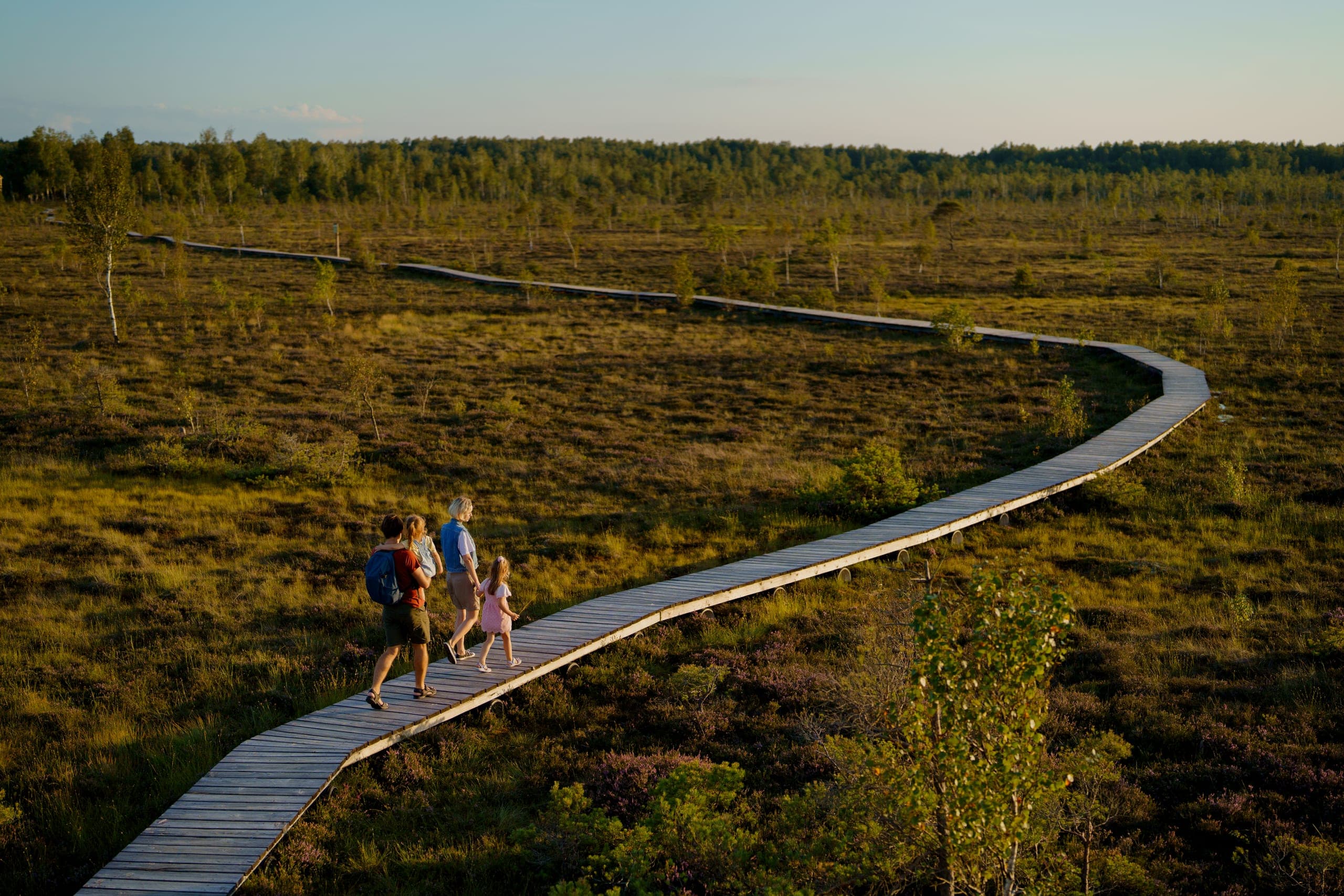
September, which is the answer
If someone asks us for the single most underrated time to visit, this is it. Daytime highs sit around 17°C at the start of the month and fall to about 13°C by the end, which is comfortable walking weather. The sea, which lags the air, is at its warmest of the entire year in early September, warmer than in June.
The crowds go home in the last week of August, and accommodation prices fall with them. An old town that was busy in July is quiet, and the Curonian Spit and the Estonian islands become the places they are in the off season, which is to say better.
The colour begins in the second half of the month, first in the birches, which turn a very particular yellow, then in the maples and oaks. By the last week of September the forests are properly changing.
Where to see the colour
The Gauja valley in Latvia is the best of it. Sigulda, Turaida and Cēsis sit above a sandstone river valley thick with mixed forest, and the cable car across the valley at Sigulda in early October is the single best twenty minutes of autumn in the region.
Lahemaa in Estonia gives you a different version: bog, forest and boulder coast, where the raised bogs turn rust and copper rather than gold, and the contrast with black pools and low pines is stranger and arguably better.
The Curonian Spit in Lithuania holds its colour late because so much of it is pine, but the deciduous stretches around Juodkrante turn well and the place is essentially empty from mid September.
Peak is usually the last week of September into the second week of October, moving south to north later. It varies by a week or two each year with the first frost.
Amber, and why storms matter
Amber is fossilised resin from forests that grew here forty million years ago, and it lies in seabed deposits off the coast. When an autumn storm churns the seabed, particularly a north-westerly, pieces wash up in the seaweed line along the beach.
This is a real activity, not a tourist story. After a big blow in October or November, people are out on the beaches at Palanga, Juodkrante, Nida and along the Latvian coast at first light with torches, sorting through the weed. Amber floats in salt water, which is why it comes in with the wrack rather than sinking.
You are unlikely to find a museum piece. You are quite likely to find small pieces if you go the morning after a storm and know to look in the seaweed rather than on the open sand. It glows warm under a torch and it is much lighter than a stone of the same size.
The Amber Museum in Palanga, housed in a nineteenth-century palace with a botanical park, is the place to understand what you picked up.
Mushrooms, which is a national sport
Mushroom picking in September and October is not a niche hobby in the Baltics; it is something a large share of the population does, and the forests fill on weekend mornings. Right of access to forests for foraging exists in all three countries, and people take it seriously.
The species that matter are chanterelles, ceps, and in Lithuania particularly the pine boletes. Roadside sellers appear at the edge of forests with buckets, and markets fill with them.
Do not forage unguided unless you genuinely know what you are doing, because the dangerous species here are the dangerous species everywhere and they grow among the good ones. Going out with someone local is the entire point of the activity anyway, and the conversation on the way back is better than the mushrooms.
Restaurant menus change completely for these weeks, and it is the best eating of the year in the region.
The migration, which is genuinely world class
Matsalu Bay in western Estonia is one of the most important migration staging areas in Europe, and in September and October it holds enormous numbers of cranes, barnacle geese and waterfowl gathering before flying south. On a good October day the noise alone is remarkable.
There are observation towers around the bay, a visitor centre, and the whole thing is free and open. It is roughly two hours from Tallinn and works as a long day trip or, better, an overnight so you can be there at dawn.
Elsewhere: Nemunas Delta in Lithuania and Lake Pape in Latvia are both significant migration sites, and cranes gather in fields across the region in late September in numbers that stop cars.
This is the strongest wildlife argument for an autumn trip, and it is almost entirely unknown outside birding circles.
November, and being honest about it
November is the hardest month in the Baltic year. The colour has gone, the snow has not arrived, daylight is down to seven or eight hours and falling, and the weather is grey, wet and windy. Locals do not enjoy it either.
There are reasons to come anyway. Prices are at their lowest of the year. Museums, restaurants and concert halls are empty and excellent. The spa and sauna culture makes complete sense in November in a way it does not in July. And the very end of the month brings the Christmas markets, which open in the last week and change the mood entirely.
But if you have a free choice of dates and you want to walk outside, come in September instead. If you want the markets, come in December. November is for people with a specific reason.
- Is autumn a good time to visit the Baltics?
- September is excellent: the sea is at its warmest of the year, crowds have gone, prices drop and the forests start to turn. October is beautiful and quiet but colder. November is dark, grey and wet, and is only worth it for museums, spas and the very end of the month.
- When do the leaves change in the Baltics?
- Peak colour usually runs from the last week of September into the second week of October, arriving later as you move south. It shifts by a week or two each year depending on the first frost.
- Where is the best autumn colour in the Baltics?
- The Gauja valley in Latvia, around Sigulda, Turaida and Cēsis, is the best of it, especially from the cable car across the valley. Lahemaa in Estonia offers a stranger version, with bogs turning rust and copper against black pools.
- When can you find amber on Baltic beaches?
- After autumn and winter storms, particularly north-westerlies, from October onward. Go at first light the morning after a big blow and search the seaweed line rather than the open sand. Palanga, Juodkrante, Nida and the Latvian coast are the best stretches.
- Is mushroom picking allowed in the Baltics?
- Yes. All three countries allow forest foraging and it is a genuine national pastime in September and October. Do not forage unguided unless you know the species; going out with a local is the point of the activity anyway.
- Where can you see the crane migration in Estonia?
- Matsalu Bay in western Estonia, about two hours from Tallinn, is one of Europe's most important migration staging areas. September and October bring huge numbers of cranes, barnacle geese and waterfowl. There are free observation towers and a visitor centre.
- What is the worst month to visit the Baltics?
- November. The autumn colour has gone, snow has not arrived, daylight is down to seven or eight hours, and the weather is grey and wet. Prices are at their lowest, which is the compensation.
Still have a question?
Ask the small team that runs these trips. A real person replies, usually within one working day.