The short version
Three countries, three languages, one shape. The 24th is the evening that counts: a long family meal at home, a church service for many, and streets that empty by mid-afternoon. The 25th is slow and domestic. The 26th is for visiting relatives.
For a visitor this means two things. The markets and the old towns are at their best in the two or three weeks before Christmas Eve, and the 24th to the 26th themselves are quiet, beautiful and largely shut. Plan around that rather than into it.
Estonia: jouluohtu and the pagan half
Estonia is among the least churchgoing countries in Europe by most surveys, and its Christmas shows it. The word itself, joulud, comes from the Nordic yule rather than from anything Christian, and the older midwinter customs never fully went away.
The evening of the 24th brings roast pork, blood sausage, sauerkraut and potatoes, and in many families a sauna before the meal rather than a service after it. The President declares Christmas Peace from Tartu at midday on the 24th, a tradition borrowed from Finland and taken seriously.
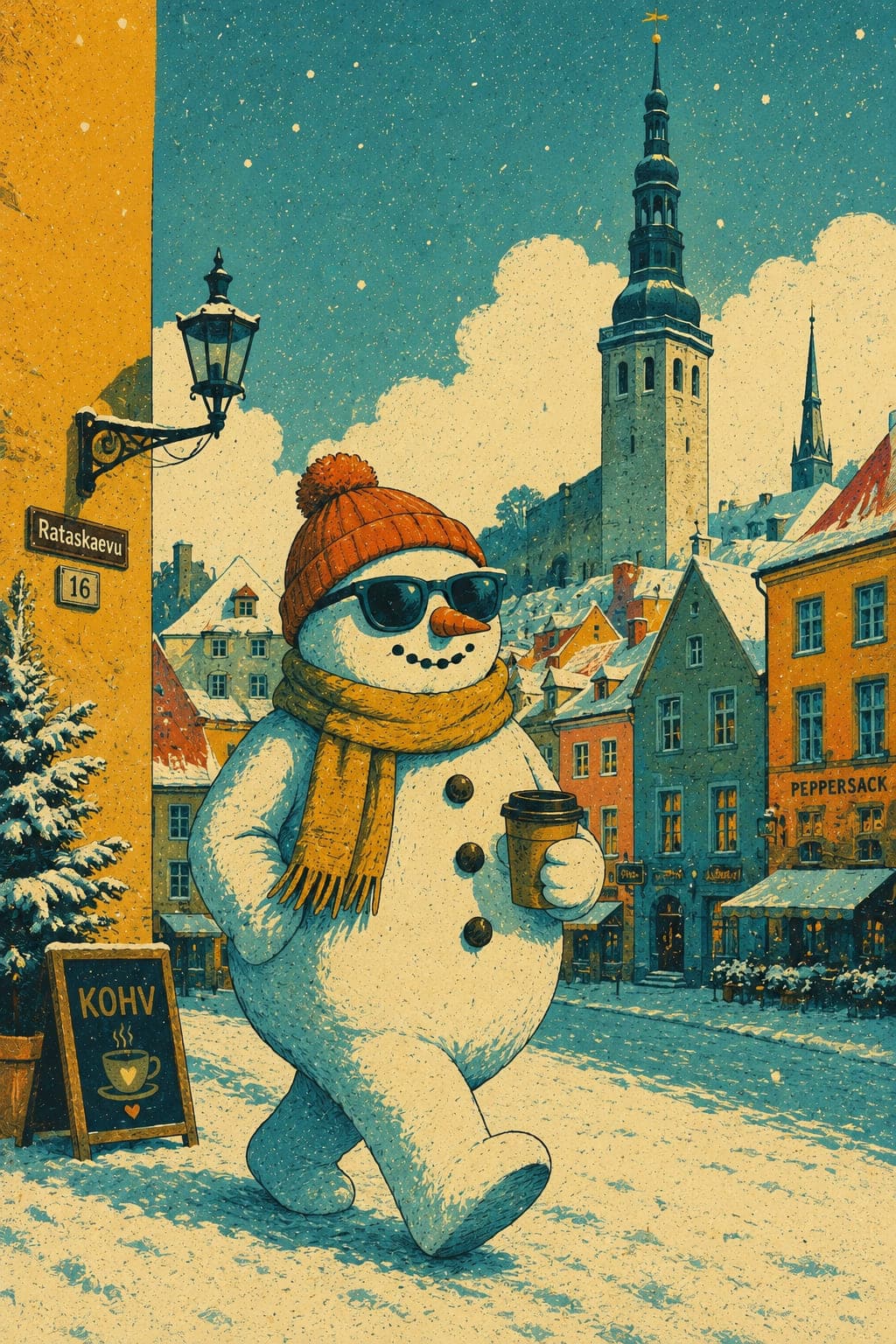
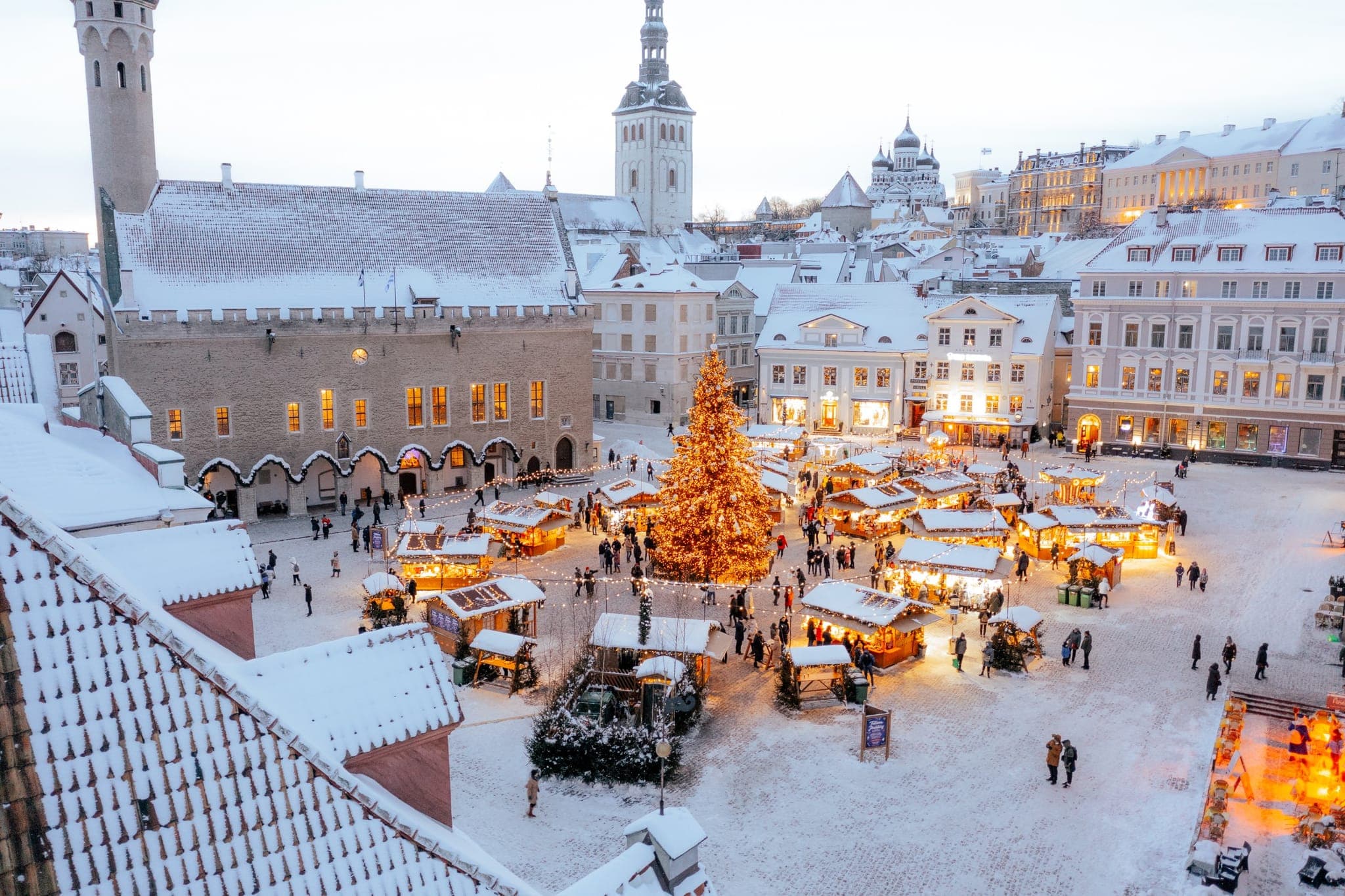
Tallinn's market on Town Hall Square is the one the lists photograph. Outside the capital, Tartu and the small towns are where the season feels least staged.
Tallinn also makes the older claim to the first Christmas tree. Its Brotherhood of Blackheads is said to have raised one on Town Hall Square in 1441, danced around it and then set it alight, nearly seventy years before Riga's 1510. Neither city's records settle it, and by now the argument is as much a part of December as the market.
Latvia: Ziemassvetki and the log
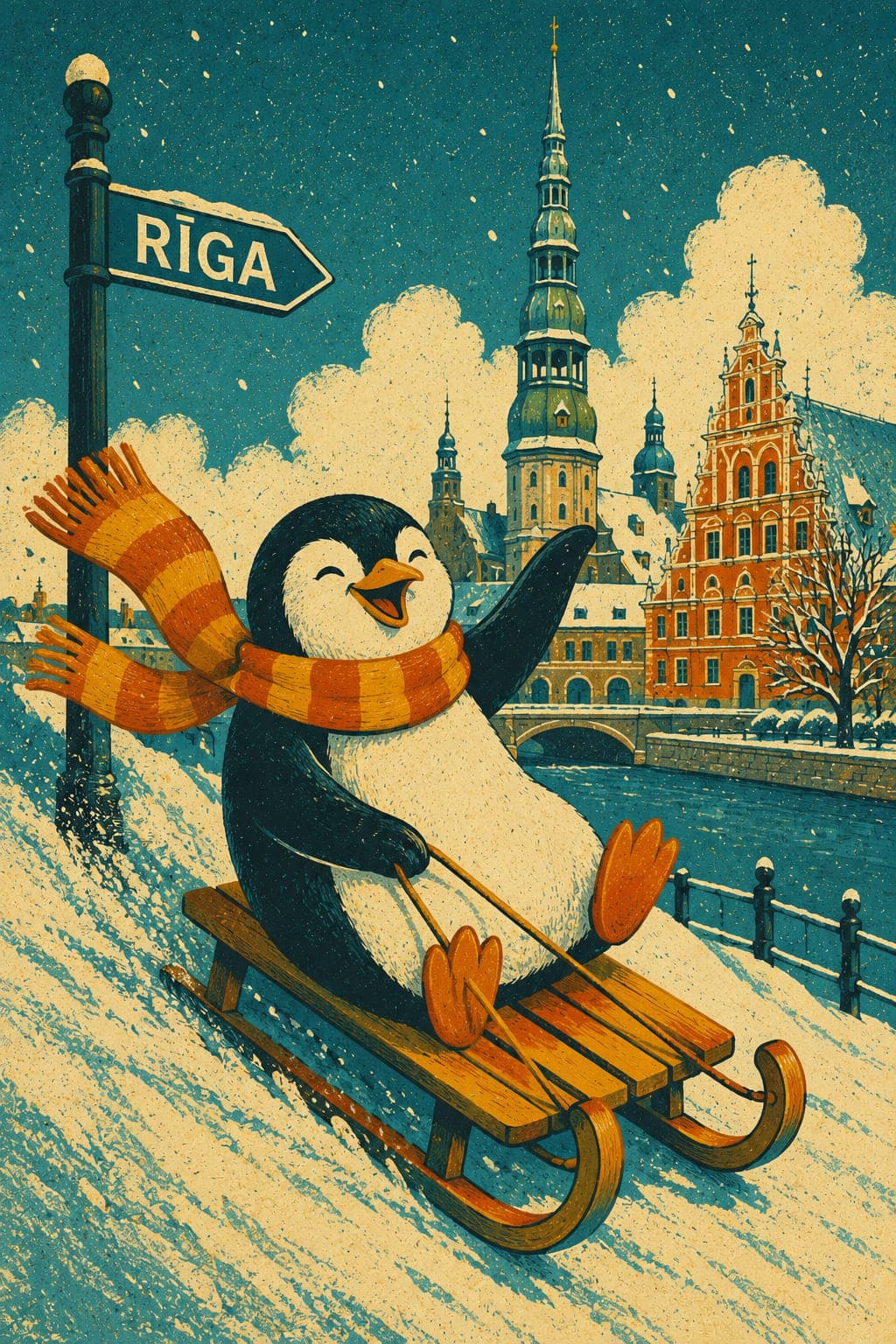
Latvia claims the first decorated Christmas tree, raised on Riga's Town Hall Square in 1510, and there is a plaque in the cobbles to say so. More interesting is the custom that predates it: the bluku vilksana, dragging a log through the village, loading it with the year's troubles, and burning it.
The meal on the 24th is pork, grey peas with bacon, sauerkraut and piparkukas, the thin dark ginger biscuits sold everywhere from late November. Nine dishes is the traditional count, and you are supposed to eat a little of each.
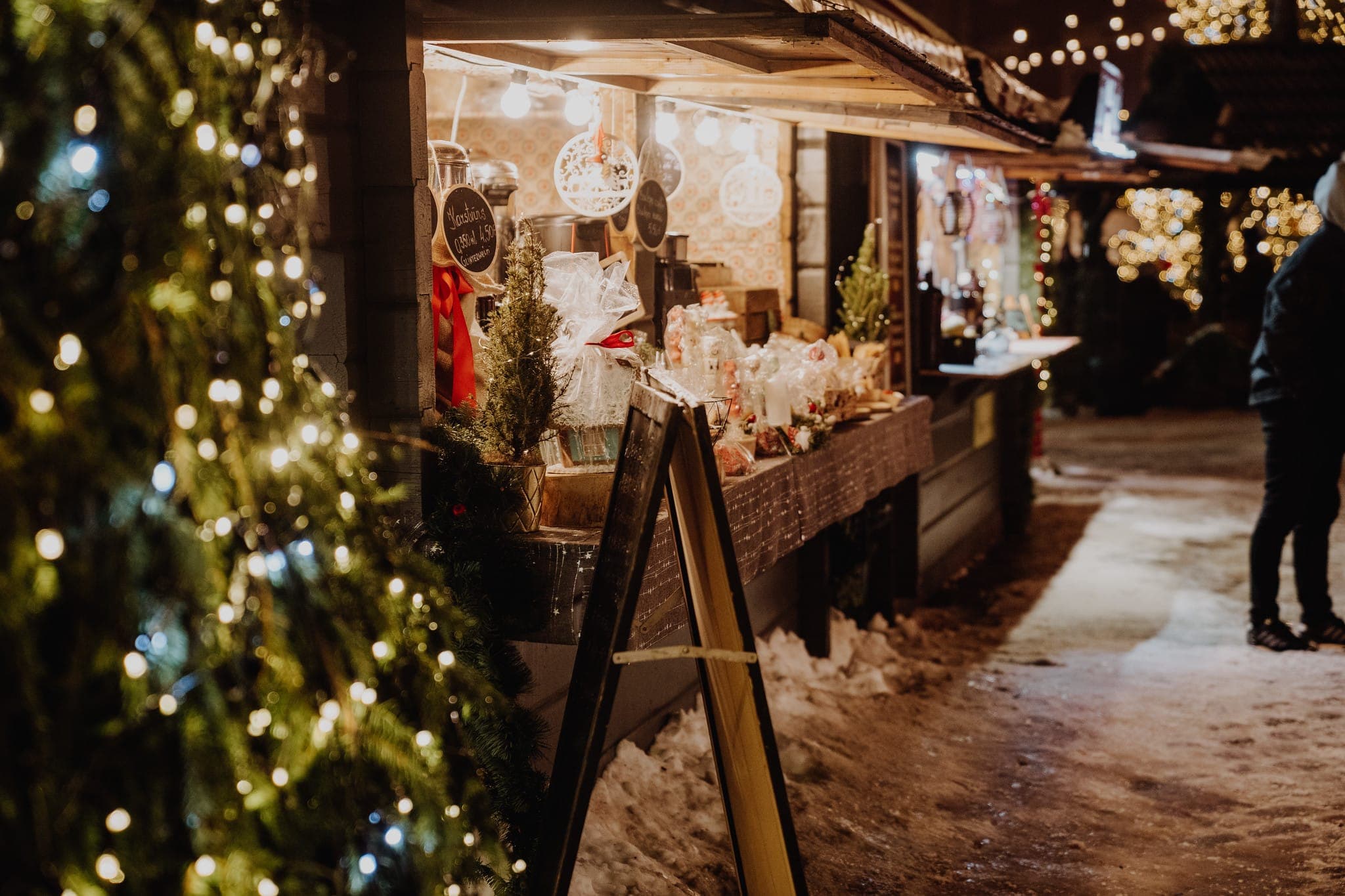
Riga through December is quieter than its reputation suggests. The Art Nouveau streets north of the centre under snow are the reason to be there rather than the market itself.
Lithuania: Kucios, and twelve dishes
Lithuania keeps the most elaborate Christmas Eve in the region, and it is the reason to come here rather than anywhere else in the Baltics for the 24th itself.
Kucios begins when the first star appears. The table carries twelve dishes, one for each apostle, and every one of them is meatless and dairy-free: herring several ways, kisielius, mushroom dumplings, poppy seed milk with the small biscuits called kuciukai. An extra place is laid for the family's dead. Nobody leaves the table until everyone has tasted everything.
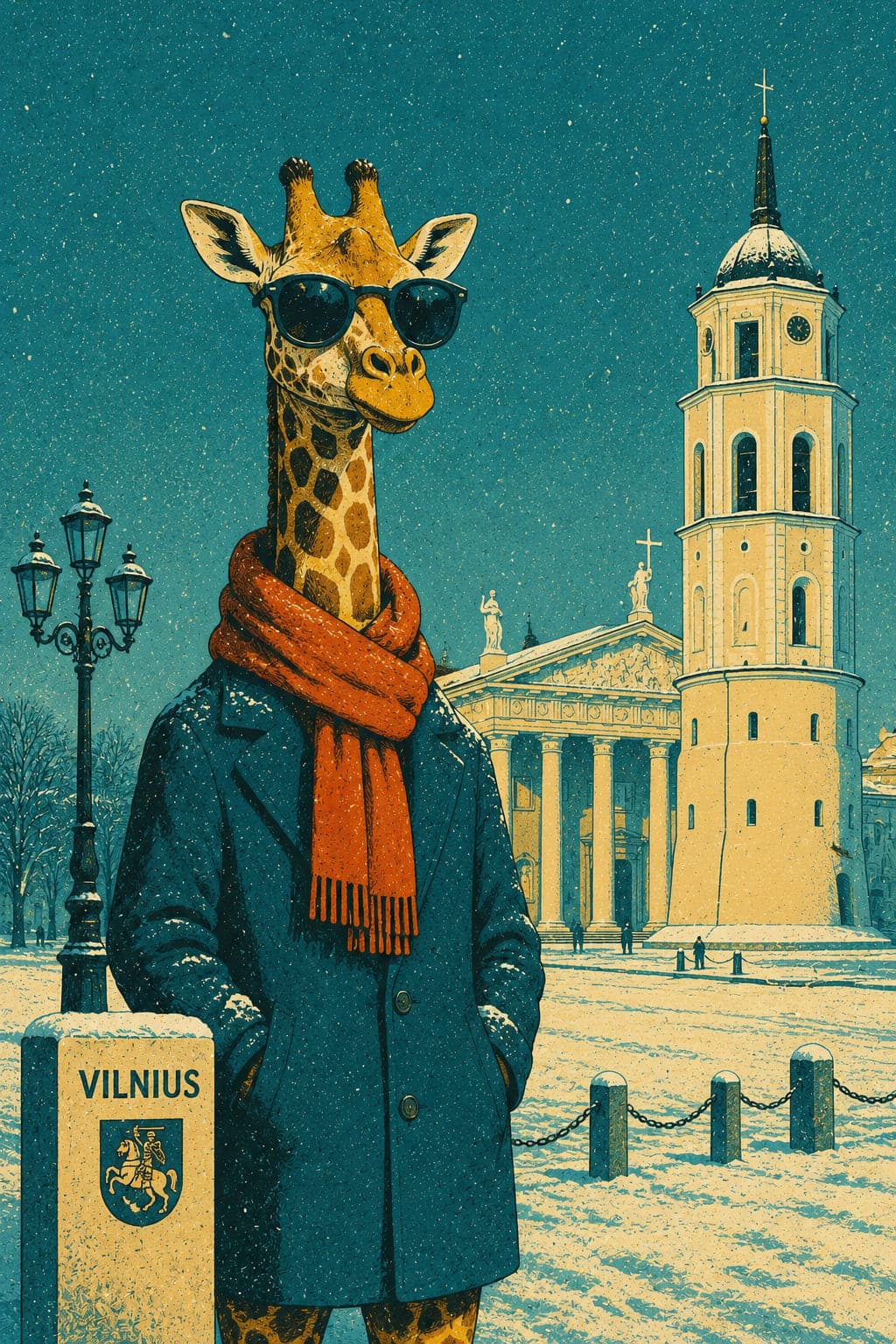
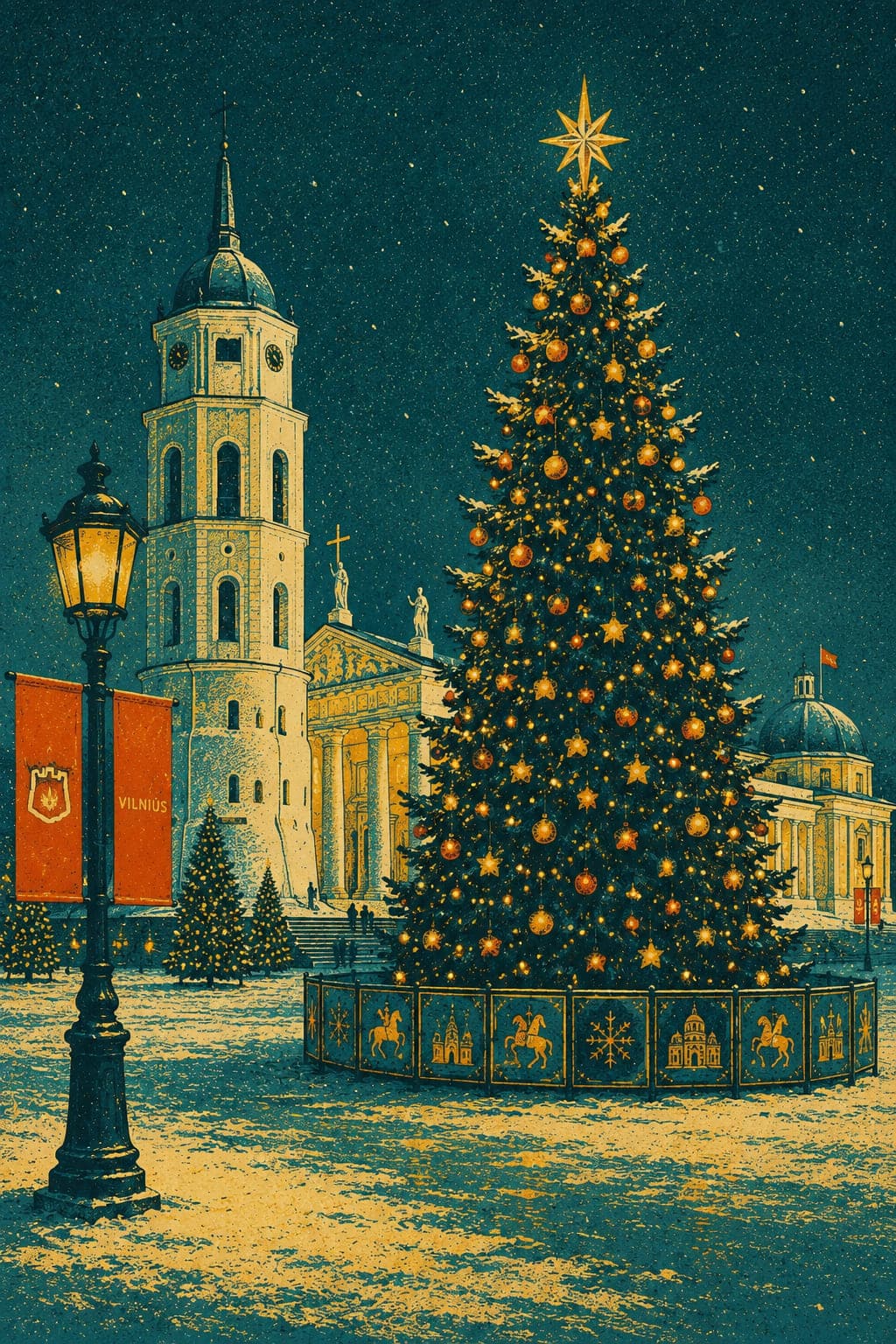
Vilnius builds one of the most photographed Christmas trees in Europe on Cathedral Square, rethemed each year. Behind it sits the largest baroque old town in Northern Europe, which is a better cold-evening walk than the market is a market.
What closes, and when
The 24th, 25th and 26th of December are public holidays in Estonia, Latvia and Lithuania. In practice shops and supermarkets close during the afternoon of the 24th, stay shut on the 25th, and open shorter hours on the 26th. Most restaurants close for all three days. Museums close on the 25th and often on the 24th and 26th too.
Hotels, airports and the main border crossings run normally. Long-distance buses and trains drop to a holiday timetable and can stop entirely on the 25th, which is the single most common way a Christmas trip here goes wrong.
New Year is the opposite: the 31st and the 1st are loud, the markets are open again, and everything is running.
Snow, cold and four hours of useful light
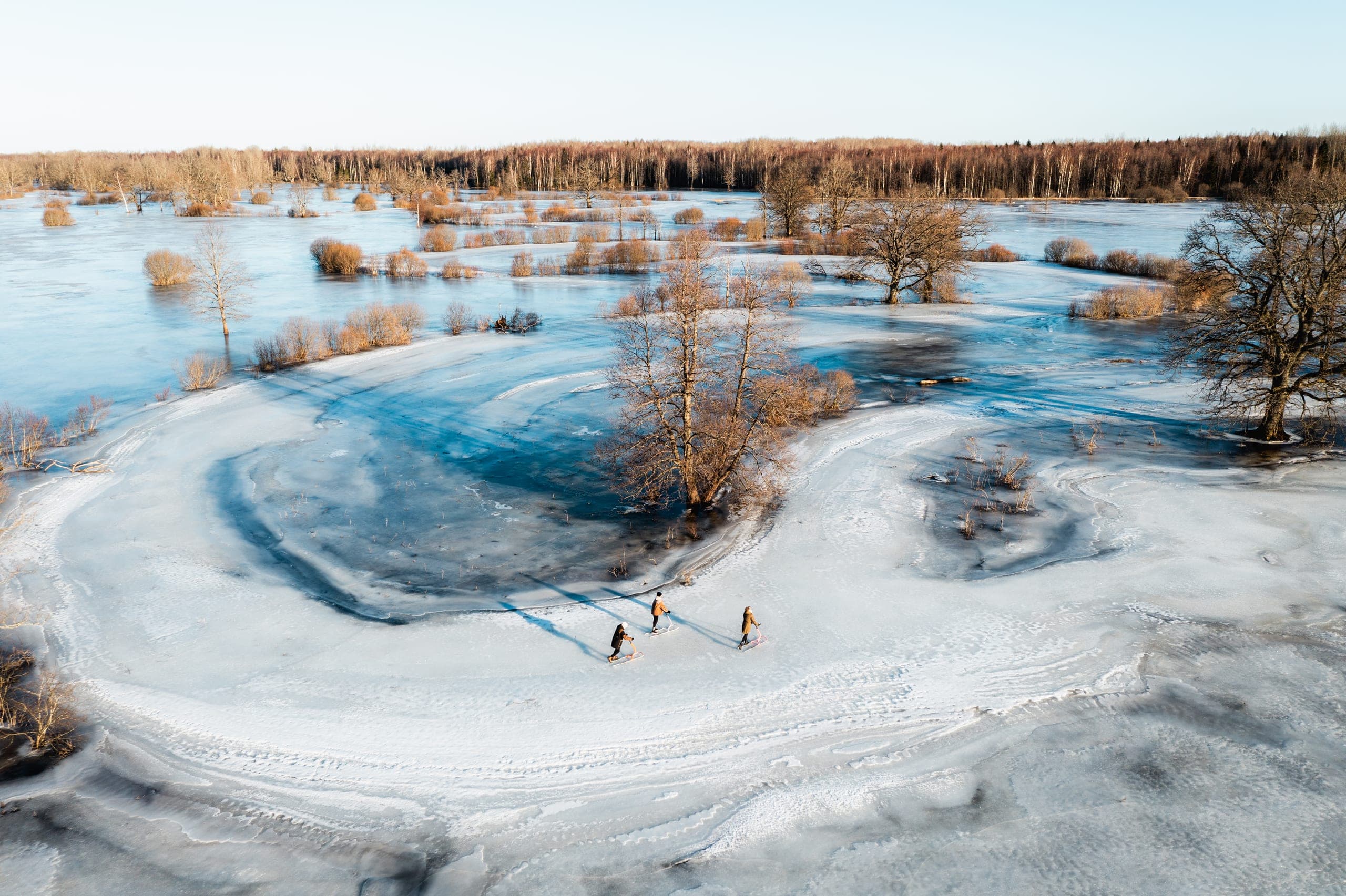
Expect temperatures around freezing and often between minus five and minus ten, colder inland and in Estonia. A white Christmas is likely rather than guaranteed: roughly two years in three in Estonia and Latvia, fewer in Lithuania, and warm Decembers have become more common.
The bigger adjustment is the light. In late December the sun rises around nine and sets around half past three in Vilnius, a little earlier in Tallinn. You get four to five useful hours. That is not a problem if you plan for it, because the markets and the old towns are better after dark anyway, but it does mean a driving day has to be short.
Is it worth coming for?
For the two or three weeks before Christmas Eve, yes, without much qualification. The old towns are medieval, small, lit and genuinely cold, the markets are unhurried compared with the German ones, and the region is cheap in a season when the rest of Europe is not.
For the 24th to the 26th themselves, it depends what you want. If you want a country going quiet, snow on a baroque roof and a long dinner somewhere that has stayed open for you, it is one of the best places in Europe to be. If you want things open, come earlier in the month.
We run the three capitals as a private winter loop, which solves the short daylight and the holiday timetables in one go: a warm car, a driver-guide, and the Hill of Crosses in the snow between Vilnius and Riga.
- What is Christmas like in Estonia?
- Quiet, domestic and only lightly religious. The evening of 24 December is the family meal, roast pork with blood sausage and sauerkraut, often after a sauna rather than a church service. The President declares Christmas Peace from Tartu at midday. Tallinn's Town Hall Square market runs from late November into early January, either side of the three closed days.
- What is Christmas like in Latvia?
- Centred on Christmas Eve, with pork, grey peas with bacon and piparkukas ginger biscuits, traditionally nine dishes. Riga claims the first decorated Christmas tree, on Town Hall Square in 1510, and the older custom of dragging and burning a log to carry off the year's troubles survives in places. The 24th to the 26th are public holidays and most things close.
- What is Christmas like in Lithuania?
- The most elaborate of the three. Kucios, the Christmas Eve supper, begins when the first star appears and runs to twelve meatless dishes, one per apostle, with an empty place laid for the family's dead. Vilnius sets one of Europe's most photographed Christmas trees on Cathedral Square. Christmas Day itself is slow and domestic.
- Is anything open on 24, 25 and 26 December in the Baltics?
- Very little. All three days are public holidays in Estonia, Latvia and Lithuania. Shops close during the afternoon of the 24th and stay shut on the 25th, most restaurants close for all three days, and museums usually close too. Hotels and airports run normally, but long-distance buses and trains drop to a holiday timetable and can stop on the 25th.
- Will there be snow in the Baltics at Christmas?
- Probably, but it is not guaranteed. Roughly two Christmases in three are white in Estonia and Latvia and somewhat fewer in Lithuania, and warm Decembers have become more common. Expect temperatures around or below freezing either way, and plan for four to five hours of useful daylight rather than for the snow.
- Is it worth visiting the Baltics at Christmas?
- Yes, particularly in the two or three weeks before Christmas Eve, when the markets are open, the old towns are lit and the region is far cheaper than western Europe in the same season. Over the 24th to the 26th the countries go quiet and largely close, which is lovely if that is what you came for and frustrating if it is not.
- Which Baltic country is best for Christmas?
- Lithuania for Christmas Eve itself, because Kucios is the fullest tradition of the three. Estonia for the market, since Tallinn's is the most celebrated. Latvia for the quietest old town under snow. The three capitals are a scenic private drive apart, so a five to seven day loop in December takes in all of them.
- Did Tallinn or Riga have the first Christmas tree?
- Both claim it. Tallinn dates its tree to 1441, when the Brotherhood of Blackheads is said to have raised one on Town Hall Square, and Riga to 1510, marked by a plaque in the cobbles of its own Town Hall Square. Both stories involve the same merchant brotherhood, the records are thin in both cases, and neither city has conceded.
Still have a question?
Ask the small team that runs these trips. A real person replies, usually within one working day.