Why it matters more here than anywhere
Midsummer in the Baltics is not a folklore performance staged for visitors. It is the most widely observed night of the year, older than Christianity in the region, and it survived fifty years of Soviet rule during which it was discouraged and, for a time in Latvia, effectively banned. Celebrating it was a quiet act of national identity, and that memory is still present.
Latvia takes it furthest. Jani is arguably the country's most important holiday, ahead of Christmas, and both 23 and 24 June are public holidays. In Estonia, Jaanipaev on 24 June is joined to Victory Day on 23 June, which commemorates a decisive 1919 battle in the War of Independence, so the two run together as one long celebration. In Lithuania, 24 June is a public holiday and the celebration is called Jonines or, in its older form, Rasos.
The practical consequence is the same in all three: the cities empty and the countryside fills.
What actually happens on the night
A bonfire, and it has to burn until sunrise. Letting it go out early is the one thing nobody does. People jump the fire in pairs, sing, and stay up through what is barely a night at all, since at this latitude the sky never fully darkens in June.
Wreaths. In Latvia, women wear wreaths of wildflowers and men, particularly anyone named Janis, wear oak leaves. There is a great deal of singing with a repeated refrain, ligo, which gives the evening before its name, Ligo. In Lithuania, wreaths are floated on rivers and lakes with candles, and couples go into the forest to look for the fern flower, which does not exist, which everybody knows, and which is entirely the point.
Food and drink. Latvian Jani has its own cheese, a caraway curd cheese made for the occasion, eaten with beer. In all three countries there is grilling, and a great deal of it, and it goes on until the light comes back around four in the morning.
Then people swim, or wash their faces in the morning dew, which is meant to keep you young, and go to sleep at six.
The practical warnings
Shops. Supermarkets close early on 23 June and many stay shut on 24 June. Buy what you need on 22 June. This catches visitors out every single year.
Restaurants. Many close for the holiday, particularly outside the capitals, because the staff are also celebrating. The ones that stay open in the cities will be quiet, which is exactly the wrong atmosphere for the biggest night of the year.
Transport. Intercity coaches run reduced holiday timetables on 23 and 24 June, and city transport thins out. Roads out of the capitals on the afternoon of 23 June are busy, and roads back on 24 June are worse, with a real and well-publicised drink-driving problem on the night itself. If you are not driving yourself, that is a genuine advantage rather than a sales point.
Accommodation. Rural guesthouses book out months in advance, particularly in Latvia. This is not a trip to arrange in June.
Where to actually be
The best version of this night is a private one: a farmhouse, a lake, a fire, and people who have done it every year of their lives. If you have any connection at all in the region, use it. An invitation to a family Jani is worth more than any ticket.
Failing that, the open-air museums run the most credible public celebrations. The Latvian Ethnographic Open-Air Museum outside Riga, the Estonian Open Air Museum at Rocca al Mare in Tallinn, and the Open Air Museum of Lithuania at Rumšiškės, near Kaunas, all hold Midsummer events with fires, singing and food, on real historic farmsteads rather than a stage.
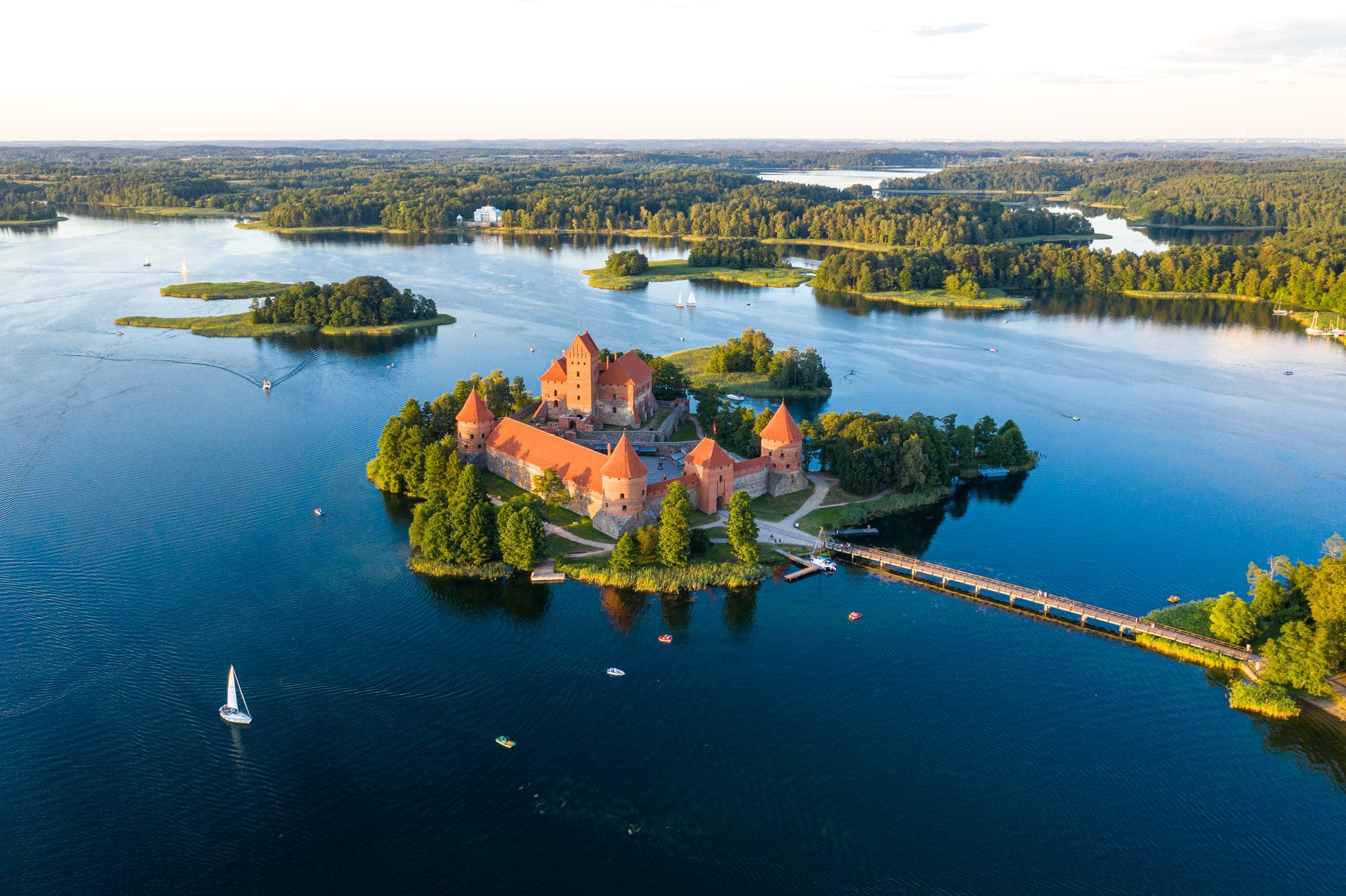
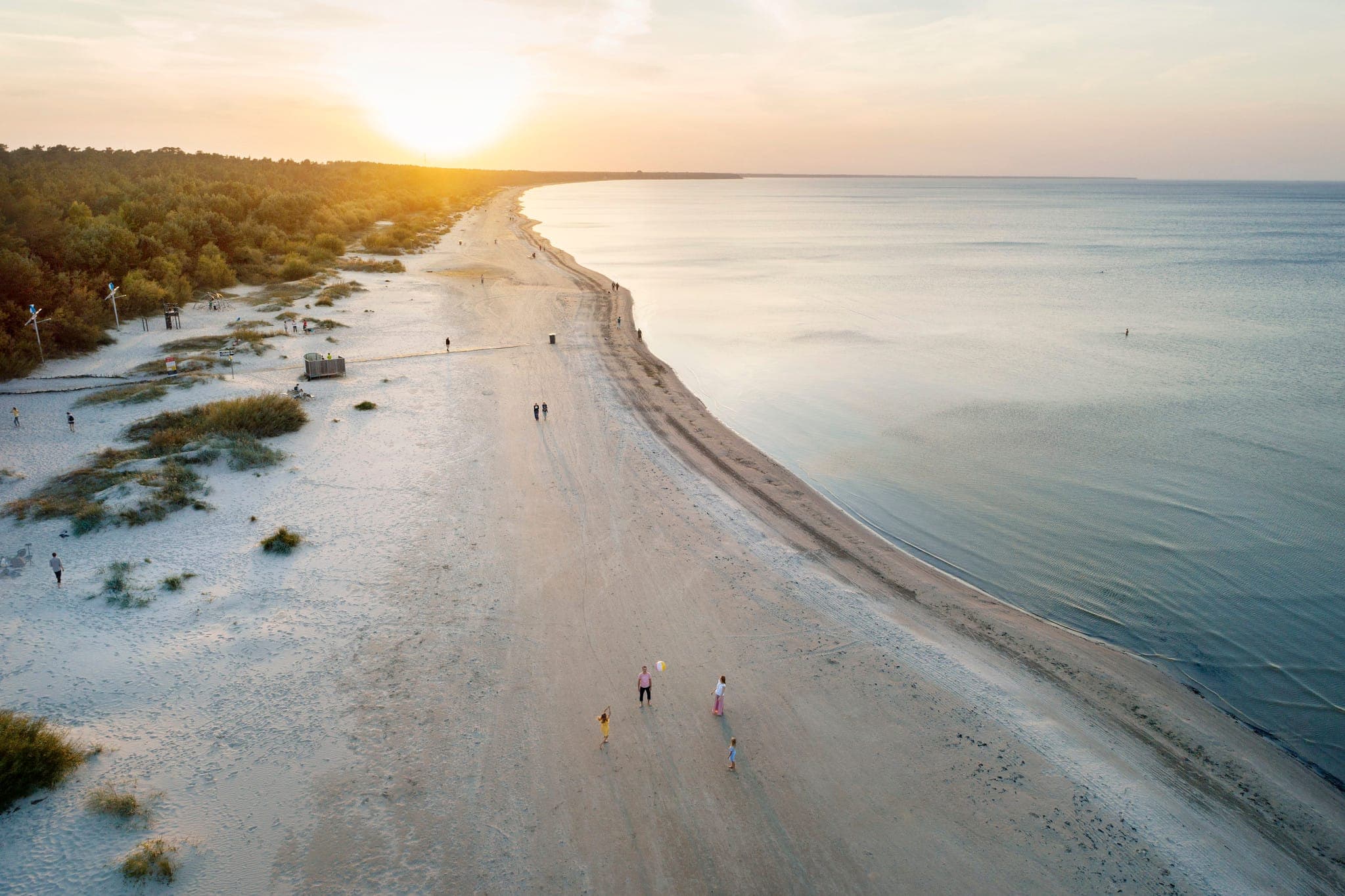
The countryside is the alternative. The Latvian coast at Jūrmala and the Kurzeme beaches, the Estonian islands, and the Lithuanian lakes around Trakai and Zarasai all fill with fires you can see from a distance along the shore.
One thing not to do: stay in a capital city old town on 23 June expecting a festival. You will find a handful of tourists and a closed bakery.
The light, which is the other reason to come
Late June is the lightest time of the year in the region by a wide margin. Tallinn gets around nineteen hours of daylight and the sky never becomes properly dark, holding a blue twilight through the small hours. Vilnius, further south, still gets over seventeen hours.
This changes how a day works. Dinner at nine feels like late afternoon, a walk at eleven feels like evening, and people simply stay outside. The whole region behaves differently for about three weeks, and it is the strongest argument for visiting in late June rather than July.
It also means midsummer travel is unusually forgiving. A drive that would be dark at six in December is bright at ten at night in June, so a late arrival or a long detour costs you nothing.
How to plan around it
Book early, arrive by 22 June, and shop on 22 June. Plan to be rural on 23 June and to do nothing on the morning of 24 June, because everyone else will also be doing nothing.
If you are building a longer trip, midsummer is a natural centre for it rather than an add-on. Arrive a few days ahead for the capitals while they are still functioning, spend the night itself in the countryside, then continue when the region wakes up.
It is also the single hardest week of the year to arrange independently, which is the honest reason to have someone local do it.
- When is Midsummer in the Baltics?
- The night of 23 June into 24 June. It is called Jani in Latvia, Jonines or Rasos in Lithuania, and Jaanipaev in Estonia. Both 23 and 24 June are public holidays in Latvia, and 24 June is a public holiday in Lithuania and Estonia.
- What happens on Latvian Jani?
- A bonfire that must burn until sunrise, wreaths of wildflowers for women and oak leaves for men, a great deal of singing with the ligo refrain, caraway Jani cheese and beer, and staying awake through a night that never gets fully dark.
- Are shops open during Baltic Midsummer?
- Mostly not. Supermarkets close early on 23 June and many stay shut on 24 June, and restaurants outside the capitals frequently close for the holiday. Buy what you need on 22 June.
- Where can visitors experience Baltic Midsummer?
- The open-air museums run the most credible public celebrations: the Latvian Ethnographic Open-Air Museum near Riga, the Estonian Open Air Museum at Rocca al Mare, and the Open Air Museum of Lithuania at Rumšiškės, near Kaunas. Otherwise head to the coast, the lakes or the islands. Do not stay in a city old town.
- How light is it at Midsummer in the Baltics?
- Tallinn gets around nineteen hours of daylight and never becomes properly dark, holding blue twilight all night. Vilnius gets over seventeen hours. It is the lightest period of the year and the region behaves completely differently for about three weeks.
- Should I book Midsummer accommodation in advance?
- Yes, months ahead. Rural guesthouses, particularly in Latvia, book out early, and it is the hardest week of the year to arrange at short notice.
Still have a question?
Ask the small team that runs these trips. A real person replies, usually within one working day.