
Tallinn: the postcard
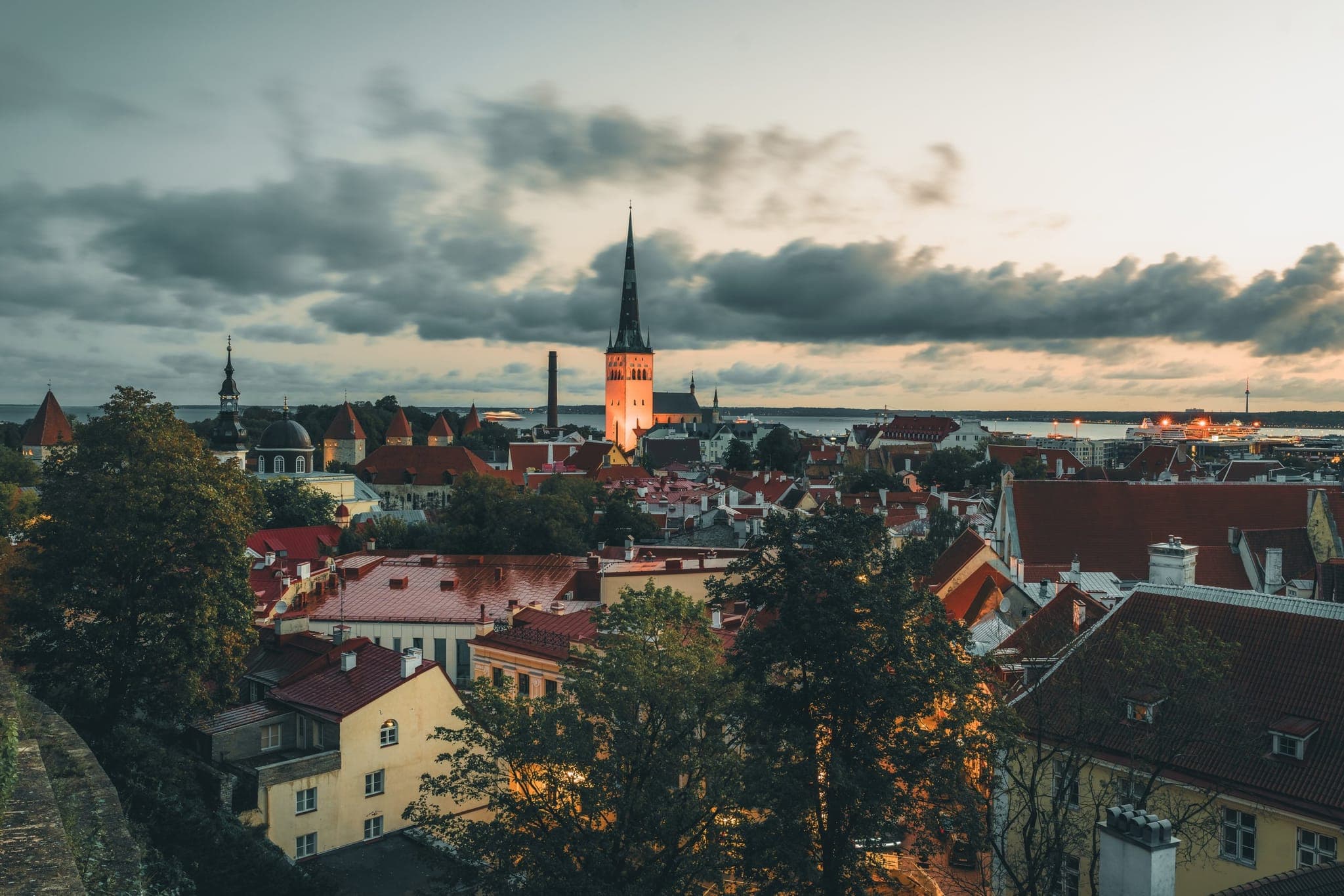
Tallinn has the best-looking old town in the region and one of the best in Europe. The medieval walls and towers are largely intact, the merchant houses are original, and the upper town on Toompea hill looks down over red roofs to the sea. It photographs exactly as well as it appears online, which is unusual.
It is also the most touristed. Cruise ships dock a fifteen-minute walk from Town Hall Square and unload thousands of people into a very small area, so the core between roughly ten and four in summer is busy. Early morning and evening are a different city entirely.
The second Tallinn is more interesting than most visitors realise. Kalamaja is a district of nineteenth-century wooden houses, Telliskivi is a former factory complex turned into studios, restaurants and a street-food market, and Kadriorg is a baroque park with the country's best art museum. All are within twenty minutes of the old town.
Tallinn is the most compact of the three and works well in two days. It is also easy to reach, with an airport a short taxi ride from the old town and a two-hour ferry to Helsinki.
Riga: the city
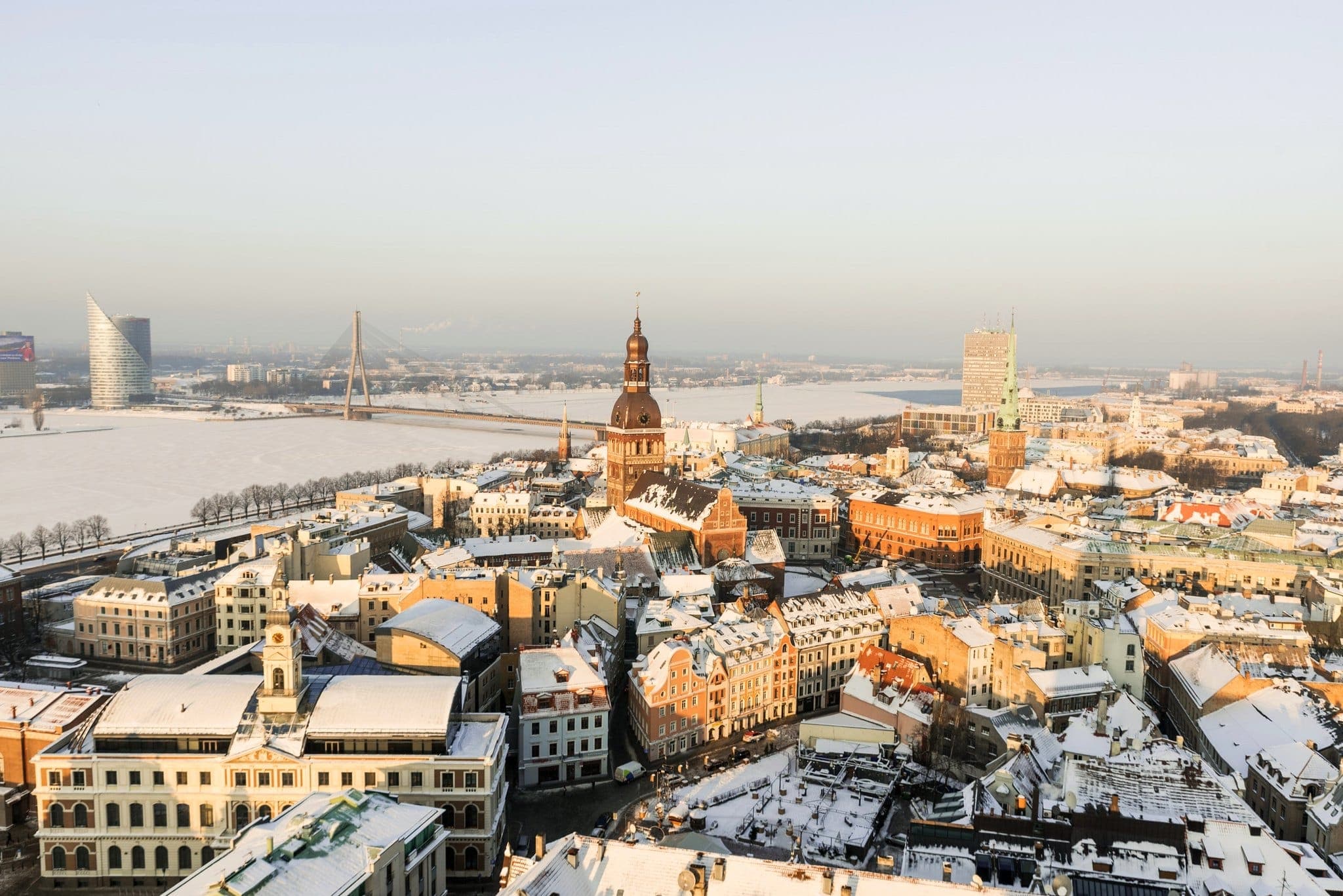
Riga is the only one of the three that feels like a proper city. Around six hundred thousand people, wide boulevards, a river, trams, and a scale that makes Tallinn feel like a large town by comparison.
Its architectural claim is Art Nouveau. More than seven hundred and fifty Jugendstil buildings survive in the centre, the densest concentration in the world, and the stretch along Alberta iela is genuinely one of the great European streets. This is not a supporting attraction; for many visitors it is the reason to come.
It has the best food and nightlife of the three by a clear margin, and the Central Market, housed in five converted Zeppelin hangars, is one of the great markets of Europe. The old town is smaller and more restored than Tallinn's, and the area around it has a rougher edge that some people love and some do not.
Riga is also the best base. It sits in the middle of the region, so both other capitals are one drive away, and Jūrmala's beach, the Gauja valley and Rundāle Palace are day trips.
Vilnius: the one people underestimate
Vilnius has the largest old town in the Baltics, roughly three and a half square kilometres, and it is the least visited of the three. Those two facts together are the whole argument: you can walk baroque streets in a UNESCO-listed centre in August and share them mostly with people who live there.
The character is different from its neighbours. Where Tallinn and Riga are Hanseatic, Gothic and Lutheran, Vilnius is Catholic and baroque, with dozens of churches, curved facades and courtyards leading into further courtyards. It has more in common with Kraków than with Tallinn.
Užupis, a small district across a river that declared itself a republic in 1997 with its own constitution nailed to a wall, is the most-cited quirk, and it is genuinely charming rather than a marketing exercise. The city is also strikingly green: a large part of it is forest and park, and there is a hill in the middle with a view.
Vilnius rewards three days more than two. Its old town is spread out in a way the other two are not, and the pleasure is in wandering rather than ticking off a list.
Cost, crowds and pace
On cost, Vilnius is cheapest, Riga sits in the middle, and Tallinn is the most expensive, particularly in July when cruise traffic peaks. The gap is roughly fifteen to twenty percent between Vilnius and Tallinn on food and rooms.
On crowds, Tallinn is busiest in the core during cruise hours, Riga fills at weekends with stag and hen traffic in a couple of old-town streets, and Vilnius is quietest almost always.
On pace, Tallinn is the most efficient, Riga the most energetic, Vilnius the most relaxed. If you like a city that makes you slow down, Vilnius. If you want to see a lot in forty-eight hours, Tallinn.
How many days each one needs
Tallinn: two days. One for the old town and Toompea, one for Kalamaja, Telliskivi and Kadriorg. A third day is best spent on a Lahemaa trip or the Helsinki ferry rather than in the city.
Riga: two to three days. One for the old town and the Central Market, one for the Art Nouveau district and the museums, and a third for Jūrmala or the Gauja valley.
Vilnius: three days. One for the old town core, one for Užupis, the hills and the churches, and one for Trakai castle on its lake, which is forty minutes away and the best day trip from any of the three capitals.
The answer, if you make us choose
For a single long weekend with no prior knowledge of the region: Riga. It has the most variety inside a small radius, the best food, the strongest architecture story and the best onward connections.
For the strongest single visual impression: Tallinn.
For the trip you will still be talking about in a year: Vilnius, which is the one that surprises people.
For a week: all three, with the drives between them treated as part of the trip. The Hill of Crosses sits on the road between Vilnius and Riga, and the Pärnu coast on the road between Riga and Tallinn.
- Which Baltic capital is the best to visit?
- Tallinn for the best-preserved medieval old town, Riga for its scale, food and architecture, and Vilnius for the largest old town and the fewest crowds. For a single long weekend, Riga offers the most variety.
- Which is better, Riga or Tallinn?
- Tallinn has the better old town and is more compact and photogenic. Riga is a bigger, more varied city with better food, nightlife and Art Nouveau architecture, and it is the better base for onward travel. Tallinn for two days, Riga for three.
- Is Vilnius worth visiting?
- Yes, and it is the most underrated of the three. It has the largest old town in the Baltics at around three and a half square kilometres, a baroque rather than Gothic character, far fewer visitors than Tallinn, and the best value of the three capitals.
- How many days do you need in each Baltic capital?
- Two days for Tallinn, two to three for Riga, and three for Vilnius, whose old town is larger and more spread out. Seven days covers all three at a comfortable pace with the drives in between.
- Which Baltic capital is cheapest?
- Vilnius, by roughly fifteen to twenty percent against Tallinn on food and accommodation. Riga sits between the two. Tallinn is the most expensive, especially in July.
- Which Baltic capital is least crowded?
- Vilnius, comfortably. Tallinn's old-town core is busiest during cruise-ship hours in summer, and Riga fills at weekends. Vilnius stays quiet even in August, which is remarkable for a UNESCO-listed old town of its size.
Still have a question?
Ask the small team that runs these trips. A real person replies, usually within one working day.