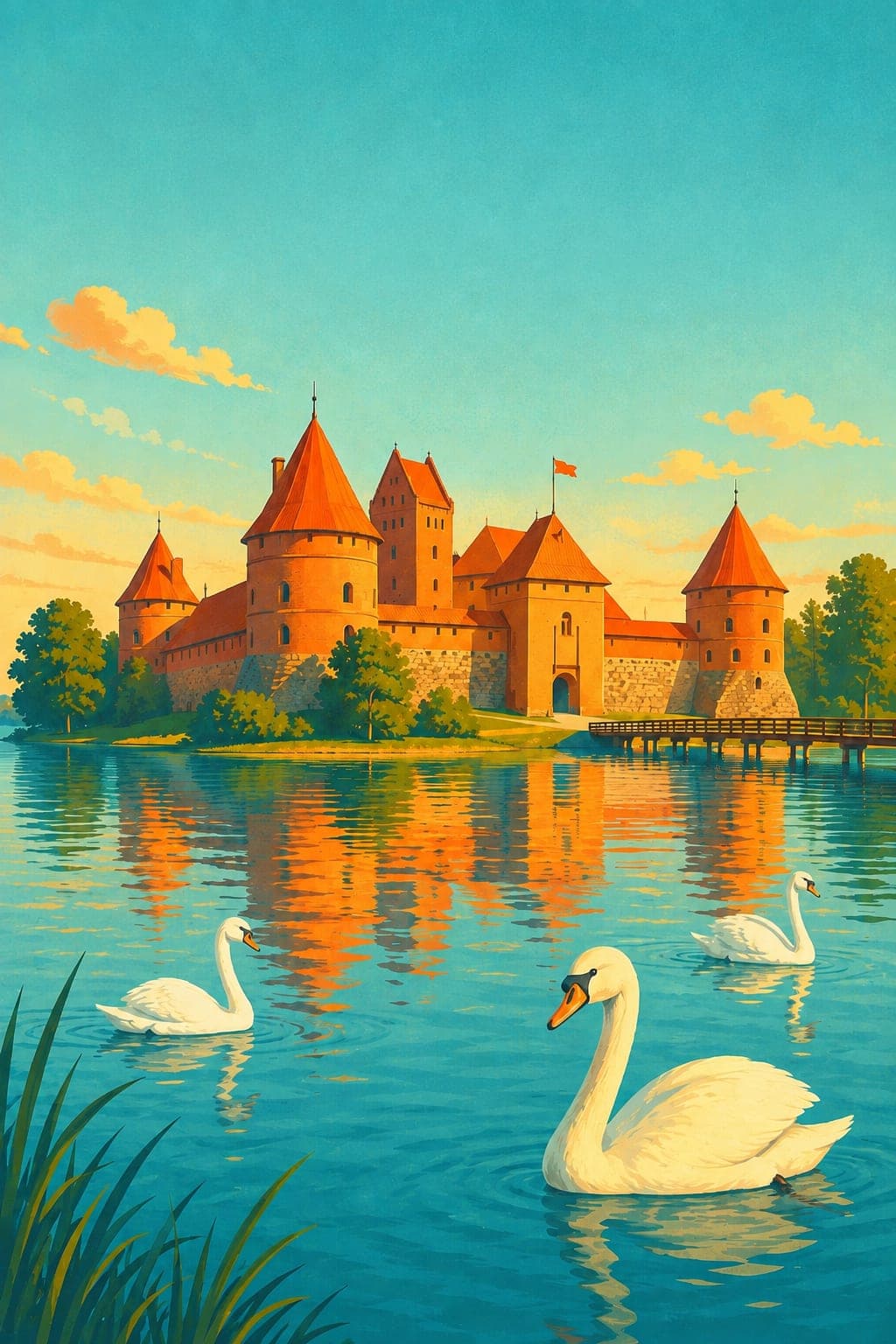
March: the thaw and the Kaziukas fair
March is winter with the light coming back. Highs sit around 5°C and nights are still below freezing, snow can fall well into the month, and by the equinox on 20 March the day is twelve hours long again.
The reason to come is Kaziukas, the St Casimir's fair, held around St Casimir's Day on 4 March. In 2027 it runs from Friday 5 to Sunday 7 March, with about 1,500 stalls along Gedimino prospektas and through the Old Town. Buy a verba, the dried-flower Easter palm that is the fair's emblem, and eat riestainiai, the ring-shaped bread rolls sold by the string.
Indoors, March is a good month for the capitals: museums are quiet, concert seasons are in full swing and hotel prices are close to their lowest.
April: storks, Easter and the fifth season
April is when the Baltics turn. Highs reach 10 to 13°C, the snow is gone from the cities and the first green appears at the end of the month. White storks come back from Africa in late March and April and rebuild their nests on poles, barns and church roofs; Lithuania has one of the densest stork populations in Europe and counts the stork as its national bird.
Easter falls on 28 March in 2027, and Orthodox Easter, kept by the Russian Orthodox communities in all three countries, on 2 May. In Lithuania people carry verbos to church on Palm Sunday and dye eggs with onion skins. In Latvia the custom is the Easter swing: it is said that swinging high at Easter keeps the mosquitoes away all summer.
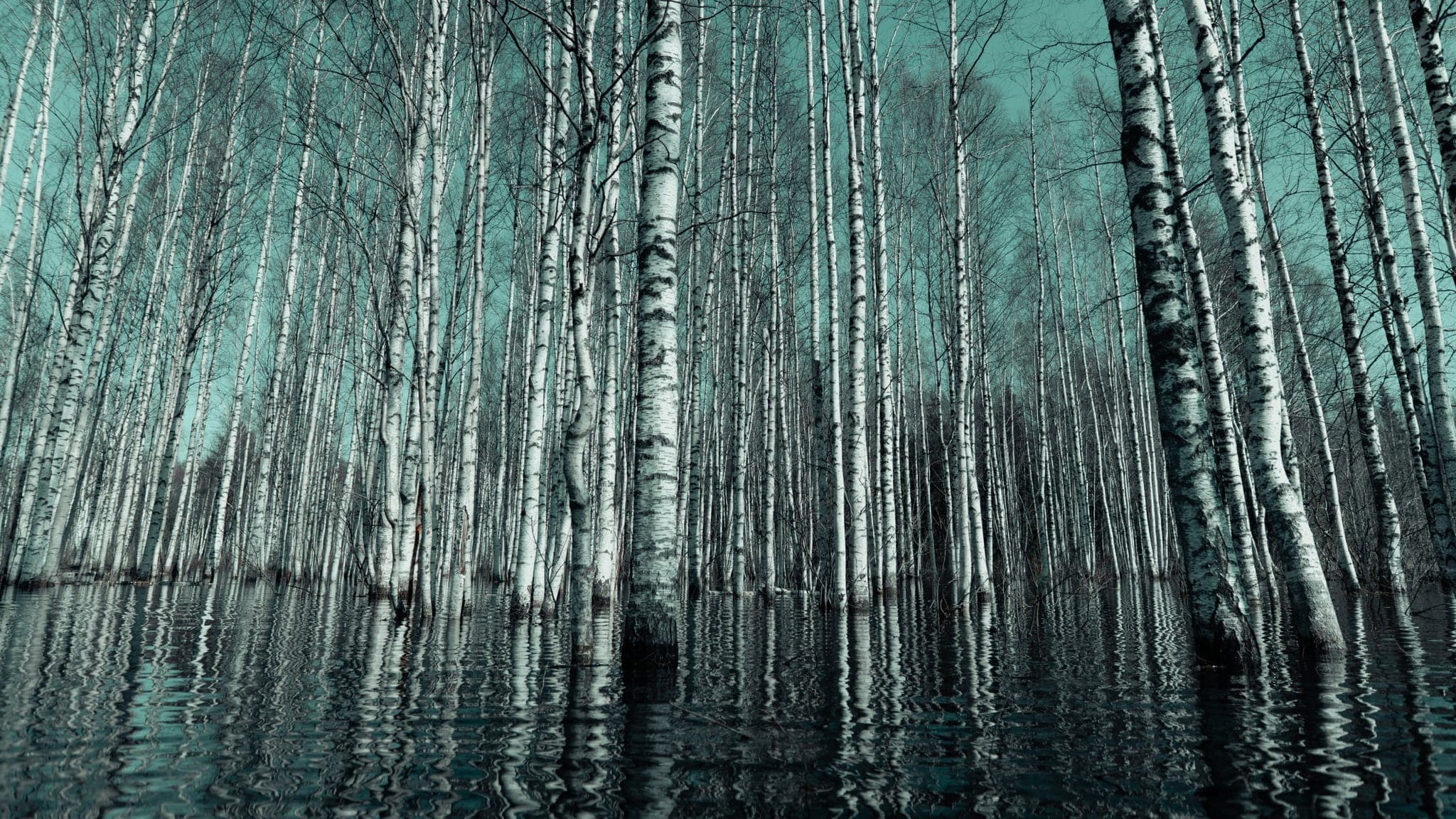
In Estonia, late March and early April bring the "fifth season" to Soomaa National Park, when snowmelt floods the rivers over thousands of hectares of meadow and forest and roads become canoe routes. The timing depends on the thaw and the high water can last days or weeks, so it is booked with a local guide at short notice.
May: green, long evenings, still quiet
May is our favourite month to recommend. Highs reach 15°C in Tallinn and 19°C in Vilnius, the birch and lilac come out together, and by the end of the month Vilnius has about 17 hours of daylight and Tallinn more than 18.
The summer crowds and prices start in June, so May has the long days without them. Cruise ships begin calling at Tallinn and Riga from May, so on a ship day the old towns fill by mid-morning; start early or go in the afternoon.
Museum Night, on a Saturday in mid-May, keeps museums in all three capitals open free into the night. 1 May is a public holiday everywhere, and Latvia also takes 4 May off for the restoration of its independence in 1990.
Nature: birds, bogs and the coast
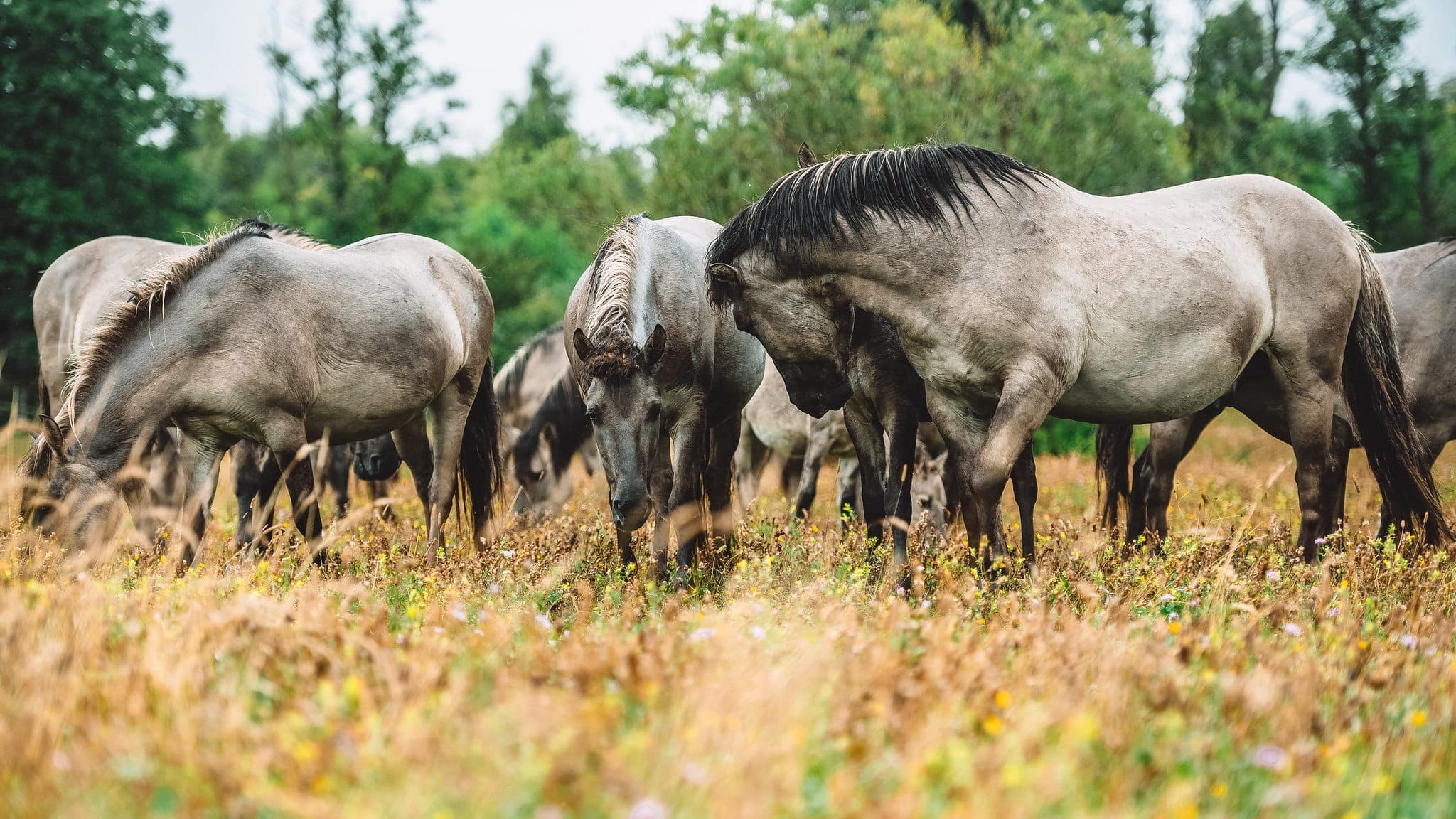
Spring is the season for birdwatchers. Hundreds of thousands of geese and other waterbirds stop on the Estonian west coast in April and May, around Matsalu Bay, and Pape Nature Park on Latvia's southwest coast has wild horses and aurochs-like cattle on its meadows and a bird ringing station on the migration route.
The bog boardwalks are open and dry enough by May: Ķemeri near Jūrmala in Latvia, Viru bog in Lahemaa in Estonia, Aukštumala on the Lithuanian side of the Curonian Lagoon. Go early in the morning for the birdsong.
The sea is the one thing spring does not offer. The Baltic is around 10°C in May, so the beaches are for walking. The coastal season, with beach cafes and summer guesthouses open, starts in June.
What is open and what is not
Everything in the capitals is open all year. Castles, palaces and most museums keep their winter hours until May, often closing an hour earlier than in summer, and some country manors and smaller sights open only from May.
On the Curonian Spit and the islands the season starts in May, and the ferries to the spit and to Saaremaa and Hiiumaa run all year. Easter weekend is a public holiday, and some museums close on Easter Sunday, so check before you plan a sight for that day.
Pack layers and a waterproof. April can give you a warm afternoon and a sleet shower in the same day, and evenings stay cool even in May.
Seeing it with us
Three capitals by rail is our easiest spring trip: Vilnius, Riga and Tallinn in eight days, self-guided and with no car needed. If you would rather have a guide, The Baltic Capitals in 8 Days does the same cities privately, and in May we add the Gauja valley or Lahemaa for the green.
For Kaziukas, a long weekend in Vilnius is enough: the fair on the Saturday, the Old Town and Užupis on the Sunday, and Trakai on the way to the airport.
We build spring trips to order, so if storks, bogs or the Soomaa flood are the point, tell us and we will plan the route around them.
| March | 5 / 5 / 3°C highs | Thaw, Kaziukas fair, 12 hours of light by the 20th |
|---|---|---|
| April | 13 / 12 / 10°C highs | Storks return, Easter, Soomaa flood |
| May | 19 / 18 / 15°C highs | Green, long evenings, before summer prices |
- Is spring a good time to visit the Baltics?
- Yes, May above all. It has long, light evenings, the countryside is green and the summer crowds and prices have not started. March and April are cooler and less settled, but bring the Kaziukas fair, Easter and the Soomaa flood.
- How warm is it in the Baltics in April?
- Mild by day and cold at night. Average highs are about 13°C in Vilnius, 12°C in Riga and 10°C in Tallinn, with lows around freezing. A warm spell can reach 20°C, and so can a late sleet shower.
- When is the Kaziukas fair in 2027?
- From Friday 5 to Sunday 7 March 2027 in Vilnius, according to the city's events calendar. It is held every year around St Casimir's Day, 4 March, with about 1,500 craft and food stalls in the city centre.
- What is the fifth season in Estonia?
- The spring flood in Soomaa National Park, usually in late March and early April, when meltwater spreads the rivers over meadows and forest. Visitors explore it by canoe with a local guide.
- When is Easter in the Baltics in 2027?
- Easter Sunday is 28 March 2027. Orthodox Easter, kept by the Russian Orthodox communities, is 2 May 2027. Easter weekend is a public holiday in all three countries.
Still have a question?
Ask the small team that runs these trips. A real person replies, usually within one working day.