Die Hauptstadt: Vilnius
Die Hauptstadt Litauens ist Vilnius mit rund 580.000 Einwohnern, im Südosten des Landes nahe der belarussischen Grenze. Sie ist seit dem Mittelalter der Sitz litauischer Macht, als sie das Zentrum des Großfürstentums war, und sie bleibt das politische und kulturelle Herz des Landes.
Vilnius ist vor allem für seine Altstadt bekannt, eine der größten und besterhaltenen barocken Altstädte Mittel- und Osteuropas und UNESCO-Weltkulturerbe. Kirchtürme, Innenhöfe und Kopfsteingassen füllen einen kompakten, überwiegend aus Backstein errichteten Kern. Jenseits des Flüsschens Vilnelė liegt Užupis, ein Bohème-Viertel, das sich 1997 zur unabhängigen Künstlerrepublik erklärte, mit einer augenzwinkernden eigenen Verfassung an der Wand.
Die Landschaft: Wald, Seen und keine Berge
Litauen ist flach, nicht gebirgig. Das Land hat überhaupt keine Berge: Der höchste Punkt, der Aukštojas südöstlich von Vilnius, erreicht nur 294 Meter, eher eine bewaldete Anhöhe als ein Gipfel. Wer Alpenlandschaft sucht, ist hier falsch.
Litauen bietet stattdessen Wald und Wasser. Etwa ein Drittel des Landes ist Wald, und im Nordosten liegt ein Seengebiet, Aukštaitija, dicht an Seen, Kiefern und stillen Dörfern. Der Nemunas, der Hauptfluss des Landes, durchquert es von Südosten und mündet bei Klaipėda ins Meer. Die Ostseeküste ist kurz, rund 90 km, und sie ist die Bernsteinküste, an der das fossile Harz nach Stürmen bis heute angespült wird.
Die Kurische Nehrung
Der markanteste Ort Litauens ist die Kurische Nehrung, eine lange, schmale Sanddünen-Halbinsel, die ein flaches Haff von der offenen Ostsee trennt. Sie ist UNESCO-Weltkulturerbe, geteilt mit dem russischen Gebiet Kaliningrad, und trägt die höchsten Wanderdünen Europas, Wälle aus hellem Sand, die der Wind noch immer bewegt.
Der Kurort Nida nahe dem südlichen Ende der litauischen Hälfte ist der Ausgangspunkt für einen Besuch: ein Dorf aus blau-braunen Fischerhäusern, in dem Thomas Mann ein Sommerhaus hatte. Die Parnidis-Düne über dem Ort mit ihrer steinernen Sonnenuhr ist der klassische Aussichtspunkt über Sand und Haff. Die Nehrung wird per Fähre von Klaipėda aus erreicht und ist an den langen Sommertagen am schönsten.
Die Städte und Orte
Nach Vilnius ist die größte Stadt Kaunas in der Mitte des Landes. Zwischen den beiden Weltkriegen war sie die provisorische Hauptstadt, als Vilnius unter polnischer Kontrolle stand, und aus dieser Zeit stammt ein bemerkenswerter Bestand an Bauten der Zwischenkriegsmoderne, heute UNESCO-gelistet. Klaipėda an der Küste ist der einzige Hafen des Landes, eine früher deutsche Stadt, bis 1945 als Memel bekannt, und das Tor zur Kurischen Nehrung.
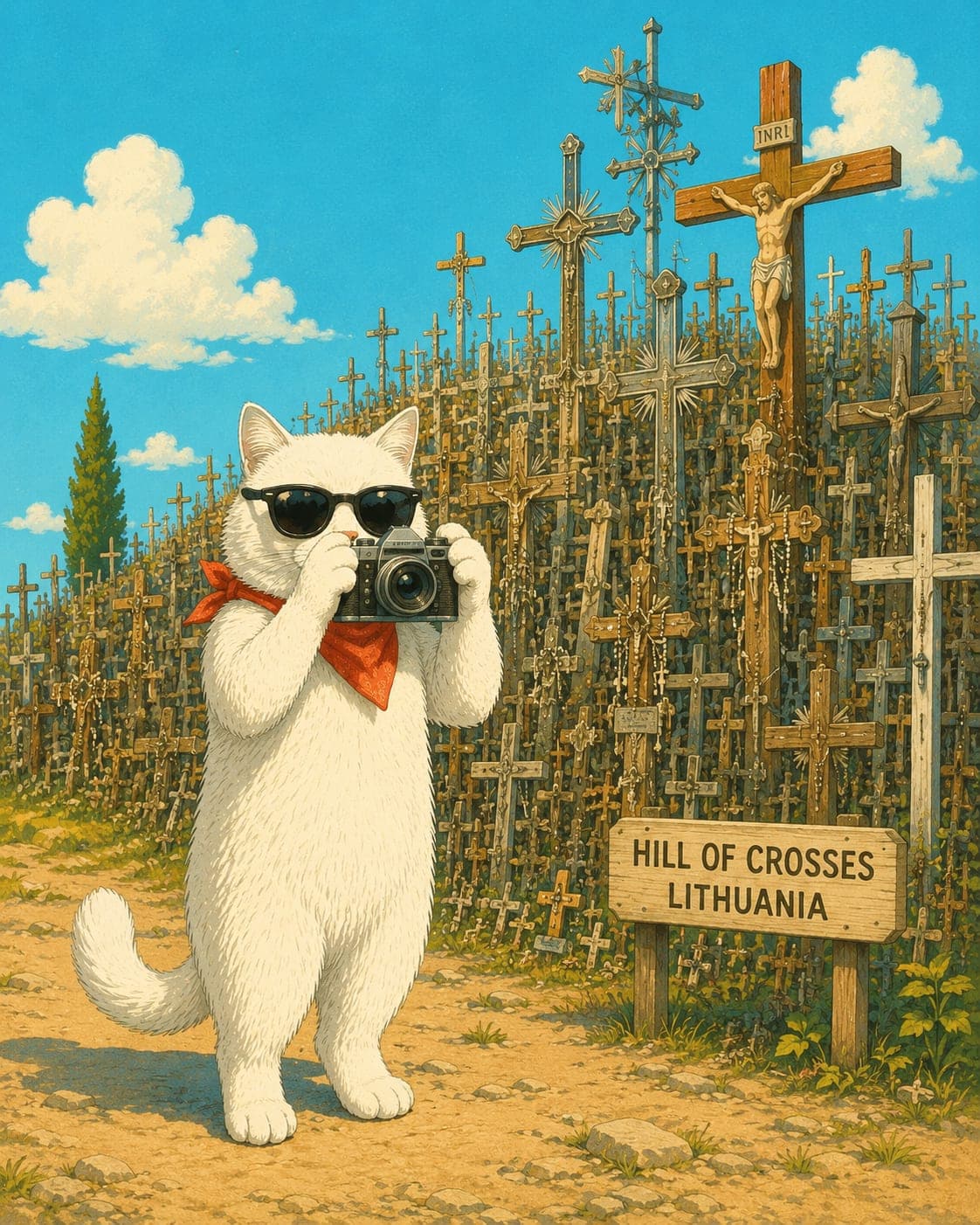
Die klassischen Tagesausflüge liegen nahe der Hauptstadt. Trakai, eine halbe Stunde westlich von Vilnius, ist eine Backsteinburg auf einer Insel im Galvė-See, der historische Sitz der Großfürsten und die Heimat der kleinen Gemeinschaft der Karaimen. Kernavė, etwas weiter draußen, war eine mittelalterliche Hauptstadt und ist heute eine archäologische UNESCO-Stätte grasbewachsener Burgberge. Und nahe Šiauliai im Norden steht der Berg der Kreuze, ein niedriger Hügel, bedeckt mit über 200.000 Kreuzen, die Pilger in zwei Jahrhunderten hinterlassen haben.
Wofür Litauen bekannt ist
Litauen ist zuerst für das barocke Vilnius und die Dünen der Kurischen Nehrung bekannt und dann für den Berg der Kreuze und für Bernstein, das baltische Gold, das entlang seiner Küste verarbeitet wird. Es ist außerdem, ganz unaufdringlich, das am tiefsten verwurzelte der drei Länder: Das mittelalterliche Großfürstentum Litauen war zeitweise der größte Staat Europas und reichte von der Ostsee bis zum Schwarzen Meer, und das Land ist bis heute tief katholisch.
Zwei Dinge überraschen Besucher. Das eine ist Basketball, der hier weniger Sport als nationale Leidenschaft ist, näher an dem, was anderswo der Fußball bedeutet. Das andere ist die Sprache: Litauisch ist eine von nur zwei überlebenden baltischen Sprachen, neben dem Lettischen, und eine der archaischsten lebenden indogermanischen Sprachen, die Formen bewahrt, die Sprachwissenschaftler mit dem Sanskrit vergleichen.
Die beste Reisezeit
Die beste Reisezeit für Litauen ist von Ende Mai bis September. Das ist die warme Jahreshälfte, wenn die Küste und die Kurische Nehrung geöffnet sind, Wälder und Seen grün sind und die Tage lang. Der Juni bringt die längsten Tage von allen, mit Licht am Himmel bis weit nach Mitternacht.
Der Dezember ist das andere Fenster, für Vilnius' Weihnachtsmarkt auf dem Domplatz, bekannt für einen aufwendig geschmückten Weihnachtsbaum, der für sich allein Besucher anzieht. Außerhalb dieser beiden Fenster sind die Übergangsmonate April und Oktober ruhiger und günstiger, bei kühlerem, grauerem Wetter.
- Was ist die Hauptstadt Litauens?
- Die Hauptstadt Litauens ist Vilnius. Mit rund 580.000 Einwohnern hat sie eine der größten und besterhaltenen barocken Altstädte Mittel- und Osteuropas, ein UNESCO-Welterbe, und beherbergt zudem die Künstlerrepublik Užupis.
- Wofür ist Litauen bekannt?
- Litauen ist bekannt für das barocke Vilnius, die Dünen der Kurischen Nehrung, den Berg der Kreuze, Bernstein, Basketball als nationale Leidenschaft und seine Geschichte als Großfürstentum. Es ist ein tief katholisches Land.
- Hat Litauen Berge?
- Nein. Litauen hat keine Berge. Es ist ein flaches Land, und sein höchster Punkt, der Aukštojas, erreicht nur 294 Meter. Die Landschaft ist von Wald, Seen und einer kurzen Küste mit den Dünen der Kurischen Nehrung geprägt, nicht von Gipfeln.
- Welche Städte und Orte sollte man besuchen?
- Zuerst Vilnius, dann Kaunas und den Hafen Klaipėda. Dazu die Inselburg Trakai, Nida auf der Kurischen Nehrung, den Berg der Kreuze bei Šiauliai und die UNESCO-Stätte Kernavė.
- Wie ist die Landschaft?
- Flach und grün. Etwa ein Drittel Litauens ist Wald, im Nordosten liegt ein Seengebiet, und die kurze, rund 90 km lange Bernsteinküste trägt die Dünen der Kurischen Nehrung. Berge gibt es nirgends, der höchste Punkt misst nur 294 Meter.
- Wann ist die beste Reisezeit?
- Ende Mai bis September wegen der langen Tage und der offenen Kurischen Nehrung, wobei der Juni der hellste Monat ist. Der Dezember ist die Zeit für Vilnius' Weihnachtsmarkt mit seinem aufwendig geschmückten Baum.
Noch eine Frage offen?
Fragen Sie das kleine Team, das diese Reisen selbst durchführt. Eine echte Person antwortet, meist innerhalb eines Werktags.