Three, five or seven days
Lithuania is a small country with its capital in the far south-east, which decides most of the plan. Everything within an hour or so of Vilnius works as a day trip. The coast, about 310 km away, does not.
So the three lengths are really three shapes. Three days is Vilnius and one trip out. Five days is Vilnius as a base, with a different day trip each morning and the same hotel each night. Seven days is a journey, east to west, ending on the Curonian Spit.
If this is your first visit and you have five days, the base is the better choice. If you have seven, go to the sea.
Three days: Vilnius and Trakai
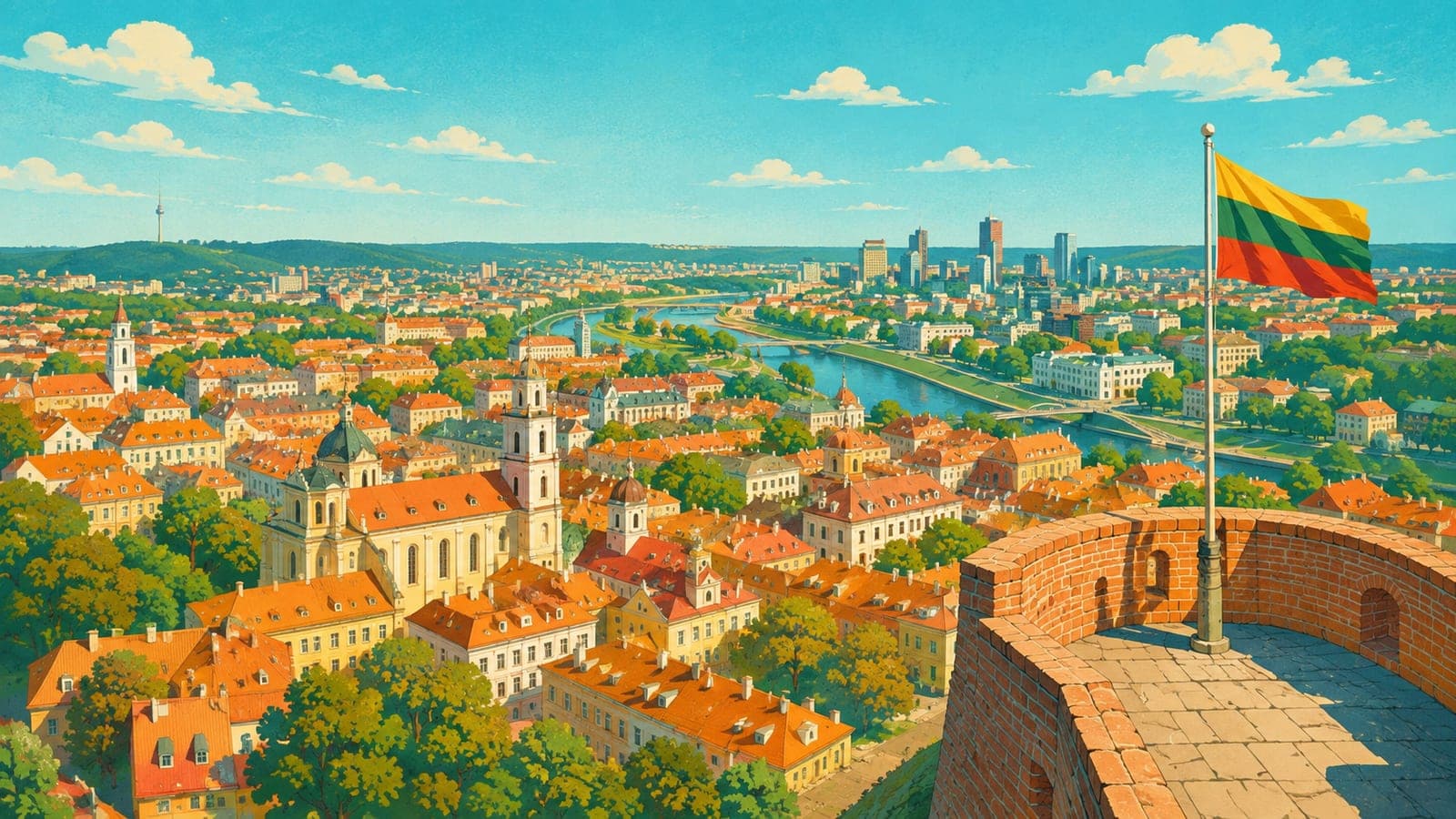
Day one is the old town on foot, the largest baroque old town in Northern Europe. Start at Cathedral Square, walk Pilies Street to the university courtyards and St Anne's, and climb to Gediminas Tower for the view over the roofs. End at the Gate of Dawn.
Day two crosses the river into Užupis, the self-declared artists' republic with its constitution posted on a wall in many languages. Spend the afternoon in the Palace of the Grand Dukes or the old Jewish quarter, and eat cepelinai in the lower old town in the evening.
Day three is Trakai, 27 km west, about half an hour by car. Cross the wooden footbridge to the brick castle on Lake Galvė, or better, see it from a boat, then eat kibinai with the Karaim community on Karaimų Street. You are back in Vilnius by mid-afternoon.
5 days in Vilnius: one hotel, three day trips
Five days in Vilnius is the most relaxed way to see Lithuania. Take the three days above, then use days four and five for the two other trips the capital does well. You never pack a bag.
Day four is Kaunas, the interwar capital, with its castle and the modernist centre around Laisvės alėja. The LTG Link express train takes about an hour, a stopping train about an hour and twenty minutes, so you do not need a car.
Day five is Kernavė, 35 km north-west: grass-covered hill forts above the Neris, where the first Lithuanian state had its centre, and a UNESCO site. It is a quiet morning, and it leaves the afternoon free for the city. If you would rather have a last full day in Vilnius, Kernavė also fits on the way back from Trakai on day three.
Vilnius in five days also leaves room for a dawn balloon flight over the old town, one of the few capitals in the world that allows it, if the weather gives you a morning.
Five days, two cities: Vilnius and Kaunas
The other way to spend five days is to split them: three nights in Vilnius and two in Kaunas. Kaunas rewards an evening, which a day trip does not give you, and the city is about an hour from Vilnius by train.
Spend days one to three in Vilnius as above, Trakai included. On day four, go to Kaunas, see the castle and walk Laisvės alėja, and stay the night. Day five is the rest of Kaunas, then the train back to Vilnius for your flight.
This version suits a second visit or anyone interested in twentieth-century architecture. For a first trip, the single base is simpler.
Seven days: Vilnius to the Curonian Spit
Days one and two are Vilnius on foot, as above. On day three, collect a car or meet your driver, go half an hour west to Trakai for the castle, and carry on to Kaunas for the night: 130 km and about two hours in all.
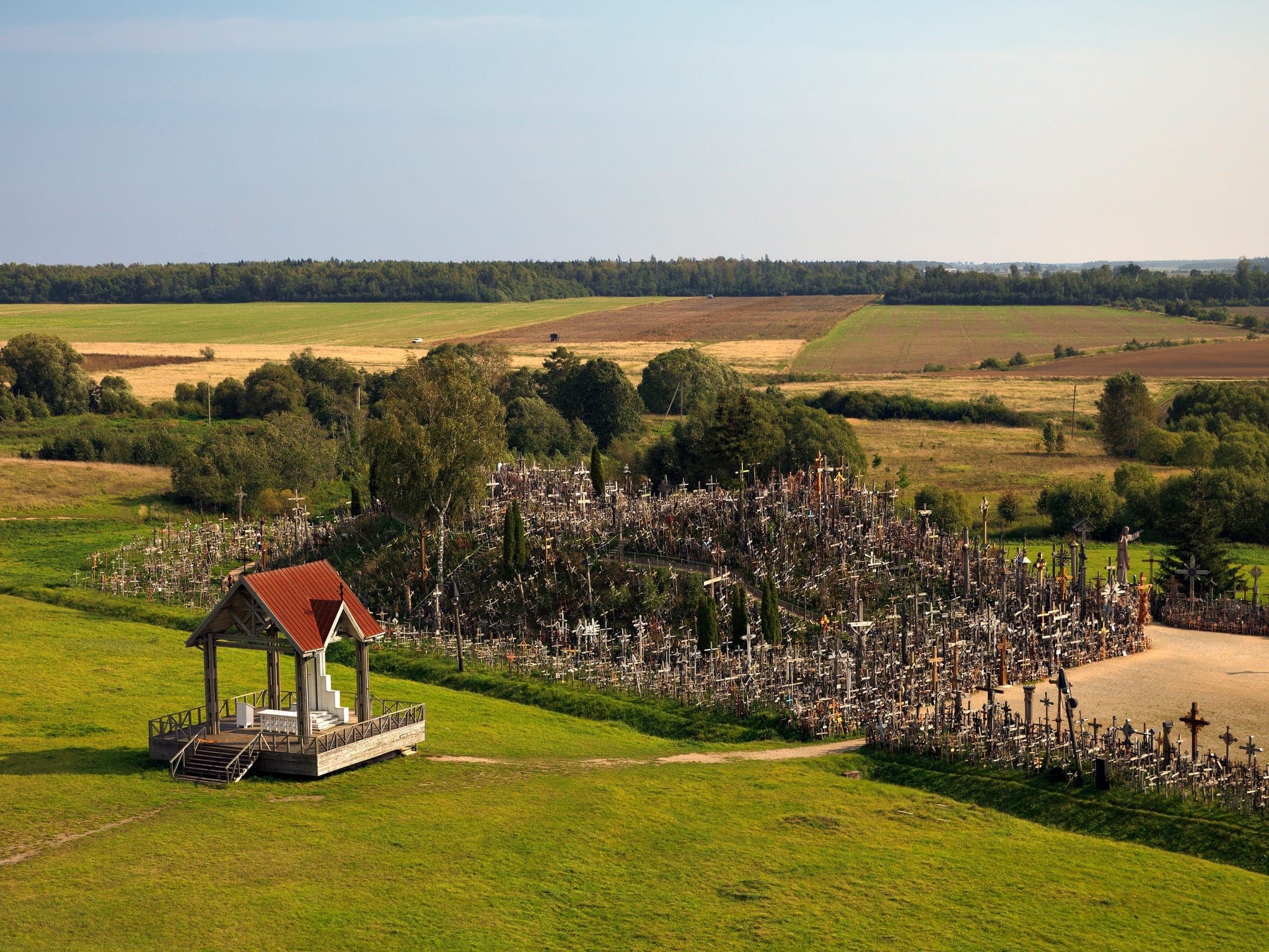
Day four is the longest drive of the week, about 230 km from Kaunas to the coast. It has one stop that stops everyone: the Hill of Crosses outside Šiauliai, a single mound of crosses left by pilgrims for generations. Sleep in Klaipėda.
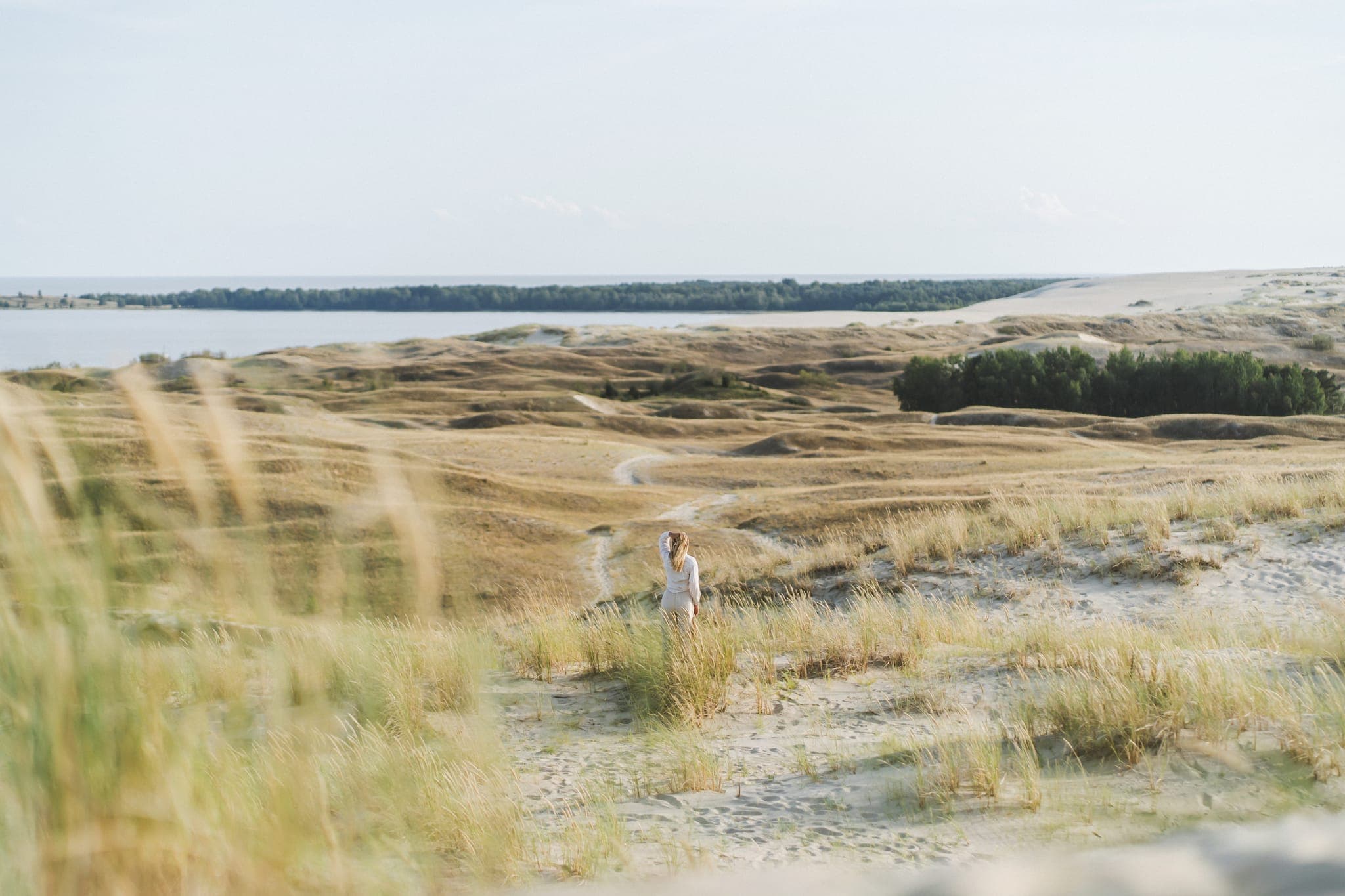
Day five, drive onto the ferry at Klaipėda, pay the Neringa entry fee at the Alksnynė post (€10 a car, €50 from 20 June to 20 August), and drive about 45 km south through pine forest to Nida. Stop at the Hill of Witches in Juodkrantė on the way.
Day six has no car. Walk up the Parnidis dune before nine, visit Thomas Mann's summer house, and cross the spit on foot to the open Baltic beach. Day seven, take the ferry back and stop in Palanga for the amber museum, then fly out of Palanga or drive the four hours back to Vilnius.
If you have a little longer
Lithuania gets better with more nights in the same places, not more places. With eight or nine days, stay three nights on the spit and add Kernavė to the Kaunas day.
The lake country of Aukštaitija in the north-east, forest and still water around Ignalina, deserves a night of its own. Žemaitija National Park belongs on the way between the coast and the Hill of Crosses.
If you are continuing to Latvia, do the Hill of Crosses on the way north instead: it is on the road from Vilnius to Riga through Šiauliai, and Rundāle Palace is just over the border.
Train, car or driver
The three-day and five-day versions need no car at all. Vilnius is walkable end to end, Kaunas is an hour by train, and Trakai and Kernavė are short drives that a driver-guide or a local bus covers.
The seven-day version is different. Klaipėda is four to five hours by train and about three to three and a half by car, and the Hill of Crosses and the spit are not on a useful rail line. Drive yourself, or have someone drive you.
Driving here is easy: good surfaces, clear signs and almost no traffic outside Vilnius and Kaunas. Headlights are compulsory day and night all year, which is the one rule visitors forget.
When to go
Late May to September is the season. Vilnius averages highs of 19 to 24°C, Trakai's lakes are at their best, and the Curonian Spit is warm enough for the beach from late June. Book Nida early: its guesthouses are small and fill first.
September is mild and quiet, and the best month for the seven-day route outside the summer holidays.
In winter, keep to the three-day and five-day versions. Vilnius lights its Christmas tree on Cathedral Square on the last Saturday of November, but the spit is cold, exposed and largely closed.
Doing it with us
A long weekend in Vilnius is the three-day version with a private guide on all three days, an old-town hotel and Trakai by car with a kibinai lunch.
Best of Lithuania is the seven-day version with a private guide and chauffeur: a sunrise balloon over Vilnius, Trakai and Kernavė, two slow days on the Curonian Spit, the Hill of Crosses and a manor in the lake country. If you would rather drive, our Lithuania self-drive covers the same week with the car delivered to your hotel.
For five days in Vilnius, tell us your dates and we will build the base and the day trips around them.
| Day 1: Vilnius | On foot | Cathedral Square, the university, Gediminas Tower |
|---|---|---|
| Day 2: Vilnius | On foot | Užupis, the Palace of the Grand Dukes |
| Day 3: to Kaunas | 130 km, about 2 h | Trakai island castle on the way |
| Day 4: to Klaipėda | About 230 km | The Hill of Crosses near Šiauliai |
| Day 5: to Nida | Ferry, then 45 km | The Hill of Witches at Juodkrantė |
| Day 6: Nida | No driving | Parnidis dune, Thomas Mann's house, the sea beach |
| Day 7: home | Ferry, then Palanga | Amber museum; fly from Palanga or drive 4 h to Vilnius |
- How many days do you need in Lithuania?
- Three days covers Vilnius and Trakai. Five lets you add Kaunas and Kernavė from the same hotel. Seven is the right length to reach the Curonian Spit, which needs at least one night and better two.
- Is 5 days in Vilnius too long?
- No, if you use it as a base. Two days in the old town and Užupis, then day trips to Trakai, Kaunas and Kernavė, all within about an hour, mean five days without repeating anything and without changing hotel.
- Can you visit the Curonian Spit on a day trip from Vilnius?
- Not realistically. The drive to Klaipėda, the ferry and the road to Nida take four to five hours each way. Plan at least one night on the coast, which is why the spit belongs in the seven-day version.
- Do I need a car for a Lithuania itinerary?
- Not for three or five days: Vilnius is walkable, Kaunas is an hour by train, and Trakai and Kernavė are short trips with a driver or by bus. For seven days with the Hill of Crosses and the coast, a car or a driver makes it work.
- What is the best month for a week in Lithuania?
- June to August for the Curonian Spit and the beach, September for a quieter trip that is still mild. In winter, stay in Vilnius and keep the coast for another year.
Make this part of your Lithuania trip.
Tell us your dates, interests and the pace you have in mind. We will suggest how this could fit your route.