
The shape of two weeks
A week in the Baltics is a relay: two nights, a drive, two nights, a drive. Two weeks changes the kind of trip it is. Each capital gets a day with nothing planned, and the places between them stop being lunch stops and become nights.
Go north. Vilnius is the quietest of the three capitals and the best place to arrive tired; Tallinn is the most finished and the easiest to leave from, with Helsinki across the water if you want a fourth capital. Running the other way works, but you end in the city that asks the most walking.
The table on this page has the nights. Thirteen of them: Vilnius three, the Curonian Spit two, Riga three, the Gauja valley one, Saaremaa two, Tallinn two.
Days 1 to 3: Vilnius and Trakai
Vilnius has the largest old town in the Baltics, about 3.6 square kilometres of baroque churches, courtyards and lanes, and it sprawls in a way Riga's and Tallinn's do not. Give it two full days on foot: the university courtyards, the Gate of Dawn, and across the river into Užupis, the artists' quarter that declared itself a republic.
The third day is for Trakai, half an hour west, where a brick castle sits on an island in a lake. Eat kibinai, the pastries of the Karaim community who have lived here for six centuries, and be back in Vilnius for the evening.
You do not need a car for any of this, and Vilnius does not want one in its old town. If you are driving the route, collect the car on the morning you leave.
Days 4 and 5: Kaunas and the Curonian Spit
Day four is a driving day, about 400 km in all. Break it in Kaunas, an hour and a half from Vilnius, for the castle and the interwar modernist centre, then carry on west to the port of Klaipėda. The car ferry to the spit takes a few minutes and leaves about every 20 minutes through the day.
Cars pay an entry fee to Neringa at the Alksnynė control post: €10 for a passenger car, rising to €50 from 20 June to 20 August. From there it is about 45 km through pine forest to Nida, the last village before the Russian border.
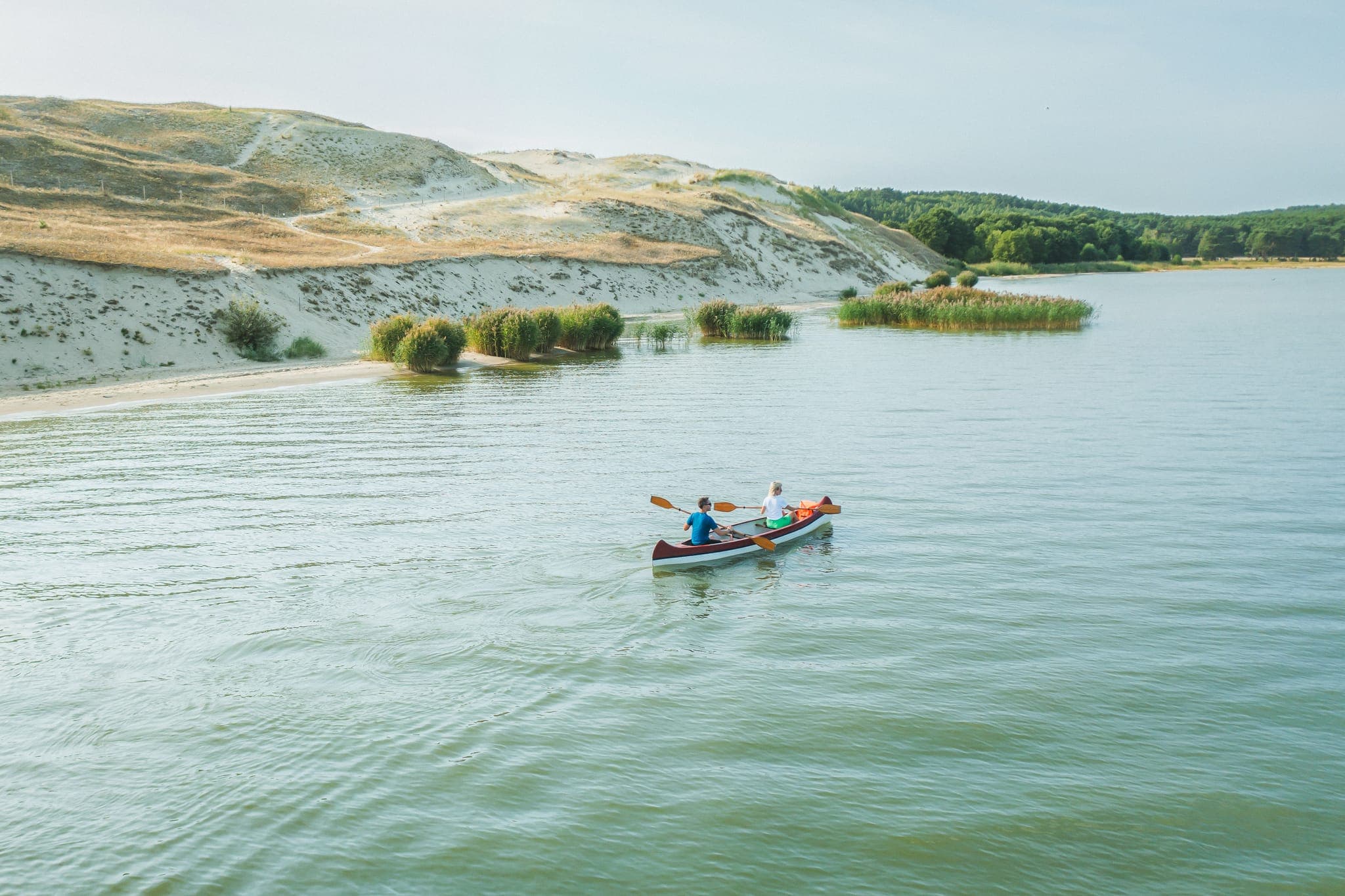
Day five has no driving at all. Walk up the Parnidis dune before nine, when it is empty, cycle the lagoon path north to Juodkrantė, and eat smoked fish at the far end. This is the day most people name afterwards.
Days 6 to 8: the Hill of Crosses, Rundāle and Riga
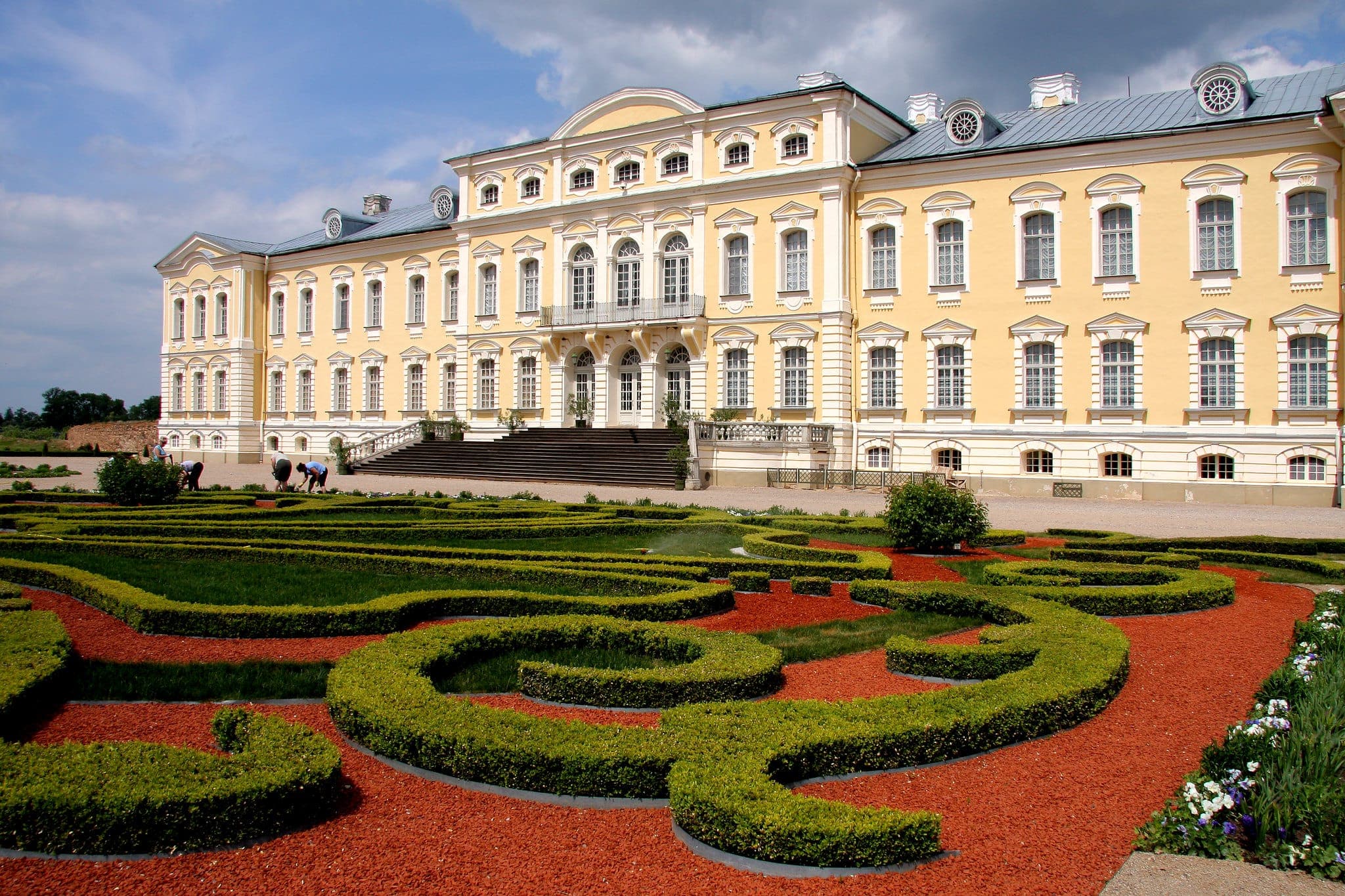
Day six is the other long one, about 380 km and five and a half hours at the wheel, and it has the two best roadside stops of the trip. The Hill of Crosses near Šiauliai is a low mound covered in well over a hundred thousand crosses, left by pilgrims since the nineteenth century. Rundāle Palace, just over the Latvian border, is a baroque palace by the architect of the Winter Palace in St Petersburg, standing alone in farmland.
Riga gets two full days. Spend one on the Art Nouveau district around Alberta iela, the densest concentration in Europe with over 700 buildings, and on the Central Market, which fills five former zeppelin hangars. Spend the other in the Old Town, or take the half-hour train to the beach at Jūrmala.
Three nights in Riga rather than two is the single biggest difference between a one-week and a two-week trip. It is the largest of the three capitals and the one that most rewards an unplanned afternoon.
Day 9: the Gauja valley
An hour northeast of Riga the land folds into the Gauja valley, Latvia's oldest national park. Turaida's red brick castle stands above the river at Sigulda, and at Cēsis they hand you a candle lantern to go down into the cellars of the castle ruin.
Sleep here, in Sigulda or Cēsis, instead of driving through. An evening in a small Latvian town is a different thing from another night in a capital, and it shortens tomorrow's drive.
In late September and early October the forest turns red and gold and this becomes the most photographed place in the country.
Days 10 and 11: Saaremaa
Cross into Estonia, stop for lunch in the beach town of Pärnu, and carry on to the harbour at Virtsu. The car ferry to the islands takes about half an hour, and from the landing it is an hour across Muhu and Saaremaa to Kuressaare. Book the ferry ahead on summer weekends.
Saaremaa is Estonia's largest island and its slowest corner: juniper heath, thatched farms, wooden windmills at Angla, a meteorite crater lake at Kaali, and a bishop's castle with a moat in Kuressaare. Two nights is right. One is a long drive for a short look.
If the island does not appeal, the alternative for these two nights is Tartu, Estonia's university town, and Lahemaa National Park on the north coast.
Days 12 to 14: Tallinn, and Helsinki if you like
It is about four hours from Kuressaare to Tallinn, ferry included. Hand the car back when you arrive; the walled Old Town is small enough to cover on foot in a day, and parking inside it is not worth attempting.
Use the extra day for what a short visit skips: the wooden houses of Kalamaja, the Kumu art museum, the Patkuli viewing platform on Toompea in the evening when the tour groups have gone.
On day fourteen you fly home, or you take the two-hour ferry to Helsinki and add a fourth capital. It costs almost nothing in travel time and it is a very different city to end on.
Car, driver or public transport
The three capitals are easy without a car. Coaches run Vilnius to Riga in about four hours and Riga to Tallinn in about four and a half, several times a day, and there is one direct train a day on each leg.
The rest of this route is not. The Curonian Spit, the Hill of Crosses, Rundāle and Saaremaa are the reason to take two weeks, and none of them sits on a practical bus route. That leaves two honest options: drive yourself, or have someone drive you.
Self-driving is easy here: open borders, light traffic, no motorway tolls for cars. A private driver-guide costs more and turns the two long days into sightseeing, with someone local to explain what you are passing.
When to go
June to August is the season for this route in particular, because the island and the spit are summer places: warm lagoon, long evenings, everything open. Book Nida and Kuressaare early, as both have few beds.
May and September are the value months. The weather is still reliable, the crowds have thinned and prices drop. September adds the first forest colour.
From November to March, swap the island and the spit for the cities. Many places to eat on the spit close for winter, the days are short, and December belongs to the Christmas markets in the three capitals instead.
Doing it with us
Our Three Crowns trip is the heart of this route, Vilnius to Tallinn in eleven days with a private guide and chauffeur. Adding Saaremaa and a third night in Riga makes it these two weeks, and we quote that as a matter of routine.
If you would rather drive, the Baltic capitals self-drive is the ten-day version with hotels booked, the car delivered to your hotel and a route book written by the people who drive it. It extends to fourteen days the same way.
Either way, tell us the dates and how many of you there are, and a person in Vilnius writes back with a route and a price.
| Vilnius | 3 nights | Days 1 to 3, Trakai as a half day |
|---|---|---|
| Nida, Curonian Spit | 2 nights | Days 4 and 5, via Kaunas |
| Riga | 3 nights | Days 6 to 8, via the Hill of Crosses and Rundāle |
| Sigulda or Cēsis | 1 night | Day 9, the Gauja valley |
| Kuressaare, Saaremaa | 2 nights | Days 10 and 11, via Pärnu |
| Tallinn | 2 nights | Days 12 and 13, home or Helsinki on day 14 |
- Is two weeks too long for the Baltics?
- No. Seven days covers the three capitals and nothing else. Two weeks adds the Curonian Spit, the Gauja valley and an Estonian island, and gives each capital a free day. It is the length at which the countryside becomes part of the trip.
- Can I do this 14-day itinerary without a car?
- The capitals, yes: coaches and one daily train link all three. The Curonian Spit is reachable by bus and ferry with patience. The Hill of Crosses, Rundāle and Saaremaa are not practical by public transport, so for the full route you either drive or travel with a driver.
- Should I start in Vilnius or Tallinn?
- Start in Vilnius and travel north. It is the quietest capital to arrive in, the long drives come in the first week, and you finish in Tallinn with Helsinki two hours away by ferry if you want to extend.
- How many days do I need in each Baltic capital on a two-week trip?
- Three nights in Vilnius, three in Riga and two in Tallinn. Vilnius has the largest old town, Riga is the biggest city, and Tallinn's walled centre is compact enough to see properly in a day and a half.
- What is the best month for two weeks in the Baltics?
- June to August for this route, because Saaremaa and the Curonian Spit are at their best in summer. May and September are quieter and cheaper with weather that is still reliable.
Still have a question?
Ask the small team that runs these trips. A real person replies, usually within one working day.